Ragdoll cats are famous for their gentle personality, luxurious coat, and impressive size. While many owners focus on nutrition, grooming, and toys, the litter box often receives less attention than it deserves. However, the Best Litter Box Setup can make a significant difference in your cat’s health, comfort, and daily routine. A thoughtfully designed setup encourages consistent litter box habits, minimizes odors, reduces mess, and creates a cleaner home for everyone.
Unlike smaller cat breeds, Ragdolls have unique physical needs. They grow into large, muscular cats that require more space to move comfortably. Their long fur can also trap litter particles, creating additional cleaning challenges if the setup is not ideal. Fortunately, a few smart decisions can prevent most common litter box problems before they begin.
Why Ragdoll Cats Need a Different Litter Box Setup
Ragdolls typically weigh between 10 and 20 pounds, making them much larger than the average domestic cat. Because of their size, many standard litter boxes quickly become cramped. A cat that cannot comfortably turn around or dig may begin avoiding the litter box altogether. Therefore, selecting equipment designed for larger breeds is one of the first steps toward success.
Their relaxed personality also influences litter box preferences. Although Ragdolls adapt well to family life, they appreciate predictable routines and quiet environments. Sudden changes, excessive noise, or frequent interruptions may discourage regular litter box use. Consequently, choosing a peaceful location helps establish positive habits.
Long coats introduce another consideration. Fine litter can cling to the fur between their paw pads and around their hind legs. As a result, litter may travel throughout the home unless you use proper mats and maintain regular grooming.
Choosing the Right Box Size
The foundation of the Best Litter Box Setup begins with selecting the proper box. Bigger is almost always better for Ragdolls. Your cat should have enough room to enter comfortably, turn around without touching the sides, and dig naturally before covering waste.
Many experts recommend choosing a litter box that measures at least one and a half times your cat’s body length, excluding the tail. Extra-large litter boxes designed specifically for giant breeds usually provide the best experience.
Storage containers converted into litter boxes have also become popular among large cat owners. These containers often provide significantly more interior space than traditional products while remaining affordable and durable.
High-sided boxes offer another advantage. Since Ragdolls are powerful diggers, taller walls help keep litter inside instead of scattered across the floor. At the same time, the entrance should remain low enough for comfortable access, especially as your cat grows older.
Open or Covered Litter Boxes
Many owners wonder whether covered boxes are better than open designs. The answer depends largely on the individual cat, although open boxes usually work well for larger breeds.
Open litter boxes provide better ventilation and allow owners to notice cleaning needs immediately. Cats can also monitor their surroundings while using the box, helping them feel safer. Additionally, large Ragdolls have fewer restrictions when entering and turning inside an uncovered box.
Covered boxes may reduce visible clutter and contain some litter scatter. However, they can trap odors inside, making the environment unpleasant if cleaning is delayed. Some enclosed boxes also become too small for fully grown Ragdolls.
If you choose a covered model, make sure it offers generous interior dimensions and adequate airflow. Otherwise, your cat may begin searching for a more comfortable location.
Selecting the Right Type of Litter
Choosing the correct litter matters just as much as selecting the box itself. The Best Litter Box Setup includes litter that feels comfortable under your cat’s paws while remaining easy to maintain.
Unscented clumping clay litter remains a popular choice because it forms solid clumps that simplify daily scooping. Many cats naturally prefer its soft texture, making the transition easy.
Natural litters made from corn, wheat, wood, or paper also appeal to many owners who prefer environmentally friendly options. These alternatives often produce less dust, which benefits both cats and people with respiratory sensitivities.
Regardless of the material, avoid strongly scented products whenever possible. Although fragrances may seem pleasant to humans, cats possess extremely sensitive noses. Heavy perfumes can discourage consistent litter box use.
Dust levels deserve attention as well. Low-dust litter keeps the surrounding air cleaner while reducing particles that settle on your Ragdoll’s beautiful coat.
Finding the Perfect Location
Even the finest litter box cannot solve problems if it sits in the wrong location. Quiet, accessible areas encourage regular use throughout the day.
Avoid placing litter boxes beside loud appliances such as washing machines or dryers. Sudden noises may startle your cat during use, creating negative associations over time.
Likewise, avoid high-traffic hallways where constant activity interrupts privacy. Instead, choose calm corners with easy access and sufficient lighting.
If your home has multiple floors, place at least one litter box on each level. This arrangement reduces accidents and provides convenient access regardless of where your cat spends time.
Keep food and water bowls well away from the litter area. Cats naturally prefer separating eating spaces from bathroom locations.
How Many Litter Boxes Should You Have?
Many veterinarians recommend following a simple guideline: one litter box per cat, plus one extra.
For example, one cat benefits from two litter boxes. Two cats should ideally have three boxes available.
Although Ragdolls often have calm personalities, they still appreciate options. Multiple boxes reduce competition, minimize stress, and allow each cat to choose a clean location whenever needed.
Homes with several levels particularly benefit from distributing boxes throughout different areas rather than grouping them together.
Cleaning Makes the Biggest Difference
The Best Litter Box Setup only works when cleanliness remains a daily priority. Even premium litter cannot compensate for poor maintenance.
Scoop waste at least once every day. Many owners prefer scooping twice daily because it keeps odors under control and maintains a pleasant environment.
Replace litter completely according to the manufacturer’s recommendations or sooner if odors persist. During each complete change, wash the box using warm water and mild unscented soap.
Avoid harsh chemical cleaners containing strong fragrances or ammonia. These smells may discourage your cat from returning to the box.
Consistent maintenance also allows you to monitor changes in your cat’s bathroom habits. Early detection of unusual urine or stool patterns may help identify health concerns before they become serious.
Reducing Litter Tracking Around the House
Long-haired Ragdolls frequently carry litter beyond the box. Fortunately, several simple strategies reduce this common problem.
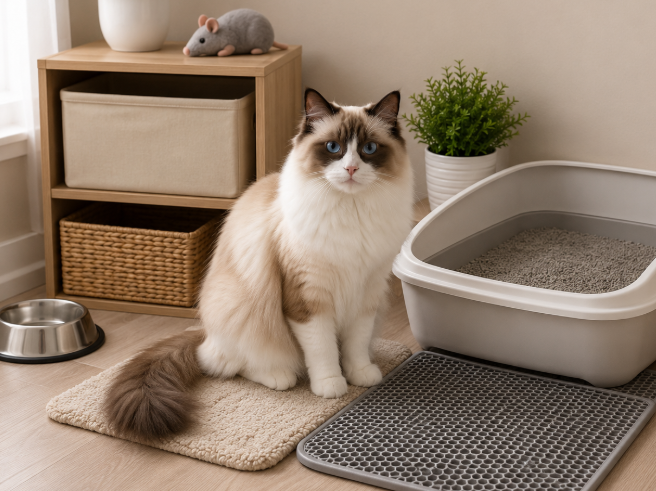
Place a large textured litter mat outside the entrance to capture loose particles as your cat exits. Larger mats generally outperform small versions because they provide more walking surface.
Trim excess fur between the paw pads if recommended by your veterinarian or professional groomer. Shorter fur traps fewer litter particles without affecting your cat’s appearance.
Choosing slightly larger litter granules may also reduce tracking compared to extremely fine products. However, always balance tracking control with your cat’s comfort and preference.
Regular vacuuming around the litter area further prevents scattered litter from spreading throughout your home.
Helping Kittens and Senior Ragdolls
Age affects litter box needs. Young kittens benefit from shallow boxes with low entry points that encourage easy access during early training.
As your Ragdoll grows, gradually transition to larger boxes without making sudden changes that could cause confusion.
Senior Ragdolls often develop arthritis or reduced mobility. Consequently, high-sided boxes may become difficult to enter. Low-entry boxes with spacious interiors provide better accessibility while maintaining comfort.
Keeping litter boxes on the same floor where older cats spend most of their time also reduces unnecessary climbing and walking.
Common Mistakes to Avoid
Several small mistakes can undermine even the most expensive litter box system.
Purchasing a box that is too small remains one of the most common problems. Large cats simply need more room than standard products provide.
Changing litter brands too frequently can also create unnecessary stress. If you decide to switch products, mix the old and new litter gradually over several days.
Ignoring daily scooping quickly leads to odor buildup, making the box less inviting. Likewise, placing the litter box in isolated basements or noisy utility rooms often discourages regular use.
Finally, never punish a cat for accidents. Instead, investigate possible medical issues, environmental changes, or litter box preferences before assuming behavioral problems.
Creating a Comfortable Daily Routine
The Best Litter Box Setup supports more than cleanliness. It also becomes part of your cat’s predictable daily routine.
Cats thrive on consistency. Therefore, maintain regular cleaning times and avoid relocating litter boxes unless absolutely necessary.
Observe your Ragdoll’s preferences over time. Some cats enjoy softer litter, while others prefer larger boxes or quieter locations. Paying attention to these small details allows you to make thoughtful adjustments that improve comfort.
Routine grooming complements litter box maintenance by keeping long fur clean and reducing the amount of litter carried throughout the house.
Most importantly, remember that every cat is unique. While general guidelines provide an excellent starting point, small adjustments based on your own Ragdoll’s behavior often produce the best long-term results.
Conclusion
Providing the Best Litter Box Setup is one of the simplest ways to improve your Ragdoll’s quality of life. A spacious litter box, comfortable litter, quiet location, and consistent cleaning routine encourage healthy habits while keeping your home cleaner and fresher. Small details such as litter mats, low-dust litter, and proper placement can significantly reduce mess and increase your cat’s comfort.
As your Ragdoll grows and ages, continue evaluating its changing needs. A setup that works for a playful kitten may require adjustments for a mature or senior cat. With careful observation and regular maintenance, you can create a litter box environment that supports your cat’s health, happiness, and confidence for many years to come.
FAQ
1. What size litter box works best for a large cat?
An extra-large litter box that allows your cat to turn around comfortably is usually the best choice for large breeds like Ragdolls.
2. Should I use scented or unscented litter?
Unscented litter is generally recommended because most cats prefer natural-smelling environments without strong fragrances.
3. How often should I completely replace the litter?
Complete replacement depends on the litter type, but most boxes benefit from a full change every one to four weeks, along with daily scooping.
4. Why does my long-haired cat track litter everywhere?
Long fur between the paw pads often traps litter. A quality litter mat, regular grooming, and low-tracking litter can reduce the problem.
5. Is one litter box enough for a single cat?
Most experts recommend having two litter boxes for one cat, giving your pet cleaner options and reducing the risk of accidents.