Owning a Ragdoll cat is a rewarding experience because these gentle felines thrive on companionship, routine, and attentive care. A well-planned Ragdoll Cat Care Routine helps maintain their beautiful coat, supports their physical health, and keeps them emotionally content. Unlike many breeds, Ragdolls enjoy spending time with their families and often follow their owners around the house. Because they depend on consistency, establishing healthy daily habits makes life easier for both you and your cat.
Every Ragdoll has unique preferences, yet their basic needs remain the same. They require nutritious food, fresh water, mental stimulation, regular grooming, and plenty of affection. Fortunately, caring for a Ragdoll does not have to feel overwhelming. Instead, a simple daily schedule ensures nothing important is forgotten while helping your cat develop healthy habits that last a lifetime.
Start the Morning With Fresh Food and Water
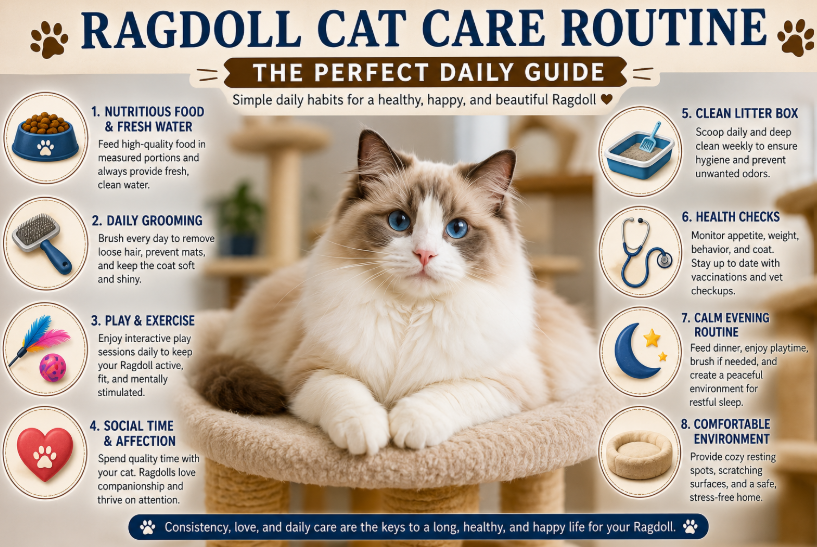
Morning is the perfect time to check your cat’s overall condition. Before serving breakfast, observe your Ragdoll’s energy level, eyes, ears, and coat. Healthy cats usually greet their owners, stretch, and show interest in food. If your cat suddenly seems tired or refuses to eat, it may be worth monitoring the situation or contacting your veterinarian.
Choose a balanced, high-quality cat food that meets your Ragdoll’s nutritional needs. Since this breed grows larger than many others, proper nutrition supports muscle development and healthy joints. Measure portions carefully instead of free-feeding throughout the day. This approach helps prevent obesity, which is a common concern among indoor cats.
Likewise, replace old water with fresh, clean water every morning. Many cats drink more when water is fresh, especially if you use a pet fountain. Good hydration supports kidney function, digestion, and overall wellness.
Make Grooming Part of Every Day
Although Ragdolls have luxurious semi-long coats, they surprisingly require less grooming than many long-haired breeds because they have little undercoat. Even so, daily brushing remains one of the most valuable parts of a Ragdoll Cat Care Routine.
Regular brushing removes loose hair before it spreads around your home. It also prevents tangles from developing behind the legs, around the neck, and beneath the belly. Additionally, brushing reduces the amount of fur your cat swallows during self-grooming, lowering the risk of hairballs.
Use a soft slicker brush or a stainless-steel comb designed for long-haired cats. Brush gently while speaking calmly to create a relaxing experience. Many Ragdolls quickly learn to enjoy grooming sessions because they appreciate gentle attention from their owners.
Besides brushing, take a few moments to inspect your cat’s ears, eyes, and paws. Early detection of redness, swelling, or debris allows you to address small problems before they become serious.
Encourage Daily Exercise and Play
Ragdolls have a calm personality, but they still need daily activity. Without enough exercise, they may gain excess weight or become bored. Fortunately, interactive play keeps them mentally and physically engaged.
Aim for at least two play sessions each day. Each session can last around 15 to 20 minutes. Feather wands, toy mice, balls, puzzle feeders, and interactive laser toys encourage healthy movement while satisfying natural hunting instincts.
Furthermore, rotate toys every few days. This simple trick keeps familiar toys exciting and prevents boredom. Cat trees, climbing shelves, and window perches also provide excellent opportunities for exploration throughout the day.
Exercise strengthens muscles, improves coordination, and reduces unwanted behaviors caused by excess energy. Even older Ragdolls benefit from gentle daily movement.
Provide Plenty of Social Interaction
One reason people love this breed is its affectionate personality. Ragdolls enjoy spending time with their families and often seek companionship throughout the day. Because of this, emotional care deserves just as much attention as physical care.
Spend quality time petting, talking, or relaxing with your cat whenever possible. Many Ragdolls enjoy sitting beside their owners while they read, watch television, or work from home. This quiet companionship helps reduce stress and strengthens trust.
If your household is empty for long periods, consider providing interactive toys or puzzle feeders to keep your cat occupied. Some owners also choose to adopt another friendly pet so their Ragdoll has company during the day. However, every cat has a different personality, so introductions should always happen gradually.
Keep the Litter Box Clean
Cleanliness plays a major role in your cat’s health and happiness. Scoop the litter box at least once or twice every day. A clean box encourages consistent litter habits while reducing unpleasant odors throughout your home.
Once each week, wash the litter box using mild soap and warm water before adding fresh litter. Avoid harsh chemicals because lingering scents may discourage your cat from using the box.
Pay attention to changes in bathroom habits as well. Frequent urination, diarrhea, constipation, or accidents outside the litter box may indicate an underlying medical issue. Monitoring these habits allows you to respond quickly if something changes.
Monitor Health Every Day
A good Ragdoll Cat Care Routine includes simple health observations that take only a few minutes. You do not need advanced medical knowledge to notice early warning signs.
Watch for changes in appetite, water consumption, breathing, movement, grooming habits, or behavior. Healthy Ragdolls usually maintain a consistent routine. Therefore, sudden changes often deserve closer attention.
Weigh your cat every few weeks using a digital pet scale or household scale. Gradual weight gain or unexpected weight loss can signal nutritional or medical concerns. Additionally, keep vaccination schedules, parasite prevention, and veterinary checkups up to date.
Daily observation often catches problems long before they become emergencies, giving your veterinarian a better chance to treat them successfully.
Create a Calm Evening Routine
Evenings provide an excellent opportunity to reinforce healthy habits. Offer dinner at roughly the same time each evening since cats appreciate predictable schedules. Consistency helps reduce anxiety while supporting healthy digestion.
After dinner, spend another short session playing with your Ragdoll. This activity burns remaining energy before bedtime and satisfies natural hunting behaviors. Afterwards, many cats settle comfortably for the night.
Take a few minutes to brush the coat if necessary, refill the water bowl, and check that the litter box is clean. These small habits prepare your cat for a restful night while making the following morning easier.
Finally, provide a comfortable sleeping space in a quiet location. Although many Ragdolls enjoy sleeping beside their owners, they also appreciate having cozy beds placed around the home.
Small Habits Create Lifelong Benefits
The best Ragdoll Cat Care Routine is not complicated. Instead, it focuses on consistency. Small daily actions quickly add up, helping your cat remain healthier, happier, and more comfortable throughout every stage of life.
When feeding nutritious meals, maintaining proper grooming, encouraging exercise, and providing plenty of affection, you create an environment where your Ragdoll can truly thrive. Additionally, regular observation allows you to notice potential health concerns before they become serious.
Remember that every Ragdoll is an individual. As you spend time together, you will naturally learn your cat’s preferences and personality. Adjust your daily routine to meet those needs while maintaining the core habits that support excellent health. With patience, consistency, and love, your Ragdoll will reward you with years of companionship, loyalty, and gentle affection.
FAQ
1. How often should I brush my Ragdoll cat?
Daily brushing is ideal because it removes loose fur, prevents tangles, and reduces hairballs while keeping the coat soft and healthy.
2. What is the best feeding schedule for this breed?
Most adult cats do well with two measured meals each day, although kittens usually require more frequent feeding.
3. Do these cats need daily exercise?
Yes. Interactive play for 20 to 40 minutes each day helps maintain a healthy weight and provides valuable mental stimulation.
4. How often should I clean the litter box?
Scoop the litter box once or twice daily and perform a complete cleaning every week for the best hygiene.
5. What should I check during everyday health inspections?
Monitor your cat’s appetite, water intake, coat, eyes, ears, weight, litter box habits, and overall behavior to spot potential health concerns early.