Providing the right nutrition is one of the most important responsibilities of owning a Ragdoll. A balanced Ragdoll Cat Diet supports healthy growth, maintains lean muscle, keeps the luxurious coat soft, and helps prevent common health problems. Since Ragdolls are one of the largest domestic cat breeds, they require high-quality nutrition that meets their size, activity level, and stage of life. Although every cat has individual needs, following a consistent feeding plan gives your feline companion the best chance to enjoy a long and healthy life.
Unlike dogs, cats are obligate carnivores. This means they rely on nutrients found primarily in animal protein. Their bodies are designed to process meat efficiently, while excessive carbohydrates provide little nutritional benefit. Therefore, choosing foods with real animal protein as the first ingredient should always be a priority. Combined with proper portion control and regular veterinary care, a healthy diet creates the foundation for lifelong wellness.
Understanding Your Ragdoll’s Nutritional Needs
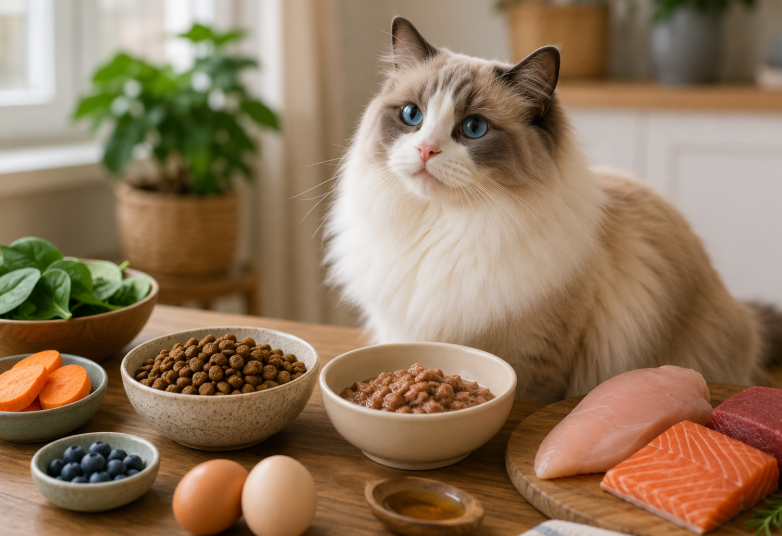
A healthy Ragdoll Cat Diet begins with understanding what your cat truly needs. Protein should make up the largest portion of every meal because it supports muscle development, tissue repair, and healthy immune function. Chicken, turkey, salmon, duck, beef, and lamb are all excellent sources of quality protein.
Healthy fats are equally important. They provide energy while supporting brain development, healthy skin, and the beautiful silky coat for which Ragdolls are known. Omega-3 and omega-6 fatty acids also help reduce inflammation and promote overall wellness.
In addition, cats require essential vitamins and minerals such as taurine, calcium, phosphorus, and vitamin A. Taurine deserves special attention because cats cannot produce enough on their own. A deficiency may lead to serious heart and eye problems, making complete and balanced commercial cat food the safest option for most owners.
Fresh water should always be available alongside meals. Proper hydration supports kidney function, digestion, and urinary health throughout your cat’s life.
Choosing the Right Food
Selecting the right products is a major part of maintaining a balanced Ragdoll Cat Diet. High-quality commercial foods formulated to meet AAFCO nutritional standards provide complete nutrition for most healthy cats.
Wet food offers several advantages. It contains significantly more moisture, which supports hydration and urinary tract health. Many Ragdolls also find wet food more appealing because of its aroma and texture.
Dry food can still be part of a healthy feeding plan. It is convenient, easy to store, and may help satisfy natural chewing instincts. However, dry food should not replace fresh water or regular hydration.
Many veterinarians recommend combining both wet and dry food. This approach offers the moisture benefits of canned food while maintaining the convenience of kibble. Regardless of your choice, carefully read ingredient labels and avoid foods containing excessive fillers, artificial colors, or unnecessary preservatives.
Feeding by Life Stage
An appropriate Ragdoll Cat Diet changes as your cat grows. Kittens require more calories and protein than adults because they experience rapid growth during their first year. Most kittens benefit from three to four smaller meals each day until they approach adulthood.
Adult Ragdolls generally do well with two measured meals daily. Feeding at consistent times supports digestion while helping prevent overeating. Since Ragdolls mature more slowly than many breeds, some continue growing until they are around four years old. Regular weight monitoring helps determine whether portion adjustments are necessary.
Senior cats often become less active, meaning they require fewer calories. At the same time, older cats still need highly digestible protein to preserve muscle mass. Some may also benefit from veterinary diets designed to support joint, kidney, or digestive health.
Regardless of age, schedule routine veterinary examinations to ensure your feeding plan continues meeting your cat’s changing nutritional needs.
Portion Control and Healthy Weight
Maintaining an ideal weight is one of the greatest benefits of a consistent Ragdoll Cat Diet. Although Ragdolls are naturally large cats, excess body fat increases the risk of arthritis, diabetes, heart disease, and reduced mobility.
Always follow feeding guidelines provided by your veterinarian or food manufacturer, then adjust based on your cat’s activity level and body condition. Measuring food with a standard measuring cup or digital kitchen scale provides much better accuracy than estimating portions.
Treats should remain an occasional reward rather than a major part of the diet. Ideally, treats should contribute no more than 10 percent of daily calorie intake. Healthy alternatives include freeze-dried meat treats made from a single animal protein source.
Regular play sessions also support healthy weight management. Combining proper nutrition with daily exercise helps your Ragdoll maintain strong muscles and excellent overall fitness.
Foods to Avoid
Protecting your cat means knowing which foods should never become part of a Ragdoll Cat Diet. Certain human foods can be dangerous or even fatal to cats.
Chocolate contains compounds that affect the nervous system and heart. Onions, garlic, and chives may damage red blood cells and lead to anemia. Grapes and raisins have been linked to kidney failure in some pets.
Alcohol, caffeine, raw bread dough, and products containing xylitol should always be kept out of reach. Cooked bones may splinter and cause serious digestive injuries, while fatty table scraps increase the risk of digestive upset and obesity.
Milk is another common misconception. Although many people believe cats enjoy milk, numerous adult cats become lactose intolerant after weaning. Fresh water remains the healthiest beverage for nearly every cat.
If you suspect your cat has consumed a toxic food, contact your veterinarian immediately rather than waiting for symptoms to appear.
Building a Healthy Feeding Routine
Consistency is an important part of every successful Ragdoll Cat Diet. Feeding meals at the same times each day helps regulate digestion and provides a predictable routine that many cats find comforting.
Serve food in clean bowls placed away from the litter box. Quiet feeding areas encourage relaxed eating and reduce stress during mealtime. If you have multiple cats, consider feeding them separately to prevent competition.
Puzzle feeders and slow-feeding bowls can make meals more engaging while preventing rapid eating. These tools encourage natural hunting behaviors and provide valuable mental stimulation, especially for indoor cats.
Monitor your cat’s appetite regularly. A sudden increase or decrease in food intake may signal an underlying health concern that requires veterinary attention. Early recognition often leads to faster diagnosis and more successful treatment.
Conclusion
A balanced Ragdoll Cat Diet provides far more than daily nourishment. It supports healthy growth, strong muscles, beautiful coats, healthy digestion, and long-term disease prevention. Choosing high-quality food, serving appropriate portions, maintaining hydration, and following a consistent feeding routine all contribute to your cat’s overall well-being.
Every Ragdoll has unique nutritional needs that change throughout life. By observing your cat’s weight, activity level, and overall health while working closely with your veterinarian, you can make informed feeding decisions that support many happy years together. Investing in proper nutrition today is one of the most valuable gifts you can give your beloved companion.
FAQ
1. How many times should I feed an adult Ragdoll each day?
Most healthy adult Ragdolls do well with two measured meals each day served at consistent times.
2. Is wet food better than dry food?
Both can be part of a healthy feeding plan. Wet food supports hydration, while dry food offers convenience and can complement a balanced diet.
3. What protein sources are best for this breed?
Chicken, turkey, salmon, duck, lamb, and beef are excellent protein sources when included in complete and balanced cat food.
4. Can Ragdolls eat homemade meals?
Homemade diets should only be prepared under the guidance of a veterinary nutritionist to ensure complete nutritional balance.
5. How can I tell if my cat is overweight?
Your veterinarian can assess body condition during wellness visits, and you should regularly monitor your cat’s weight and overall body shape at home.