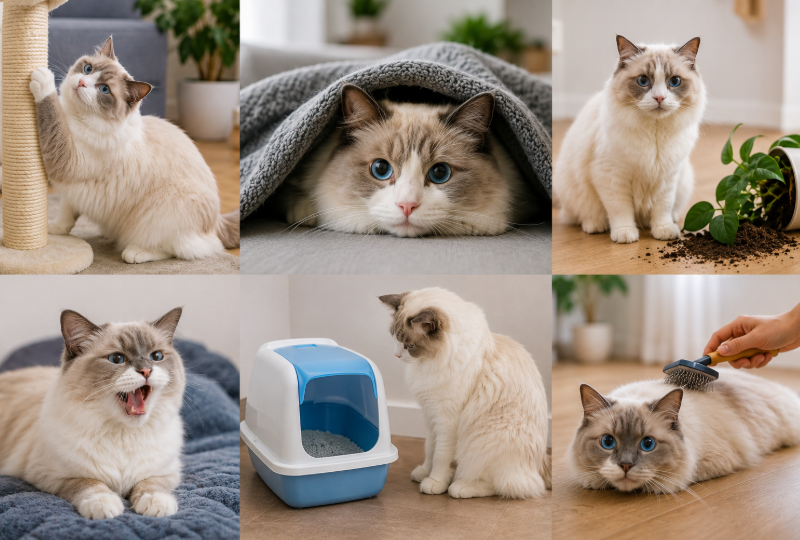
Ragdolls are known for their calm personalities, affectionate nature, and gentle temperament, yet Ragdoll Cat Behavior Problems can still develop under certain conditions. Many owners expect Ragdolls to behave perfectly because of the breed’s friendly reputation. However, even the most relaxed cat may develop behavioral issues related to stress, boredom, environment, or health concerns. Understanding these problems early helps owners create healthier and happier homes for their feline companions.
Unlike highly independent cat breeds, Ragdolls usually form very strong bonds with humans. They often follow owners around the house, seek constant attention, and dislike being left alone for long periods. Consequently, emotional stress may trigger unwanted behaviors if their needs are not met properly.
Indoor living also affects behavior significantly. Ragdolls are commonly kept indoors because of their trusting personalities and lower survival instincts outdoors. While indoor living improves safety, it may also increase boredom, inactivity, and frustration without enough stimulation.
Most behavioral problems are not signs of a “bad” cat. Instead, they often reflect emotional discomfort, environmental stress, medical issues, or unmet natural instincts. Therefore, solving behavior problems usually involves understanding the cause rather than punishing the cat.
With patience and consistency, many common Ragdoll behavior issues improve significantly. Owners who understand the breed’s emotional and physical needs can often prevent problems before they become severe.
Why Ragdolls Behave Differently From Other Cats
Ragdolls have unique personality traits that influence their behavior heavily. Unlike more independent breeds, they often crave social interaction and emotional closeness. Consequently, they may struggle more with loneliness or routine disruptions compared to other cats.
Their trusting nature also affects confidence levels. Many Ragdolls dislike loud environments, aggressive pets, or chaotic households because they prefer calm and predictable surroundings. Therefore, stressful homes may increase anxiety-related behaviors quickly.
Ragdolls are also highly intelligent and emotionally sensitive. They notice environmental changes easily and may react strongly to unfamiliar situations. As a result, moving homes, schedule changes, or introducing new pets sometimes trigger behavioral problems.
Ragdoll Cat Behavior Problems often involve attachment-related behaviors because the breed forms strong emotional bonds with owners. Some cats become anxious when left alone too often, while others demand constant attention throughout the day.
Despite their relaxed reputation, Ragdolls still need physical activity and mental stimulation. Without enough enrichment, boredom may lead to scratching, overeating, excessive vocalization, or destructive behavior.
Understanding breed-specific tendencies helps owners respond more effectively. Ragdolls usually respond better to gentle correction and positive reinforcement rather than punishment or harsh discipline.
Their emotional sensitivity makes trust especially important. Calm communication and consistent routines usually create better long-term results than strict control-based approaches.
Separation Anxiety and Emotional Dependence
One of the most common Ragdoll Cat Behavior Problems involves separation anxiety. Because Ragdolls bond closely with people, they may become distressed when left alone frequently or for extended periods.
Cats experiencing separation anxiety often display behaviors such as excessive meowing, clinginess, pacing, or destructive scratching near doors and windows. Some may also stop eating properly or develop grooming-related stress behaviors.
Changes in owner schedules sometimes trigger anxiety unexpectedly. For example, working from home regularly and then suddenly returning to the office may confuse emotionally attached cats. Consequently, behavioral problems may appear even in previously calm pets.
Creating predictable routines helps reduce anxiety significantly. Feeding, playtime, and affection at consistent times provide emotional security and stability. Therefore, structured schedules often improve confidence naturally.
Ragdoll Cat Behavior Problems related to loneliness may also improve through environmental enrichment. Puzzle feeders, climbing structures, window perches, and interactive toys help reduce boredom during alone time.
Some owners consider adopting another compatible cat for companionship. While this solution works in certain situations, introductions should happen slowly and carefully to avoid additional stress.
Interactive play before leaving the house often helps too. Physical activity reduces stress while encouraging rest afterward. Consequently, anxious cats may settle more comfortably when owners leave.
Severe anxiety sometimes requires veterinary guidance, especially if behavior escalates or affects physical health significantly.
Scratching Furniture and Household Items
Scratching is completely natural feline behavior, yet it becomes frustrating when cats target furniture, carpets, or walls. Many owners misunderstand scratching and assume it reflects disobedience. However, cats scratch for physical and emotional reasons rather than spite.
Cats scratch to maintain claw health, stretch muscles, mark territory, and release stress. Consequently, stopping scratching entirely is unrealistic and unhealthy. Instead, owners should redirect behavior toward appropriate surfaces.
Ragdoll Cat Behavior Problems involving scratching often develop when cats lack proper scratching outlets. Some cats dislike certain scratching textures or locations, making placement extremely important.
Vertical scratching posts work well for many Ragdolls because they enjoy full-body stretching while scratching. Others prefer horizontal scratchers made from cardboard or carpet textures. Therefore, offering multiple options usually increases success.
Placement matters significantly too. Scratching posts should remain near favorite sleeping spots or areas where unwanted scratching occurs frequently. Cats naturally stretch and scratch after resting periods.
Punishment rarely solves scratching problems and may increase anxiety instead. Positive reinforcement works much better. Rewarding cats when they use approved scratching surfaces encourages healthier habits gradually.
Regular nail trimming may also reduce furniture damage without removing natural scratching behavior entirely. Consequently, combining environmental management with positive training often produces the best results.
Litter Box Problems and Possible Causes
Litter box issues are among the most stressful behavior problems owners face. Fortunately, these problems often have identifiable causes rather than intentional disobedience. Understanding the reason behind accidents is essential before attempting solutions.
Medical conditions should always be ruled out first. Urinary infections, kidney disease, arthritis, and digestive problems may cause inappropriate elimination unexpectedly. Therefore, veterinary evaluation becomes extremely important when litter habits change suddenly.
Stress also affects litter box behavior heavily. Changes involving new pets, loud environments, moving homes, or routine disruptions sometimes trigger accidents outside the box. Consequently, emotional factors often play major roles.
Ragdoll Cat Behavior Problems involving litter boxes may also result from poor box conditions. Cats dislike dirty litter, strong odors, or crowded placement areas. Most experts recommend one litter box per cat plus an extra box in multi-cat households.
Box size matters too. Large Ragdolls often feel uncomfortable using small or enclosed litter boxes. Therefore, spacious boxes usually improve comfort significantly.
Litter preferences vary between cats as well. Some dislike scented litter, while others prefer softer textures. Gradual litter changes help prevent stress and confusion.
Location remains equally important. Boxes placed near loud appliances or busy household traffic may discourage use. Quiet and accessible areas generally work best for emotionally sensitive breeds like Ragdolls.
Patience becomes essential during retraining. Calm correction and positive reinforcement support better results than punishment or frustration.
Excessive Vocalization and Attention-Seeking
Ragdolls are naturally vocal cats compared to some breeds. Many communicate frequently through soft meows, chirps, or attention-seeking sounds. However, excessive vocalization sometimes signals emotional or physical problems.
Cats may vocalize excessively because of boredom, loneliness, hunger, stress, or medical discomfort. Consequently, understanding context helps identify the real cause.
Ragdoll Cat Behavior Problems involving constant meowing often relate to emotional dependence. Cats craving attention may vocalize repeatedly when owners ignore them or leave rooms frequently.
Ignoring all vocalization rarely solves the issue completely. Instead, owners should reward calm behavior while avoiding reinforcement of excessive demands. Therefore, timing attention carefully becomes important.
Interactive play helps reduce boredom-related meowing significantly. Mentally stimulated cats usually display calmer behavior and lower attention-seeking intensity.
Senior Ragdolls may vocalize more because of hearing loss, cognitive changes, or medical discomfort. Consequently, sudden behavior changes in older cats always deserve veterinary evaluation.
Nighttime vocalization often improves through better evening routines. Feeding, play, and environmental enrichment before bedtime help many cats settle more comfortably overnight.
Calm environments support quieter behavior too. Loud households or stressful multi-pet dynamics sometimes increase vocalization in emotionally sensitive cats.
Aggression and Social Tension
Ragdolls are not typically aggressive cats, yet aggression may still develop under stressful circumstances. Fear, pain, territorial pressure, or overstimulation sometimes trigger defensive behavior unexpectedly.
Multi-pet households occasionally create social tension, especially when resources feel limited. Competition involving food bowls, litter boxes, or resting spaces may increase stress levels gradually.
Ragdoll Cat Behavior Problems involving aggression often appear subtle initially. Swatting, growling, hiding, or blocking pathways may signal discomfort before serious conflict develops.
Pain-related aggression deserves immediate veterinary attention. Cats experiencing joint pain, dental disease, or illness sometimes react defensively when touched or approached.
Overstimulation can also trigger sudden reactions. Some Ragdolls enjoy affection intensely yet become overwhelmed after prolonged petting. Consequently, learning body language helps prevent unwanted reactions.
Separate feeding stations and multiple resting spaces usually reduce household tension effectively. Environmental enrichment also supports emotional balance while decreasing territorial competition.
Punishing aggressive behavior often worsens fear and stress. Calm redirection and identifying underlying causes produce much healthier long-term results.
Slow introductions remain essential whenever adding new pets. Rushing introductions may create lasting anxiety and territorial conflict between animals.
How Enrichment Prevents Behavior Problems
Many behavioral issues improve dramatically when cats receive enough mental and physical stimulation. Indoor Ragdolls especially depend heavily on owners for enrichment because they lack outdoor hunting opportunities.
Interactive play supports emotional wellness while reducing boredom-related behaviors. Feather wands, puzzle feeders, laser toys, and climbing structures encourage natural instincts safely indoors.
Ragdoll Cat Behavior Problems often decrease when environments become more stimulating and predictable simultaneously. Cats receiving daily interaction usually display healthier emotional balance overall.
Vertical climbing areas help build confidence as well. Window perches, cat trees, and wall shelves encourage movement while providing safe observation spaces.
Rotating toys regularly helps maintain interest and curiosity. Consequently, cats remain mentally engaged instead of relying entirely on food or attention for stimulation.
Routine matters greatly too. Feeding, playtime, and rest schedules should remain reasonably consistent whenever possible. Predictability helps emotionally sensitive breeds feel safer and more relaxed.
Environmental enrichment cannot replace emotional connection entirely, however. Ragdolls generally need both stimulation and regular human interaction to stay emotionally healthy.
Conclusion
Ragdolls are affectionate and emotionally sensitive cats that thrive best in calm, structured, and supportive homes. Although Ragdoll Cat Behavior Problems can develop, most issues improve significantly once owners understand the underlying causes.
Separation anxiety, scratching, excessive vocalization, litter box problems, and social tension often result from stress, boredom, or unmet emotional needs rather than stubbornness. Consequently, solving these issues requires patience, consistency, and environmental support.
Interactive play, predictable routines, proper litter box management, and emotional reassurance all contribute to healthier feline behavior naturally. Punishment rarely produces lasting improvements and may increase anxiety further.
Owners who focus on enrichment, communication, and emotional stability usually build stronger relationships with their Ragdolls over time. With proper care and understanding, these intelligent and affectionate cats often become calm, loving, and emotionally balanced companions.
Behavior problems should never be ignored completely because they frequently reflect deeper physical or emotional concerns. Early attention and supportive care create the best opportunity for long-term success and happier feline wellness.
FAQ
1. Why are Ragdolls so attached to their owners?
Ragdolls naturally form strong emotional bonds and usually prefer close human interaction throughout the day.
2. Can boredom cause destructive behavior in cats?
Yes. Lack of stimulation often leads to scratching, overeating, excessive vocalization, or attention-seeking habits.
3. Why is my Ragdoll suddenly avoiding the litter box?
Stress, dirty litter boxes, medical problems, or environmental changes commonly affect litter habits.
4. How can I reduce separation anxiety in my cat?
Consistent routines, enrichment toys, interactive play, and calm environments often reduce anxiety significantly.
5. Should aggressive behavior always be taken seriously?
Yes. Aggression may indicate stress, fear, pain, or medical problems requiring attention and evaluation.