Creating the right indoor environment is one of the most important responsibilities for Ragdoll owners today. A proper Ragdoll Cat Home Setup supports emotional comfort, physical safety, healthy behavior, and long-term wellness. Because Ragdolls are highly affectionate and emotionally sensitive cats, they depend heavily on stable and enriching home environments. Unlike more independent breeds, Ragdolls often seek close human interaction and feel safest in calm indoor spaces.
Many owners choose indoor living for Ragdolls because the breed tends to be trusting and less street-smart outdoors. While indoor lifestyles increase protection from traffic, predators, and disease, they also require thoughtful environmental planning. Consequently, owners must provide enough stimulation, comfort, and activity opportunities inside the home.
Ragdolls thrive best in predictable environments with soft resting spaces, climbing opportunities, interactive toys, and low stress levels. Without enough enrichment, some cats may become bored, anxious, or inactive over time. Therefore, creating a balanced home setup becomes essential for supporting both physical and emotional health.
Indoor design affects much more than comfort alone. Proper layouts also reduce risks involving obesity, stress, destructive behavior, and household accidents. Understanding how Ragdolls behave naturally helps owners create safer and healthier indoor spaces that support long-term happiness.
Why Indoor Living Works Best for Ragdolls
Ragdolls are widely known for their gentle and trusting personalities. Unlike highly cautious outdoor cats, many Ragdolls approach strangers and unfamiliar environments with little fear. Consequently, outdoor living exposes them to significant risks involving traffic, predators, theft, and accidents.
Indoor living allows owners to control environmental safety much more effectively. Stable temperatures, clean spaces, controlled nutrition, and reduced disease exposure all contribute to healthier lifestyles. Therefore, most veterinarians recommend keeping Ragdolls indoors full-time whenever possible.
However, indoor cats require proper stimulation to stay emotionally balanced. A poor indoor environment may increase boredom, inactivity, and stress. Consequently, owners should never assume safety alone guarantees happiness.
Ragdoll Cat Home Setup planning should include opportunities for climbing, exploration, hiding, scratching, and interactive play. These activities support natural instincts while reducing frustration and behavioral problems.
Indoor environments also protect long-haired coats more effectively. Outdoor exposure often leads to dirt buildup, parasites, and increased grooming challenges. As a result, indoor Ragdolls usually maintain healthier coats and skin condition.
Emotional security matters greatly too. Ragdolls generally prefer calm and predictable surroundings where they can bond closely with owners. Stable indoor routines help create that emotional comfort naturally.
While outdoor adventures may seem exciting, indoor enrichment often provides safer and healthier alternatives for this affectionate breed.
Creating Comfortable Sleeping and Resting Areas
Ragdolls love comfort, warmth, and soft resting spaces. Because they spend large portions of the day sleeping or relaxing, sleeping area quality directly affects overall well-being. Therefore, comfortable resting zones should become a major priority inside the home.
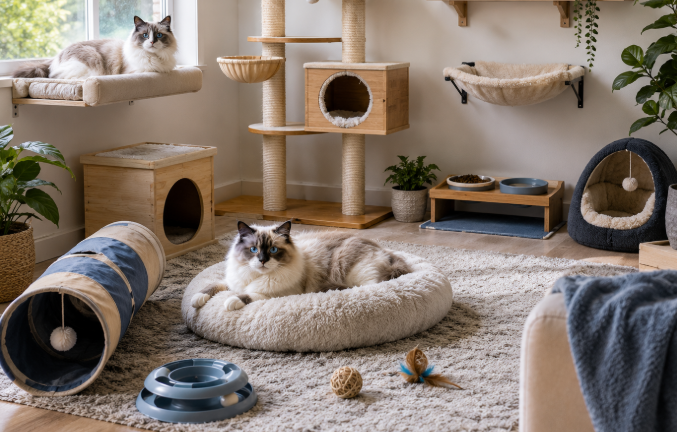
Soft cat beds placed in quiet areas often work best. Many Ragdolls prefer warm and elevated sleeping spots where they feel safe while observing their surroundings. Consequently, window perches, cushioned shelves, and cat trees usually become favorite locations quickly.
Ragdoll Cat Home Setup ideas should include several resting areas throughout the home rather than only one bed. Cats naturally move between sleeping spots depending on temperature, noise, and activity levels during the day.
Quiet environments support better rest too. Beds positioned near loud appliances or heavy household traffic may increase stress and disturb sleep quality. Therefore, calmer areas usually improve comfort significantly.
Some Ragdolls also enjoy enclosed hideaways where they feel protected during stressful situations. Covered beds or soft tunnels provide additional emotional security while supporting natural feline instincts.
Temperature matters as well. Ragdolls generally prefer warm environments because of their plush coats and relaxed personalities. Heated pet beds or sunny resting spots often improve comfort during colder seasons.
Comfortable sleeping spaces support more than relaxation alone. Quality rest helps maintain immune health, emotional balance, and healthier daily energy levels over time.
The Importance of Vertical Space
Vertical space plays a major role in feline emotional health. Cats naturally enjoy climbing and observing their environment from elevated positions. Consequently, homes lacking climbing opportunities may feel restrictive and unstimulating for indoor cats.
Ragdolls may not climb as aggressively as highly athletic breeds, yet they still benefit greatly from vertical enrichment. Cat trees, shelves, and window perches encourage movement while providing emotional comfort.
Ragdoll Cat Home Setup plans should include stable and sturdy climbing structures large enough to support their heavier body size comfortably. Flimsy furniture may feel unsafe and discourage use entirely.
Window perches are especially valuable because they provide entertainment through outdoor observation. Watching birds, insects, and neighborhood activity helps reduce boredom naturally.
Vertical spaces also create personal territory in multi-pet households. Cats often feel safer when they can retreat upward away from noise or social pressure. Consequently, elevated resting spots help reduce stress and conflict between pets.
Exercise benefits matter too. Climbing helps maintain muscle tone, mobility, and healthy body weight. Since indoor Ragdolls may become inactive easily, encouraging gentle movement becomes increasingly important.
Placement affects usefulness significantly. Cat trees positioned near windows or family areas usually attract more interest than isolated corners with little stimulation.
How Safe Spaces Reduce Stress
Even affectionate cats need private areas where they can retreat and relax quietly. Safe spaces help Ragdolls cope with stress, visitors, loud noises, or routine disruptions more comfortably.
Ragdoll Cat Home Setup strategies should always include calm hiding spots away from household activity. Cats feel more emotionally secure when they know they can escape stimulation whenever necessary.
Closets, covered beds, cat tunnels, or quiet room corners often work well as safe retreat areas. Some cats also prefer elevated hideouts where they can observe surroundings while remaining protected.
Children and guests should respect these quiet zones consistently. Forced interaction may increase stress and reduce trust over time. Consequently, allowing cats control over social interaction supports healthier emotional balance.
Safe spaces become especially important during stressful events such as moving homes, introducing pets, or hosting visitors. Cats coping with change often feel calmer when familiar retreat areas remain available.
Soft lighting and comfortable bedding improve relaxation further. Therefore, creating cozy and predictable environments helps emotionally sensitive Ragdolls feel more stable daily.
Stress reduction directly affects physical health too. Relaxed cats generally display healthier appetite, grooming habits, and immune function overall.
Choosing Safe Furniture and Household Layouts
Household design influences feline safety more than many owners realize. Large Ragdolls require stable furniture, open movement paths, and secure climbing surfaces to avoid injuries indoors.
Heavy cat trees and sturdy shelves work best because Ragdolls are larger than many cat breeds. Lightweight structures may tip over or collapse during climbing. Consequently, durability becomes extremely important when selecting furniture.
Ragdoll Cat Home Setup planning should also address dangerous household hazards. Loose cords, toxic plants, unstable decorations, and accessible chemicals create serious risks for curious indoor cats.
Window safety deserves special attention too. Secure screens prevent accidental falls while allowing fresh air and safe observation opportunities. Many owners also install catios for controlled outdoor experiences.
Flooring affects comfort and safety as well. Slippery surfaces may challenge senior Ragdolls or cats with mobility problems. Rugs or soft mats help improve traction and reduce slipping risks.
Furniture arrangement should encourage natural movement rather than creating cramped pathways. Open layouts help larger cats navigate more comfortably while supporting gentle activity throughout the day.
Simple safety adjustments often prevent injuries and reduce stress significantly. Therefore, thoughtful home organization supports healthier long-term indoor living.
The Role of Enrichment and Play
Indoor cats rely entirely on owners for stimulation and entertainment. Without enough enrichment, boredom may lead to overeating, scratching problems, excessive vocalization, or inactivity. Consequently, daily mental stimulation remains essential for emotional health.
Interactive toys encourage natural hunting instincts safely indoors. Feather wands, puzzle feeders, laser toys, and moving objects all help maintain curiosity and activity levels.
Ragdoll Cat Home Setup plans should include enrichment options throughout different areas of the home rather than concentrating everything in one location. Rotating toys regularly also helps maintain interest over time.
Puzzle feeders provide both mental stimulation and slower eating habits simultaneously. Consequently, they support healthier digestion while reducing boredom-related eating behaviors.
Play sessions strengthen owner relationships as well. Ragdolls generally enjoy interactive attention and often respond enthusiastically to gentle games involving movement and chasing.
Window access adds valuable enrichment too. Outdoor sights and sounds provide mental engagement that indoor cats naturally enjoy throughout the day.
Boredom affects physical health alongside emotional well-being. Mentally stimulated cats often stay more active and maintain healthier body condition over time.
Feeding Areas and Hydration Setup
Feeding environments strongly influence feline comfort and behavior. Calm and clean feeding stations help Ragdolls feel secure while supporting healthier eating habits daily.
Ragdoll Cat Home Setup routines should include separate food and water areas away from litter boxes or loud household activity. Cats naturally prefer cleaner and quieter feeding spaces.
Wide bowls often work better for Ragdolls because some cats dislike whisker pressure from narrow dishes. Stainless steel or ceramic bowls also resist bacteria buildup more effectively than plastic.
Hydration remains extremely important for indoor cats. Multiple water stations throughout the home encourage better drinking habits naturally. Consequently, many owners also use cat water fountains because moving water appeals to feline instincts.
Elevated feeding stations sometimes improve comfort for senior cats or larger Ragdolls. Raised bowls may reduce neck strain and encourage better posture during meals.
Multi-cat households benefit from separate feeding stations too. Resource competition sometimes increases stress, especially in emotionally sensitive breeds like Ragdolls.
Clean feeding areas support both physical and emotional health. Fresh water, hygienic bowls, and predictable meal routines all contribute to healthier indoor lifestyles.
Maintaining a Calm and Predictable Routine
Routine plays a major role in feline emotional stability. Ragdolls generally feel safest when daily life remains reasonably predictable. Consequently, stable schedules help reduce anxiety and stress-related behaviors.
Feeding, playtime, grooming, and sleep routines should happen consistently whenever possible. Predictability helps emotionally sensitive cats feel more secure within their environment.
Ragdoll Cat Home Setup plans should support routine naturally through organized feeding stations, accessible litter boxes, and designated play areas. Structured environments help cats understand expectations and feel more relaxed daily.
Loud environments or constant disruption may increase stress levels significantly. Therefore, calm households often support healthier behavior and stronger emotional balance.
Grooming routines also matter because Ragdolls have long and silky coats requiring regular maintenance. Gentle brushing sessions help prevent matting while strengthening trust between owners and cats.
Cats generally adapt better to change when transitions happen gradually. Rearranging furniture, introducing pets, or altering schedules too suddenly may create unnecessary anxiety.
Consistent routines build trust over time while supporting healthier sleep, appetite, and emotional wellness naturally.
Conclusion
Creating a thoughtful indoor environment is one of the best ways to support long-term Ragdoll health and happiness. A proper Ragdoll Cat Home Setup combines safety, comfort, enrichment, and emotional stability to meet the breed’s unique needs effectively.
Ragdolls thrive best in calm homes with soft resting spaces, climbing opportunities, interactive play, and predictable routines. Without these elements, boredom, stress, or inactivity may gradually affect physical and emotional well-being.
Indoor living offers important protection for this gentle and trusting breed. However, safe indoor lifestyles still require stimulation, exercise, and emotional support to remain healthy and balanced.
Comfortable sleeping areas, vertical enrichment, clean feeding stations, and stress-free safe spaces all contribute to healthier feline behavior naturally. Small environmental improvements often create meaningful changes in confidence, activity, and overall wellness.
Owners who understand their Ragdoll’s emotional sensitivity usually build stronger and more rewarding relationships over time. With proper care and thoughtful planning, indoor homes can provide both safety and exceptional quality of life for these affectionate and beautiful cats.
FAQ
1. Why should Ragdolls stay indoors?
Ragdolls are highly trusting cats and face greater risks from traffic, predators, and outdoor accidents.
2. What type of bed do Ragdolls prefer?
Most Ragdolls enjoy soft, warm, and elevated resting spaces placed in calm areas.
3. Do Ragdolls need climbing furniture?
Yes. Vertical spaces encourage exercise, confidence, and healthy mental stimulation indoors.
4. How can I keep my indoor Ragdoll entertained?
Interactive toys, climbing trees, puzzle feeders, and window perches help reduce boredom naturally.
5. Are calm routines important for this breed?
Yes. Predictable routines help emotionally sensitive Ragdolls feel safer and less stressed daily.