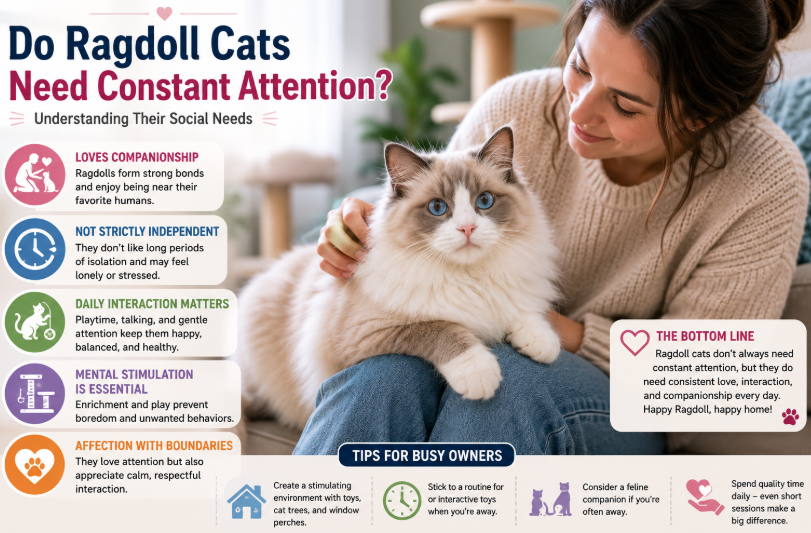
Many first-time owners are surprised by how emotionally connected Ragdolls become with their families. Ragdoll Cats Need Attention far more than many other cat breeds because they are naturally social, affectionate, and emotionally sensitive. While some cats enjoy independence and solitude for long periods, Ragdolls usually prefer staying close to people throughout the day. Consequently, understanding their emotional needs is extremely important before bringing one home.
Ragdolls are often described as “puppy-like” because of their tendency to follow owners from room to room. They commonly greet people at doors, sleep nearby, and seek interaction regularly. Although this affectionate personality makes them wonderful companions, it also means they may struggle emotionally when ignored or left alone too often.
Many owners initially choose Ragdolls because of their calm and relaxed reputation. However, calm behavior does not mean emotional independence. In reality, Ragdolls thrive best in homes where people spend consistent time interacting with them daily.
Attention does not simply mean constant cuddling either. Emotional support includes playtime, conversation, predictable routines, enrichment, and companionship. Therefore, creating balanced daily interaction helps Ragdolls feel secure and emotionally stable indoors.
Understanding how this breed responds to loneliness, boredom, and social connection helps owners build healthier relationships while preventing stress-related behavior problems later.
Why Ragdolls Are More Social Than Other Cats
Ragdolls were specifically bred for gentle temperament and strong human companionship. Unlike highly independent working breeds, Ragdolls often seek emotional closeness naturally. Consequently, they develop deeper attachment behaviors compared to many cats.
Many Ragdolls enjoy being carried, sitting beside owners, or following household activity throughout the day. Some even wait outside bathrooms or doors because they dislike separation from familiar people. These behaviors reflect emotional bonding rather than simple curiosity.
Ragdoll Cats Need Attention because social interaction provides emotional comfort and security. They often feel happiest when participating in daily household routines rather than remaining isolated in separate rooms.
Their trusting personality also affects emotional sensitivity. Ragdolls usually prefer calm and predictable environments where they receive regular affection and gentle interaction. Therefore, emotionally distant households may feel stressful for them over time.
Unlike some breeds that entertain themselves independently for long periods, Ragdolls often become bored without companionship or stimulation. Consequently, owners must provide both emotional engagement and environmental enrichment consistently.
Their affectionate nature also makes them highly responsive to positive interaction. Gentle play, soft communication, and routine affection often strengthen trust quickly.
Understanding these social tendencies helps owners create healthier expectations before adopting a Ragdoll kitten or adult cat.
What Happens When Ragdolls Feel Lonely
Loneliness affects Ragdolls more deeply than many owners realize. Because they depend heavily on emotional connection, long isolation periods sometimes create stress, boredom, or anxiety-related behaviors.
Ragdoll Cats Need Attention consistently because emotional neglect may lead to destructive habits or behavioral changes over time. Some cats begin excessive meowing, clinginess, or pacing when they feel lonely frequently.
Others may stop eating properly or sleep excessively because of reduced emotional stimulation. Consequently, behavioral changes sometimes appear gradually rather than immediately.
Separation anxiety is relatively common in this breed. Cats strongly attached to owners may become distressed when routines suddenly change or when left alone for extended hours daily.
Some lonely Ragdolls also overgroom themselves. Stress-related grooming may eventually lead to hair thinning or skin irritation if emotional needs remain unmet.
Boredom creates additional problems too. Indoor cats without enough interaction often become inactive and emotionally frustrated. Consequently, overeating, scratching furniture, or nighttime restlessness sometimes develop.
Fortunately, emotional stress usually improves significantly once owners increase interaction, playtime, and environmental stimulation. Early attention to loneliness signs helps prevent more serious behavioral problems later.
Recognizing emotional discomfort quickly allows owners to respond before anxiety becomes deeply established.
How Much Daily Attention Do Ragdolls Need?
Every cat has a unique personality, yet most Ragdolls require more interaction than average cats. Daily attention helps maintain emotional balance, mental stimulation, and overall happiness indoors.
Ragdoll Cats Need Attention through regular conversation, petting, interactive play, and nearby companionship. Many do not necessarily demand constant physical contact, yet they strongly prefer knowing their owners are nearby consistently.
Interactive play sessions should happen daily. Even short periods involving feather toys, laser pointers, or climbing games provide important mental and physical stimulation. Consequently, regular play reduces boredom and supports healthier behavior naturally.
Many Ragdolls also enjoy simply relaxing near their owners during quiet activities. Sitting beside people while they work, read, or watch television often provides emotional comfort without requiring nonstop activity.
Predictable routines matter greatly too. Feeding schedules, playtime, and bedtime routines help emotionally sensitive cats feel safer and more secure daily.
Owners working long hours away from home should carefully consider whether they can meet these social needs consistently. While Ragdolls tolerate some independence, extremely long isolation periods may create emotional strain over time.
Balanced interaction matters more than constant attention. Quality companionship combined with environmental enrichment usually supports healthier emotional stability.
The Importance of Interactive Play
Play is not only physical exercise for Ragdolls. It also supports emotional health, mental stimulation, and stronger bonding between cats and owners. Consequently, interactive play becomes one of the most valuable daily activities for this breed.
Ragdoll Cats Need Attention through engaging activities that mimic natural hunting instincts. Feather wands, toy mice, puzzle feeders, and chasing games all help satisfy those instincts safely indoors.
Without enough stimulation, Ragdolls may become bored surprisingly quickly. Consequently, inactivity and frustration sometimes lead to destructive behavior or excessive sleeping.
Interactive play also helps prevent obesity. Because Ragdolls tend to enjoy relaxed indoor lifestyles, regular movement supports healthier body weight and muscle tone over time.
Short play sessions often work best. Cats naturally prefer bursts of activity followed by rest periods rather than long intense exercise. Therefore, multiple short sessions throughout the day usually create better results.
Rotating toys regularly helps maintain curiosity too. New textures, sounds, and movement patterns keep mentally intelligent cats engaged longer.
Play strengthens trust as well. Ragdolls commonly associate interactive games with emotional connection and positive attention from owners.
Consistent enrichment supports calmer behavior while reducing loneliness and stress naturally.
Can Ragdolls Be Left Alone During the Day?
Many owners work outside the home and worry about leaving their Ragdolls alone. While most adult cats tolerate several hours independently, extended isolation every day may create emotional difficulties for highly social breeds.
Ragdoll Cats Need Attention enough that all-day solitude sometimes becomes challenging emotionally. Cats left alone frequently without stimulation may become anxious, bored, or emotionally withdrawn over time.
Environmental enrichment helps significantly when owners are away. Cat trees, window perches, puzzle feeders, and interactive toys all provide mental stimulation during quiet hours.
Leaving televisions or calming music on sometimes helps certain cats feel less isolated too. Consequently, small environmental adjustments may improve comfort noticeably.
Some owners consider adopting another compatible pet for companionship. While another cat does not replace human interaction completely, social companionship may reduce loneliness in certain households.
Routine also matters greatly. Consistent feeding schedules and predictable departures help reduce anxiety because cats understand daily patterns more clearly.
Adult Ragdolls generally handle moderate alone time better than kittens. Young kittens require much more supervision, interaction, and emotional reassurance during development.
Balancing independence with emotional support helps create healthier long-term adjustment for indoor Ragdolls.
Why Environment Matters for Emotional Health
Indoor environments strongly influence emotional well-being in social cat breeds. Boring or stressful homes often increase loneliness and behavioral problems significantly. Therefore, home design should support both comfort and stimulation.
Ragdoll Cats Need Attention partly because indoor lifestyles limit natural stimulation compared to outdoor environments. Consequently, enriching indoor spaces becomes extremely important.
Vertical climbing spaces help support confidence and curiosity naturally. Cat trees, shelves, and window perches encourage movement while providing observation opportunities.
Safe hiding spots also matter. Even affectionate cats occasionally need quiet retreat areas where they feel protected during stressful situations.
Window access provides excellent entertainment for indoor cats too. Watching birds, insects, and outdoor movement helps reduce boredom while stimulating natural instincts.
Comfortable sleeping areas support emotional security as well. Soft beds placed near family activity often help Ragdolls feel included while resting peacefully.
Environmental cleanliness also affects emotional comfort. Dirty litter boxes, loud spaces, or cluttered rooms sometimes increase stress for emotionally sensitive cats.
Well-designed indoor environments reduce boredom while helping owners meet social needs more effectively.
How Owners Can Build Stronger Bonds
Strong relationships develop through trust, consistency, and emotional understanding. Ragdolls generally bond deeply with owners who provide predictable affection and calm interaction daily.
Ragdoll Cats Need Attention that feels emotionally reassuring rather than overwhelming. Gentle petting, calm communication, and patient routines usually build trust most effectively.
Routine grooming sessions also strengthen relationships. Many Ragdolls enjoy brushing because it combines physical comfort with close interaction.
Respecting personal boundaries matters too. Although affectionate, some cats still prefer choosing when and how they interact socially. Consequently, forcing attention sometimes creates stress instead of comfort.
Talking softly to cats throughout the day often helps strengthen emotional familiarity. Ragdolls commonly respond positively to gentle voices and repeated social interaction.
Consistency builds security gradually. Cats feeling emotionally safe generally become more affectionate, playful, and relaxed within their environment.
Trust also grows when owners recognize emotional signals early. Understanding signs of stress, boredom, or overstimulation helps prevent behavioral issues while improving communication.
Strong bonds improve overall quality of life for both owners and cats significantly over time.
Are Ragdolls the Right Choice for Busy Owners?
Ragdolls can adapt to different lifestyles, yet they are not ideal for every household. Extremely busy owners with little time for interaction may struggle to meet the breed’s emotional needs consistently.
Ragdoll Cats Need Attention that goes beyond feeding and basic care alone. Daily companionship, enrichment, and social interaction remain essential for long-term emotional wellness.
People working long hours away from home should consider whether they can provide enough quality interaction before and after work. Some cats adjust reasonably well, while others become stressed by excessive isolation.
Families, remote workers, retirees, or households with regular activity often suit Ragdolls particularly well because companionship happens naturally throughout the day.
Potential owners should also consider long-term commitment carefully. Ragdolls commonly live many years and remain emotionally dependent throughout adulthood.
Busy lifestyles do not automatically prevent successful ownership. However, owners must intentionally create routines and enrichment opportunities that support emotional stability consistently.
Choosing a breed aligned with personal lifestyle ultimately creates healthier outcomes for both cats and owners.
Conclusion
Ragdolls are affectionate, emotionally sensitive cats that genuinely thrive on companionship and daily interaction. Ragdoll Cats Need Attention because strong social bonds help them feel emotionally secure, mentally stimulated, and physically healthy indoors.
Unlike highly independent breeds, Ragdolls often prefer staying close to owners throughout daily routines. While this affectionate personality creates wonderful companionship, it also means emotional neglect or prolonged isolation may cause stress-related problems over time.
Interactive play, enrichment, predictable routines, and calm communication all contribute to healthier emotional well-being. Fortunately, meeting these needs usually feels rewarding because Ragdolls respond with loyalty, affection, and deep trust.
Balanced attention matters more than constant supervision. Creating supportive routines while encouraging healthy independence helps emotionally sensitive cats feel stable and secure.
Owners who understand the breed’s social nature often build exceptionally strong relationships with their Ragdolls. With proper companionship and thoughtful care, these gentle cats become loving and emotionally connected members of the family for many years.
FAQ
1. Are Ragdolls more affectionate than other cats?
Yes. Ragdolls are widely known for their strong emotional attachment and social personalities.
2. Can Ragdolls stay alone all day?
Some adult Ragdolls tolerate moderate alone time, but extended isolation may increase stress or loneliness.
3. Why does my Ragdoll follow me everywhere?
Following behavior usually reflects affection, curiosity, and emotional attachment to owners.
4. How much playtime do Ragdolls need daily?
Most Ragdolls benefit from several short interactive play sessions every day.
5. Do Ragdolls get separation anxiety easily?
Yes. Because of their social nature, some Ragdolls become anxious when left alone too frequently.