Ragdoll cats are known for their striking blue eyes, calm personality, and luxurious coats. Their long fur gives them an elegant appearance, yet it also requires regular attention to stay soft and healthy. Without proper care, mats, tangles, and loose hair can quickly become a problem. A consistent Ragdoll Cat Grooming Routine not only improves your cat’s appearance, but it also supports comfort, skin health, and overall well-being.
Many owners assume long-haired cats can manage their coats alone. However, Ragdolls have dense fur that easily traps debris and loose hair. Because of this, grooming should become part of your weekly schedule rather than an occasional task. Fortunately, grooming sessions can become relaxing bonding moments when approached with patience and the right techniques.
The good news is that Ragdolls are usually calm and affectionate during grooming. Most tolerate brushing much better than other long-haired breeds. Even so, developing a structured Ragdoll Cat Grooming Routine early helps your cat feel comfortable with handling, brushing, nail trims, and bathing when necessary.
Why Long Fur Needs Consistent Care
Ragdoll coats may look fluffy and thick, yet their fur texture is softer and silkier than many other long-haired breeds. Because the coat lacks a dense undercoat, severe matting happens less often than with Persians. Still, tangles can form around the chest, legs, belly, and tail if brushing becomes inconsistent.
Loose hair also creates another challenge. During seasonal shedding, dead fur can collect around the house and increase hairball problems. Regular brushing removes excess fur before your cat swallows it while grooming. As a result, digestive discomfort becomes less common.
A healthy grooming routine also allows owners to monitor their cat’s skin condition. While brushing, you can check for redness, bumps, fleas, dryness, or unusual sensitivity. Early detection often prevents larger health problems later.
Beyond physical health, grooming supports emotional well-being. Cats thrive on predictable habits, and many Ragdolls enjoy gentle attention. Once your Ragdoll Cat Grooming Routine becomes familiar, your cat may even look forward to brushing sessions.
Essential Grooming Tools Every Owner Should Have
Choosing the right tools makes grooming faster and far more comfortable for your cat. Cheap or poorly designed brushes can pull the coat and create stress during grooming sessions.
A stainless steel comb should become your primary tool. Wide teeth help remove tangles without tugging, while narrower teeth smooth the coat afterward. Many experienced owners also prefer slicker brushes because they remove loose fur efficiently.
For sensitive areas like the belly and armpits, a soft pin brush often works best. These areas tend to knot easily, so gentler tools reduce discomfort. Additionally, grooming gloves can help collect surface fur during light maintenance sessions.
Nail clippers are another important part of your Ragdoll Cat Grooming Routine. Indoor cats still need regular nail care to prevent overgrowth and snagging. Keeping styptic powder nearby is also wise in case accidental bleeding occurs.
Pet-safe wipes can freshen the coat between baths, especially around the paws and rear area. Meanwhile, cat-friendly shampoos designed for long-haired breeds help maintain softness without irritating the skin.
Investing in quality tools from the beginning saves time and reduces frustration. More importantly, proper tools help your Ragdoll associate grooming with comfort instead of stress.
How Often Should You Groom a Ragdoll Cat?
Consistency matters more than lengthy grooming sessions. Most Ragdolls benefit from brushing at least three times per week. However, daily brushing may become necessary during heavy shedding periods.
A structured Ragdoll Cat Grooming Routine usually includes several smaller tasks throughout the week instead of one overwhelming session. Brushing should happen most often, while nail trimming and ear cleaning require less frequent attention.
Bathing is typically needed every four to eight weeks, depending on lifestyle and coat condition. Indoor cats may stay cleaner longer, yet oily buildup can still develop over time.
Nails generally need trimming every two to four weeks. Ear cleaning should happen monthly unless your veterinarian recommends otherwise. Dental care also deserves attention because oral health directly affects overall wellness.
Creating a schedule helps you stay organized. More importantly, predictable routines reduce anxiety for your cat. Many owners notice their cats remain calmer when grooming happens at familiar times each week.
Step-By-Step Brushing Technique
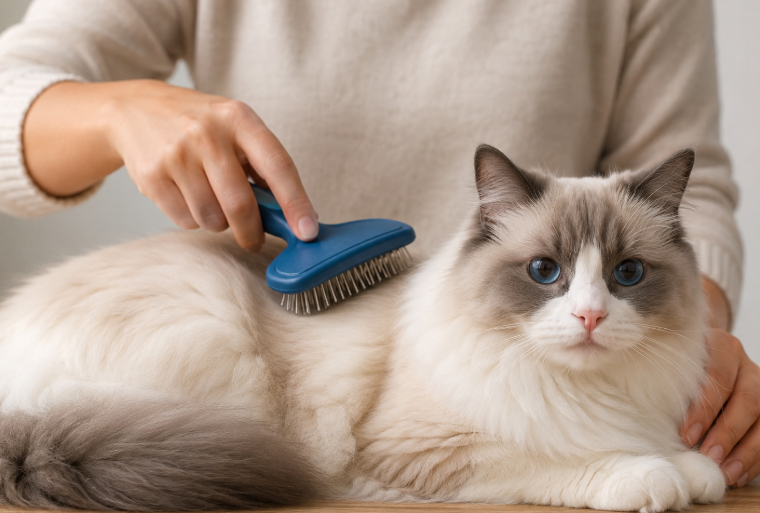
Brushing is the foundation of any effective Ragdoll Cat Grooming Routine. Proper technique matters because rough handling can create fear and resistance.
Begin by placing your cat in a quiet environment without distractions. Some cats prefer sitting on a lap, while others feel more secure on a table covered with a towel. Start with gentle strokes around the shoulders and back where sensitivity is lower.
Work gradually toward the chest, belly, and legs. Always brush in the direction of hair growth to avoid pulling the coat. If you encounter a tangle, never yank aggressively. Instead, hold the fur near the skin and carefully loosen the knot with a comb.
Short sessions often work better than long grooming periods. Five to ten minutes can be enough for daily maintenance. Additionally, offering treats afterward creates positive associations.
Pay close attention to friction areas. Mats commonly form beneath the front legs and around the hindquarters because movement causes the fur to rub together. Checking these areas consistently prevents painful knots from developing.
The tail should also receive careful attention. Ragdoll tails are thick and feathery, yet excessive brushing can thin the fur over time. Gentle combing is usually sufficient.
Over time, regular brushing becomes easier and faster. Once your cat understands the process, your Ragdoll Cat Grooming Routine will feel more natural for both of you.
Bathing Tips for Long-Haired Ragdolls
Many cat owners avoid bathing because they assume all cats hate water. Surprisingly, some Ragdolls tolerate baths quite well when introduced properly.
Before bathing, thoroughly brush the coat to remove loose fur and tangles. Wet mats become tighter and harder to remove afterward. Use lukewarm water and a mild cat shampoo specifically formulated for sensitive skin.
Avoid getting water directly into the ears or eyes. Instead, gently clean the face with a damp cloth. Massage shampoo carefully through the coat without scrubbing too harshly.
Rinsing thoroughly is extremely important. Leftover shampoo residue can irritate the skin and leave the fur dull. After rinsing, wrap your cat in a soft towel and absorb as much moisture as possible.
Some owners use low-heat pet dryers, while others allow the coat to air dry naturally in a warm room. If using a dryer, keep noise levels low and avoid excessive heat.
Bathing should support your Ragdoll Cat Grooming Routine rather than replace regular brushing. Even freshly washed coats can develop tangles if brushing becomes inconsistent.
Managing Shedding and Hairballs
Although Ragdolls shed less than some long-haired breeds, seasonal shedding still occurs. Spring and fall usually bring noticeable increases in loose fur.
Frequent brushing remains the most effective solution. Removing dead fur before your cat swallows it greatly reduces hairball formation. Additionally, hydration supports healthy digestion and smoother hair passage.
Diet also affects coat quality. Foods rich in omega-3 fatty acids help maintain skin hydration and reduce excessive shedding. Many veterinarians recommend high-quality protein sources because healthy fur depends heavily on proper nutrition.
Hairball-control treats may help some cats, yet overusing them is not always necessary. Instead, focus on preventive care through grooming and hydration.
Vacuuming and lint rolling may still become part of life with a Ragdoll. However, a consistent Ragdoll Cat Grooming Routine significantly reduces the amount of loose fur around your home.
Nail, Ear, and Dental Care
Coat maintenance often receives the most attention, yet full grooming includes much more than brushing. Nails, ears, and teeth all require regular monitoring.
Trim only the sharp tip of the nail and avoid the pink quick inside. If your cat becomes nervous, trim one or two nails at a time instead of forcing a full session.
Ear cleaning should remain gentle. Use a veterinarian-approved cleaner and soft cotton pad rather than cotton swabs. Healthy ears should appear light pink and free from strong odors.
Dental hygiene is equally important. Dental disease can cause pain, appetite loss, and infections that affect overall health. Brushing your cat’s teeth several times weekly supports healthier gums and fresher breath.
These smaller tasks may seem minor, yet they complete a balanced Ragdoll Cat Grooming Routine that supports long-term wellness.
Common Grooming Mistakes to Avoid
Even caring owners sometimes make grooming mistakes without realizing it. One of the most common problems is waiting too long between brushing sessions. Small tangles can quickly become painful mats when ignored.
Using human shampoo is another frequent mistake. Human products disrupt the natural balance of feline skin and may trigger irritation.
Some owners also rush grooming sessions. Fast movements and aggressive brushing create fear, especially for younger cats. Instead, calm handling encourages cooperation.
Skipping positive reinforcement can also cause problems. Treats, praise, and gentle petting help your cat associate grooming with safety.
Another issue involves shaving mats too aggressively at home. Cat skin tears easily, especially around tight knots. Severe matting often requires professional grooming assistance.
Consistency always works better than occasional deep grooming. A manageable Ragdoll Cat Grooming Routine prevents stress while keeping the coat healthy year-round.
Creating a Relaxing Grooming Environment
Environment plays a major role in grooming success. Loud noises, sudden movement, and unfamiliar spaces can make cats anxious.
Choose a calm area with minimal distractions. Soft lighting and quiet surroundings help your cat remain relaxed. Some owners play gentle background music during grooming sessions because predictable sounds create a calmer atmosphere.
Timing also matters. Grooming after meals or playtime often works well because cats feel more relaxed and sleepy. Avoid grooming immediately after stressful events like vet visits.
Body language provides important clues during grooming. Tail flicking, flattened ears, or sudden tension may indicate your cat needs a short break. Respecting those signals builds trust over time.
Many owners discover that grooming becomes easier when approached slowly and patiently. Instead of treating it like a chore, view it as quality bonding time.
A successful Ragdoll Cat Grooming Routine should feel calm, steady, and positive. When your cat feels secure, grooming sessions become smoother and far more enjoyable.
Conclusion
Maintaining a beautiful long-haired cat requires commitment, yet the rewards are worth the effort. Ragdolls thrive when their coats stay clean, soft, and free from painful tangles. More importantly, regular grooming supports comfort, health, and emotional connection.
The best grooming habits develop through consistency rather than perfection. Short, gentle sessions several times each week create better results than occasional marathon grooming days. Over time, your cat will learn to trust the process and may even seek out the attention.
Every cat has slightly different needs, so flexibility matters. Some Ragdolls require more brushing during seasonal shedding, while others need extra attention around sensitive areas. Observing your cat closely helps you adjust care as needed.
With patience, quality tools, and a structured Ragdoll Cat Grooming Routine, you can keep your cat’s luxurious coat healthy and manageable throughout every season. More importantly, you will strengthen the bond that makes owning a Ragdoll such a rewarding experience.
FAQ
How often should a long-haired Ragdoll be brushed?
Most long-haired Ragdolls should be brushed at least three times weekly. Daily brushing may help during seasonal shedding periods.
What type of brush works best for silky cat fur?
A stainless steel comb and a soft slicker brush usually work best for removing tangles and loose hair gently.
Can long-haired cats develop painful mats quickly?
Yes, mats can form surprisingly fast around the belly, chest, and legs if grooming sessions become inconsistent.
Is bathing necessary for indoor Ragdolls?
Indoor cats still benefit from occasional baths because oils and dirt can build up on the coat over time.
How can owners reduce hairballs naturally?
Regular brushing, healthy hydration, and quality nutrition help reduce swallowed fur and minimize hairball problems naturally.