Learning how to Reduce Ragdoll Cat Shedding naturally can make life much easier for both cats and owners. Ragdolls are famous for their beautiful silky coats, yet even these elegant cats leave loose fur around furniture, clothing, and floors. While shedding is completely normal, excessive hair loss often becomes frustrating without proper care and routine maintenance.
Many owners assume heavy shedding cannot be controlled. However, simple lifestyle adjustments can greatly improve coat condition while reducing loose hair around the home. Diet, grooming habits, hydration, stress levels, and environmental conditions all affect how much fur a Ragdoll sheds throughout the year.
Fortunately, Ragdolls generally have less undercoat compared to many long-haired breeds. That means their shedding often responds well to consistent natural care. Instead of relying on harsh treatments or constant cleaning, owners can focus on healthier routines that support skin and coat wellness from the inside out.
Understanding why shedding happens is the first step toward managing it effectively. Once you recognize the causes, controlling loose fur becomes much more realistic and manageable.
Why Ragdoll Cats Shed So Much
All cats shed naturally because hair growth follows continuous cycles. Older fur eventually falls out so new healthy hair can grow properly. Seasonal changes often increase this process, especially during spring and fall.
Ragdolls may appear fluffier than they actually are because their coats are soft, silky, and long. Even moderate shedding can therefore seem dramatic around the house. Still, excessive hair loss sometimes signals deeper issues such as poor nutrition, dehydration, stress, or inconsistent grooming.
Indoor living also affects coat cycles. Artificial lighting and controlled temperatures can confuse natural seasonal shedding patterns. As a result, some indoor cats shed lightly throughout the entire year instead of only seasonally.
When owners try to Reduce Ragdoll Cat Shedding, they often focus only on brushing. Although grooming matters greatly, coat health depends on several connected factors working together consistently.
Healthy skin creates healthier fur. Likewise, balanced nutrition and emotional comfort strongly influence how much hair your cat loses daily.
Owners should also understand that some shedding always remains normal. The goal is not complete elimination but healthier coat management and reduced excess fur.
Daily Grooming Makes the Biggest Difference
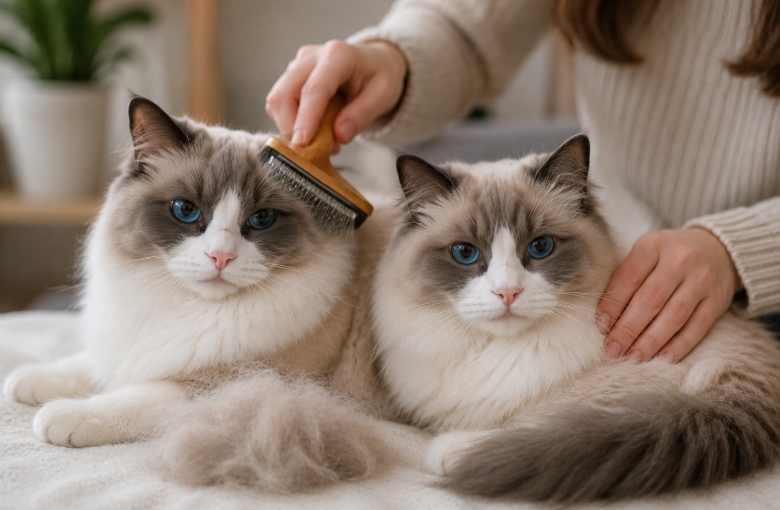
Regular brushing remains the most effective natural solution for controlling loose fur. Removing dead hair before it falls around the home dramatically reduces visible shedding.
Ragdolls usually enjoy grooming sessions because they naturally crave attention and physical closeness. This personality trait makes brushing easier compared to more defensive breeds.
A stainless steel comb works especially well because it reaches deeper layers gently without pulling excessively. Soft slicker brushes also help remove surface fur efficiently.
When owners Reduce Ragdoll Cat Shedding through grooming, consistency matters far more than long sessions. Short brushing periods several times weekly often work better than occasional deep grooming.
Pay close attention to friction areas such as the chest, belly, and hind legs. Loose fur commonly collects there and may eventually form mats if ignored.
Gentle brushing also stimulates circulation and distributes natural skin oils evenly across the coat. As a result, the fur stays softer, shinier, and healthier overall.
Most Ragdolls benefit from brushing at least three to four times weekly. During seasonal shedding periods, daily grooming may produce even better results.
Nutrition Plays a Major Role in Coat Health
Diet directly affects fur quality and shedding levels. Cats lacking essential nutrients often develop dry skin, brittle coats, and increased hair loss.
High-quality protein remains especially important because cat fur contains large amounts of protein naturally. Poor-quality foods may weaken hair structure over time and increase shedding noticeably.
Omega-3 and omega-6 fatty acids also support skin hydration and coat strength. These healthy fats help reduce dryness while improving shine and softness.
When owners attempt to Reduce Ragdoll Cat Shedding naturally, improving nutrition often creates major improvements within several weeks. Healthy coats grow stronger from the inside rather than relying only on external grooming.
Wet food can provide additional benefits because hydration strongly affects skin condition. Cats eating moisture-rich diets frequently experience softer coats and healthier skin balance.
Avoid sudden food changes whenever possible. Gradual dietary transitions help prevent digestive upset while allowing your cat to adapt comfortably.
Consulting a veterinarian may also help identify hidden nutritional deficiencies contributing to excessive shedding.
Hydration Helps Prevent Dry Skin
Many cat owners underestimate the connection between hydration and coat quality. Dehydrated skin becomes flaky and irritated more easily, which can increase shedding over time.
Cats naturally drink less water than many animals because of their desert ancestry. However, indoor lifestyles and dry food diets may still leave them mildly dehydrated.
Fresh water should remain available in multiple locations throughout the home. Some cats also drink more frequently from water fountains because moving water feels fresher instinctively.
When owners Reduce Ragdoll Cat Shedding through hydration improvements, they often notice softer skin and healthier-looking fur within a short time.
Wet food provides additional moisture support naturally. Some owners also mix small amounts of water into meals to increase hydration further.
Environmental humidity matters as well. Extremely dry indoor air, especially during winter, may worsen flaky skin and excessive fur loss.
Healthy hydration supports overall wellness while helping maintain balanced skin conditions year-round.
Bathing Can Help When Done Correctly
Many owners avoid bathing cats completely, yet occasional baths can reduce shedding significantly when performed properly.
Bathing helps remove loose hair trapped within the coat before it spreads throughout the home. It also removes excess oils, dust, and debris that may irritate the skin.
However, overbathing creates problems too. Frequent washing strips natural oils and may worsen dryness. Most Ragdolls only need bathing every four to eight weeks depending on coat condition and lifestyle.
When owners Reduce Ragdoll Cat Shedding with baths, using cat-specific shampoos remains extremely important. Human products may irritate feline skin and increase hair loss instead of helping.
Always brush thoroughly before bathing because wet tangles become much harder to remove afterward. Gentle drying also matters because rough towel rubbing may damage delicate fur.
Some Ragdolls tolerate baths surprisingly well, especially when introduced calmly from a young age. Quiet environments and lukewarm water usually create the best experience.
Bathing should support regular grooming routines rather than replace them completely.
Stress and Anxiety Can Increase Shedding
Emotional stress affects physical health more than many owners realize. Cats experiencing anxiety often shed more heavily during stressful situations.
Changes in routine, loud environments, unfamiliar guests, or conflicts with other pets may all trigger increased fur loss temporarily. Some cats even release noticeable amounts of hair during stressful handling or vet visits.
When trying to Reduce Ragdoll Cat Shedding naturally, emotional comfort deserves attention alongside grooming and nutrition. Calm environments often produce healthier coats over time.
Ragdolls are emotionally sensitive cats that strongly prefer stable routines. Predictable feeding schedules, regular interaction, and safe resting spaces help reduce stress significantly.
Interactive play sessions can also lower anxiety while improving overall mood and physical health. Exercise stimulates circulation and supports healthier skin conditions naturally.
Owners should monitor behavioral changes carefully if sudden excessive shedding appears. Emotional stress sometimes reveals itself through grooming changes, hiding, or reduced appetite as well.
A calm cat usually develops healthier long-term coat conditions than a constantly anxious one.
Seasonal Shedding Requires Extra Attention
Even healthy cats shed more heavily during seasonal transitions. Longer daylight hours during spring often trigger the release of thicker winter fur.
During these periods, increased grooming becomes especially important. Loose hair accumulates quickly and may spread heavily around the home without consistent brushing.
When owners Reduce Ragdoll Cat Shedding during seasonal changes, daily grooming often works best temporarily. Frequent brushing prevents dead fur from collecting deeply within the coat.
Vacuuming and lint rolling may still increase seasonally despite good grooming routines. However, proactive care dramatically reduces overall mess compared to neglecting coat maintenance entirely.
Nutrition and hydration become even more important during heavier shedding cycles. Supporting healthy skin helps the new coat grow properly while reducing unnecessary hair breakage.
Seasonal shedding remains completely normal. The goal involves managing loose fur efficiently rather than preventing all hair loss entirely.
Owners who maintain consistent year-round routines often experience smoother seasonal transitions with less dramatic shedding overall.
Environmental Cleanliness Supports Healthier Fur
Clean living spaces contribute more to coat health than many owners expect. Dust, allergens, and dirty bedding may irritate sensitive skin and worsen shedding problems.
Washing cat bedding regularly removes excess fur while reducing skin irritants. Vacuuming carpets and furniture also improves overall air quality within the home.
When owners Reduce Ragdoll Cat Shedding naturally, environmental cleanliness supports healthier skin conditions indirectly. Cleaner spaces often reduce irritation and help cats groom more comfortably.
Air purifiers may also benefit homes with multiple pets or dry indoor environments. Better air quality can reduce dander buildup while improving comfort for both owners and cats.
Keeping litter boxes clean matters too. Cats experiencing stress from dirty litter areas may groom excessively, which sometimes increases visible shedding.
Simple household maintenance routines often create noticeable improvements over time.
Avoid Common Grooming Mistakes
Some owners accidentally worsen shedding through improper care habits. Aggressive brushing may irritate the skin and break healthy fur unnecessarily.
Using the wrong tools creates additional problems. Sharp or poorly designed brushes may pull delicate hair instead of removing loose fur gently.
When trying to Reduce Ragdoll Cat Shedding, patience always works better than forceful grooming sessions. Calm handling creates positive experiences and healthier coat maintenance.
Skipping grooming for long periods also increases problems. Loose fur builds up quickly and may eventually form mats that trap dead hair beneath the surface.
Overusing supplements without veterinary guidance can also create nutritional imbalance. Balanced diets usually provide enough support without excessive additives.
Consistency remains far more important than complicated treatments or expensive products.
Conclusion
Managing shedding naturally requires balance, patience, and consistency rather than quick fixes. Ragdolls will always shed to some degree because hair growth cycles remain completely natural. However, healthy routines can dramatically reduce loose fur while improving overall coat condition.
Owners who focus on grooming, nutrition, hydration, emotional comfort, and environmental cleanliness usually see the best long-term results. Small daily habits often create bigger improvements than occasional intensive treatments.
When you consistently Reduce Ragdoll Cat Shedding through gentle care and healthy routines, your cat’s coat becomes softer, shinier, and easier to manage. More importantly, these habits support overall wellness and comfort throughout every season.
Healthy cats naturally develop healthier fur. With proper attention and consistent care, shedding becomes far less overwhelming while your Ragdoll continues looking beautiful year-round.
FAQ
- How often should Ragdolls be brushed?
Most Ragdolls benefit from brushing three to four times weekly, while seasonal shedding may require daily grooming.
- Does wet food help improve coat quality?
Yes, moisture-rich foods support hydration and healthier skin, which may reduce excessive shedding naturally.
- Can stress cause increased fur loss in cats?
Yes, emotional stress and sudden routine changes can temporarily increase shedding in sensitive cats.
- Are Ragdolls heavy shedders compared to other breeds?
Ragdolls shed moderately, yet their long silky fur often makes loose hair appear more noticeable.
- What brush works best for long-haired cats?
Stainless steel combs and soft slicker brushes usually remove loose fur gently without damaging the coat.