Many people love the gentle and affectionate personality of Ragdolls, yet they often wonder whether this breed fits modern routines and demanding schedules. Understanding Ragdoll Cats Busy Lifestyles concerns is extremely important before adopting one of these emotionally sensitive cats. While Ragdolls are calm and adaptable in many situations, they also crave companionship and regular interaction much more than many owners expect.
Unlike highly independent cat breeds, Ragdolls usually form deep emotional bonds with people. They often follow owners from room to room, wait near doors, and seek affection throughout the day. Consequently, busy households with long work hours may create emotional challenges if the cat spends excessive time alone.
However, busy lifestyles do not automatically mean Ragdolls cannot thrive. Success depends on balancing companionship, environmental enrichment, predictable routines, and quality interaction during available time together. Therefore, thoughtful planning becomes essential for owners with demanding schedules.
Ragdolls generally adapt well when their emotional and physical needs remain supported consistently. Interactive play, safe indoor environments, and structured routines all contribute to healthier adjustment even in active households.
Understanding how this breed responds to loneliness, stimulation, and routine helps owners decide whether their lifestyle truly matches the needs of a Ragdoll. Proper preparation often makes a significant difference in long-term happiness for both cats and owners.
Why Ragdolls Are More Emotionally Dependent
Ragdolls are widely known for their affectionate and people-oriented nature. Unlike some cats that prefer independence, Ragdolls often seek regular interaction and companionship throughout the day. Consequently, emotional connection becomes a major part of their overall well-being.
Many Ragdolls enjoy sitting beside owners, sleeping nearby, or following household activity constantly. Some even greet family members at doors and remain close during daily routines. These behaviors reflect strong social attachment rather than simple curiosity.
Ragdoll Cats Busy Lifestyles discussions often focus on emotional dependency because these cats generally dislike isolation more than many other breeds. Long periods without interaction sometimes create boredom, anxiety, or stress-related behaviors.
Their calm personality also contributes to emotional sensitivity. Ragdolls usually thrive best in peaceful environments where routines remain stable and predictable. Therefore, chaotic schedules or inconsistent interaction may increase stress over time.
This does not mean Ragdolls require nonstop attention every minute. However, they often feel happiest when companionship and emotional reassurance remain consistent daily.
Owners who understand this social nature usually build stronger relationships while preventing common emotional problems later. Consequently, emotional care becomes just as important as feeding or grooming routines.
Can Ragdolls Handle Long Work Hours?
Many people work full-time jobs and worry whether a Ragdoll can tolerate being alone during the day. Adult Ragdolls can handle moderate independence, yet extended isolation every day may eventually affect emotional well-being negatively.
Ragdoll Cats Busy Lifestyles concerns become especially important when owners regularly spend ten or more hours away from home. Some cats adapt reasonably well, while others develop loneliness-related behaviors over time.
Age matters significantly too. Young kittens generally struggle much more with long isolation periods because they require supervision, socialization, and emotional reassurance during development.
Adult cats usually manage alone time better if they have enough environmental stimulation and predictable routines. Consequently, enrichment becomes extremely important for working households.
Interactive toys, climbing furniture, puzzle feeders, and window perches all help reduce boredom during quiet hours. Leaving calming background noise, such as soft music or television, may also comfort some cats.
Quality interaction after returning home matters greatly too. Owners spending meaningful time playing, grooming, or relaxing with their Ragdoll often maintain healthier emotional balance despite busy schedules.
Consistency usually helps more than occasional intense attention. Stable routines provide emotional security that many Ragdolls depend on heavily.
Signs Your Ragdoll Feels Lonely
Cats often communicate emotional discomfort through behavior changes rather than obvious distress. Recognizing these signals early helps owners respond before loneliness becomes a serious emotional issue.
Ragdoll Cats Busy Lifestyles may lead to loneliness when interaction, stimulation, or companionship remain too limited consistently. Common signs include excessive meowing, clinginess, pacing, or destructive scratching.
Some lonely cats sleep excessively because of boredom and low mental stimulation. Others overeat or lose appetite completely depending on how stress affects them emotionally.
Overgrooming sometimes develops too. Stress-related grooming may eventually create hair thinning or irritated skin if emotional needs remain unmet for extended periods.
Certain cats also become unusually withdrawn. Instead of seeking interaction, emotionally stressed cats may hide more frequently or avoid normal social behavior.
Litter box problems occasionally appear as well. Anxiety and emotional instability sometimes contribute to inappropriate elimination, especially when combined with environmental stress.
Fortunately, many loneliness-related behaviors improve significantly once owners increase stimulation and emotional interaction. Early attention usually prevents more serious long-term problems from developing.
Observing daily behavior carefully helps owners understand whether their Ragdoll feels emotionally balanced or stressed within the household routine.
How Environmental Enrichment Helps Busy Owners
Environmental enrichment plays a major role in supporting indoor cats emotionally and physically. Since busy owners cannot provide interaction constantly, enriching home environments become essential for reducing boredom and stress.
Ragdoll Cats Busy Lifestyles work much better when indoor spaces encourage exploration, movement, and mental stimulation naturally. Interactive toys, climbing areas, scratching posts, and puzzle feeders all help maintain engagement throughout the day.
Window perches are especially valuable because they provide entertainment through outdoor observation. Watching birds, insects, and neighborhood movement stimulates natural feline instincts safely indoors.
Vertical spaces also support confidence and activity. Cat trees, shelves, and elevated resting areas encourage climbing while creating secure observation points.
Rotating toys regularly helps maintain curiosity too. Cats often lose interest in toys left unchanged for long periods. Consequently, simple toy rotation keeps environments feeling fresh and stimulating.
Puzzle feeders provide additional mental exercise during mealtime. Instead of eating immediately, cats work gently for food portions while staying mentally active.
Comfortable resting spaces matter as well. Soft beds placed near windows or quiet areas help Ragdolls relax comfortably while owners are away.
Thoughtful enrichment reduces emotional frustration significantly while helping indoor cats remain healthier and more emotionally balanced overall.
Should Busy Owners Get Two Cats?
Some owners consider adopting a second cat to provide companionship during work hours. In many situations, this approach helps reduce loneliness and boredom successfully. However, compatibility and proper introductions remain extremely important.
Ragdoll Cats Busy Lifestyles may improve with feline companionship because social interaction continues even when humans are unavailable. Certain Ragdolls become noticeably calmer and more playful with another friendly cat nearby.
Age and personality matching matter greatly though. Gentle and sociable companions usually work best for emotionally sensitive breeds like Ragdolls.
Introducing cats too quickly sometimes creates stress or territorial conflict instead of comfort. Therefore, gradual introductions help build healthier long-term relationships between pets.
Another cat does not replace human interaction completely. Ragdolls still require affection, playtime, and bonding with owners regularly. However, companionship may reduce emotional isolation during quiet hours.
Owners should also consider additional responsibilities before adopting multiple pets. Veterinary care, litter maintenance, grooming, and feeding costs all increase with another animal.
When managed properly, multi-cat households often provide emotional benefits that support healthier adjustment for busy working families.
The Importance of Predictable Routines
Routine strongly influences feline emotional security. Ragdolls generally feel safer and calmer when daily life follows familiar patterns. Consequently, stable schedules become especially important in busy households.
Ragdoll Cats Busy Lifestyles function better when feeding, playtime, and interaction happen at consistent times daily. Predictability helps emotionally sensitive cats understand what to expect.
Sudden schedule changes sometimes create stress because Ragdolls notice environmental shifts quickly. Therefore, maintaining regular routines whenever possible supports emotional balance naturally.
Morning and evening interaction often become the most valuable bonding periods for working owners. Short but meaningful play sessions before leaving and after returning home help maintain emotional connection effectively.
Consistent feeding schedules also support healthier digestion and emotional comfort. Cats often feel calmer when meals happen reliably each day.
Even simple routines involving grooming, quiet cuddling, or interactive games strengthen trust over time. Consequently, emotionally stable cats usually display fewer stress-related behaviors indoors.
Routine does not require perfection. However, reasonable consistency often makes a major difference in how well Ragdolls adapt to active households.
Why Quality Attention Matters More Than Quantity
Many owners assume Ragdolls require nonstop interaction to remain happy. Fortunately, emotional well-being depends more on meaningful engagement than constant physical presence alone.
Ragdoll Cats Busy Lifestyles can work successfully when owners provide focused attention during available time together. Interactive play, gentle affection, and emotional connection often matter more than simply being nearby without engagement.
Short but consistent play sessions support both physical and mental health effectively. Even fifteen to twenty minutes of interactive activity daily may improve emotional stability significantly.
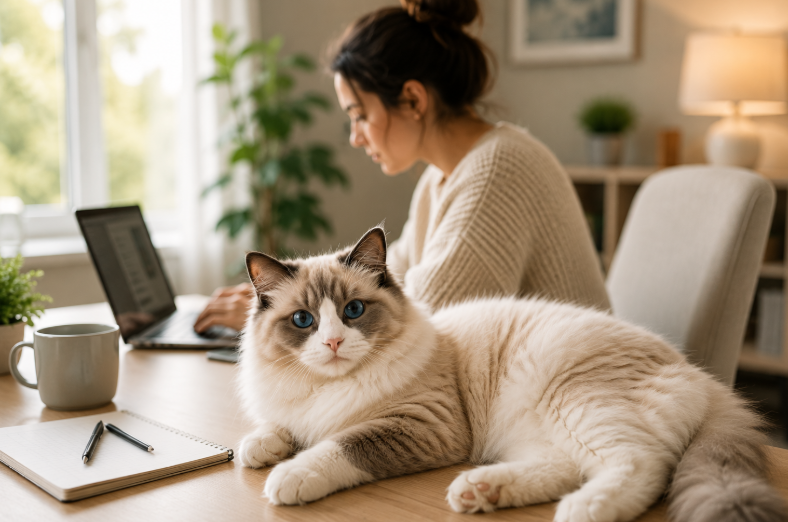
Calm companionship also helps greatly. Many Ragdolls simply enjoy sitting beside owners while they work, read, or relax quietly.
Positive communication strengthens bonds too. Talking gently, grooming regularly, and respecting boundaries all contribute to emotional trust and security.
Stress usually develops more from emotional neglect than moderate alone time itself. Consequently, owners who remain emotionally engaged often maintain healthier relationships despite demanding schedules.
Understanding this balance helps busy owners create more realistic and sustainable care routines without unnecessary guilt.
Are Ragdolls Suitable for Modern Families?
Modern households vary greatly in schedule, noise levels, and daily activity. Fortunately, many Ragdolls adapt well when emotional support and environmental needs remain prioritized consistently.
Ragdoll Cats Busy Lifestyles concerns should encourage thoughtful preparation rather than automatic rejection of the breed. Families with structured routines, calm environments, and regular interaction often provide excellent homes for Ragdolls even with busy schedules.
Remote workers, retirees, and families with staggered schedules may find Ragdolls especially compatible because companionship happens naturally throughout the day.
However, extremely unpredictable lifestyles involving frequent travel or long daily absences may create emotional difficulties for highly social cats. Therefore, honest self-evaluation before adoption remains extremely important.
Children and other pets often integrate well with Ragdolls too, provided introductions happen calmly and respectfully. Their gentle nature usually supports positive family relationships when environments remain stable.
The breed’s emotional sensitivity simply requires awareness and commitment. Owners willing to provide enrichment, affection, and structured routines often build exceptionally rewarding relationships with their Ragdolls over time.
Conclusion
Ragdolls are affectionate and emotionally connected cats that thrive best with regular companionship, predictable routines, and meaningful interaction. Although Ragdoll Cats Busy Lifestyles concerns are valid, many working owners successfully care for these gentle cats by creating supportive and enriching environments.
Long work hours alone do not automatically prevent successful ownership. However, emotionally sensitive breeds like Ragdolls require thoughtful planning to avoid loneliness, boredom, and stress-related behaviors.
Interactive play, environmental enrichment, stable schedules, and quality attention all contribute to healthier emotional balance indoors. Multi-cat companionship may also help certain households reduce isolation during quiet hours.
The key lies in understanding that Ragdolls are deeply social cats rather than emotionally independent pets. Owners who prioritize companionship and emotional wellness usually develop exceptionally strong and rewarding relationships with them.
With patience, consistency, and realistic expectations, Ragdolls can adapt successfully to many modern lifestyles while remaining loving and emotionally secure companions for years to come.
FAQ
1. Can Ragdolls live happily with working owners?
Yes. Many adapt well when owners provide enrichment, stable routines, and regular interaction daily.
2. Do Ragdolls become lonely easily?
Yes. Because of their social personalities, some Ragdolls struggle with long periods of isolation.
3. Are two cats better for busy households?
In many cases, compatible feline companionship helps reduce boredom and emotional stress.
4. How can I entertain my Ragdoll while working?
Puzzle feeders, cat trees, window perches, and rotating toys help maintain stimulation indoors.
5. Do Ragdolls need constant physical attention?
No. They mainly need emotional connection, companionship, and consistent quality interaction regularly.