Ragdoll cats are well known for their affectionate personalities and strong attachment to their families. They enjoy following their favorite people from room to room, greeting them at the door, and relaxing nearby throughout the day. Because of these traits, many prospective owners wonder, Can Ragdoll Cats Be Left Alone while they spend long hours at work? The answer is yes in many situations, but several important factors determine whether your cat will remain healthy, happy, and emotionally secure during your absence.
Unlike some independent cat breeds that prefer spending most of the day alone, Ragdolls thrive on companionship. They often seek interaction with people and tend to form deep emotional bonds with their owners. However, this does not mean they cannot adapt to a working household. With thoughtful planning, a stimulating environment, and a consistent routine, many Ragdolls adjust very well to spending part of the day by themselves.
Understanding the breed’s personality helps you make realistic expectations. While every cat is unique, Ragdolls generally appreciate predictable schedules and stable environments. Therefore, preparing your home properly can make a significant difference in how well your cat handles alone time.
Understanding the Ragdoll Personality
Before deciding whether a Ragdoll fits your lifestyle, it helps to understand how this breed differs from others.
Ragdolls are often described as “puppy-like” because they enjoy being close to people. Many greet family members when they arrive home, follow them into different rooms, and even wait outside bathroom doors. Their desire for companionship is one of the reasons they have become such popular family pets.
Despite their affectionate behavior, they are not constantly demanding attention. Most Ragdolls enjoy quiet companionship just as much as active play. They often choose to nap near their owners instead of expecting nonstop interaction.
This balanced personality allows many of them to adjust well when family members leave for work each day, provided their emotional and physical needs continue to be met.
How Long Can They Stay Alone?
One of the first questions owners ask after wondering Can Ragdoll Cats Be Left Alone concerns the number of hours involved.
Healthy adult Ragdolls can usually stay alone during a standard workday of approximately eight hours without significant problems. Many adapt comfortably to this routine once they understand that their owners always return.
However, regularly leaving a cat alone for twelve hours or longer may increase boredom, loneliness, and stress. While occasional longer absences happen, they should not become the normal routine without additional support.
Kittens require much more supervision than adults. Young Ragdolls need frequent meals, social interaction, litter box monitoring, and opportunities for safe exploration. Consequently, very young kittens should not remain alone for an entire workday.
Senior cats may also need additional attention, especially if they have medical conditions requiring medication or close observation.
Signs Your Cat Is Handling Alone Time Well
Every Ragdoll responds differently to being alone. Fortunately, their behavior usually provides clear clues about how they feel.
A well-adjusted cat continues eating normally, uses the litter box consistently, maintains healthy grooming habits, and greets family members calmly when they return home.
Many Ragdolls spend much of the day sleeping. Cats naturally sleep between twelve and sixteen hours daily, so owners are often surprised to discover their pets spend most working hours peacefully resting.
After waking, they may watch birds through windows, explore the house, stretch, groom themselves, or play with favorite toys before returning to another nap.
These natural activities help occupy their time until family members return.
Signs Your Cat May Feel Lonely
Although Ragdolls generally adapt well, some struggle more than others.
Changes in behavior often provide the earliest warning signs.
For example, excessive vocalization, destructive scratching, inappropriate urination, reduced appetite, overgrooming, or noticeable withdrawal may suggest emotional distress.
Some cats become unusually clingy after their owners return home. Others appear anxious whenever someone prepares to leave.
These behaviors do not automatically indicate separation anxiety, but they deserve careful observation.
If concerning patterns continue for several weeks, consulting your veterinarian helps rule out underlying medical problems before assuming the issue is purely behavioral.
Creating a Comfortable Home Environment
Whether or not Can Ragdoll Cats Be Left Alone successfully often depends on the environment waiting for them.
A comfortable home gives your cat opportunities to explore, rest, observe, and play throughout the day.
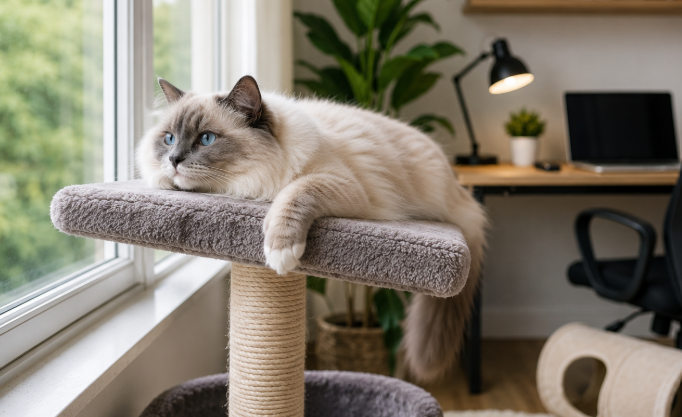
Begin by providing several comfortable sleeping locations in different rooms. Many Ragdolls enjoy soft beds positioned near sunny windows where they can watch outdoor activity.
Window perches offer excellent entertainment. Birds, squirrels, butterflies, and neighborhood activity provide natural mental stimulation that changes throughout the day.
Cat trees create additional climbing opportunities while allowing your pet to observe the home from elevated positions.
Together, these features reduce boredom and encourage healthy exploration.
Interactive Toys Make a Difference
Mental stimulation helps prevent boredom during long workdays.
Rather than leaving dozens of toys scattered across the floor, rotate selections every few days to maintain novelty.
Puzzle feeders challenge your cat to work for treats instead of eating everything immediately. Food-dispensing balls encourage gentle movement while rewarding curiosity.
Battery-powered motion toys can also provide occasional entertainment, although they should always be safe and durable.
Simple toys often work surprisingly well. Lightweight balls, plush mice, crinkle toys, tunnels, and cardboard boxes remain favorites for many Ragdolls.
Keeping several options available allows your cat to choose activities based on mood and energy level.
Maintaining a Predictable Routine
Cats appreciate consistency.
Establishing predictable schedules helps reduce uncertainty and builds confidence.
Feed your Ragdoll at approximately the same times each morning and evening. Likewise, try leaving and returning home according to similar schedules whenever possible.
Many owners discover their cats naturally adjust to these routines within a few weeks.
Before leaving for work, spend several minutes playing with your cat using interactive toys such as feather wands or fishing-pole toys.
Physical exercise before your departure encourages relaxation afterward.
Similarly, spending quality time together after work strengthens your bond and provides valuable mental stimulation.
These consistent interactions reassure your cat that time apart always ends with enjoyable companionship.
Should You Leave the Television On?
Some owners leave televisions or radios playing quietly while they are away.
Although scientific evidence remains limited, gentle background sounds may help certain cats feel less isolated.
Nature documentaries featuring birds or fish sometimes capture feline attention, particularly if displayed on a secure television.
However, loud music or constantly changing sounds may create unnecessary stress instead of comfort.
Each cat responds differently. Therefore, observe your Ragdoll’s behavior before deciding whether background noise improves the environment.
Many cats remain perfectly content in a quiet home with natural daylight and comfortable resting areas.
The Importance of Daily Play
Playtime satisfies important hunting instincts that remain strong even in indoor cats.
Interactive games before and after work help burn energy, reduce boredom, and strengthen emotional bonds.
Laser pointers, wand toys, and moving feather toys encourage running, jumping, and stalking behaviors. However, always allow your cat to catch a physical toy occasionally to prevent frustration.
Short sessions lasting ten to fifteen minutes often provide more benefit than one long session.
Because Ragdolls generally enjoy spending time with people, these daily routines become valuable emotional enrichment in addition to physical exercise.