One of the greatest joys of owning a Ragdoll is watching its playful personality shine. These gentle giants are famous for their affectionate nature, but they also enjoy a surprising variety of games and activities. Many new owners wonder How Ragdoll Cats Play because they often appear calmer than many other breeds. While they may not climb every curtain or sprint endlessly around the house, Ragdolls absolutely enjoy playtime when it matches their personality and energy level. Understanding what motivates them helps create a happier, healthier life for both the cat and its family.
Play is much more than entertainment. It provides physical exercise, mental stimulation, emotional enrichment, and valuable bonding opportunities. Indoor cats especially depend on regular play because they do not experience the challenges of hunting, exploring, and climbing outdoors. Without enough stimulation, boredom can develop and sometimes lead to unwanted behaviors such as scratching furniture, overeating, or excessive sleeping.
Fortunately, Ragdolls are easy to entertain once you understand their preferences. Their playful moments often involve interaction with people rather than independent activity, making them wonderful companions for families, couples, and individuals alike.
Understanding the Ragdoll Personality
Before exploring How Ragdoll Cats Play, it helps to understand their personality.
Unlike highly energetic breeds that seem constantly in motion, Ragdolls usually display a calm, balanced temperament. They enjoy activity, but they rarely become overly hyperactive. Instead, they often alternate between energetic play sessions and long periods of relaxation.
Their affectionate personality influences how they choose to play. Many Ragdolls prefer interactive games with their owners instead of entertaining themselves for hours.
Because they form strong bonds with people, they often see playtime as another opportunity to spend quality time with their favorite humans.
This social nature explains why many Ragdolls happily follow family members around the house while patiently waiting for someone to begin a game.
Why Play Matters Every Day
Some owners assume calm cats require very little exercise. However, every indoor cat benefits from daily physical and mental activity.
Regular play helps maintain healthy body weight by burning calories and strengthening muscles. At the same time, it stimulates natural hunting instincts that remain deeply rooted in domestic cats.
Exercise also supports joint flexibility and cardiovascular health. These benefits become especially important because Ragdolls tend to grow into large, muscular cats.
Mental stimulation deserves equal attention. Puzzle toys, interactive games, and new challenges encourage problem-solving while preventing boredom.
Furthermore, consistent play reduces stress and strengthens trust between owners and their cats. Even ten to fifteen minutes of focused interaction twice each day can make a noticeable difference.
Interactive Play Is Their Favorite
One of the most interesting things about How Ragdoll Cats Play is their preference for human involvement.
Many breeds happily chase toys by themselves for long periods. Ragdolls certainly enjoy solo activities, but they often become much more excited when another person joins the fun.
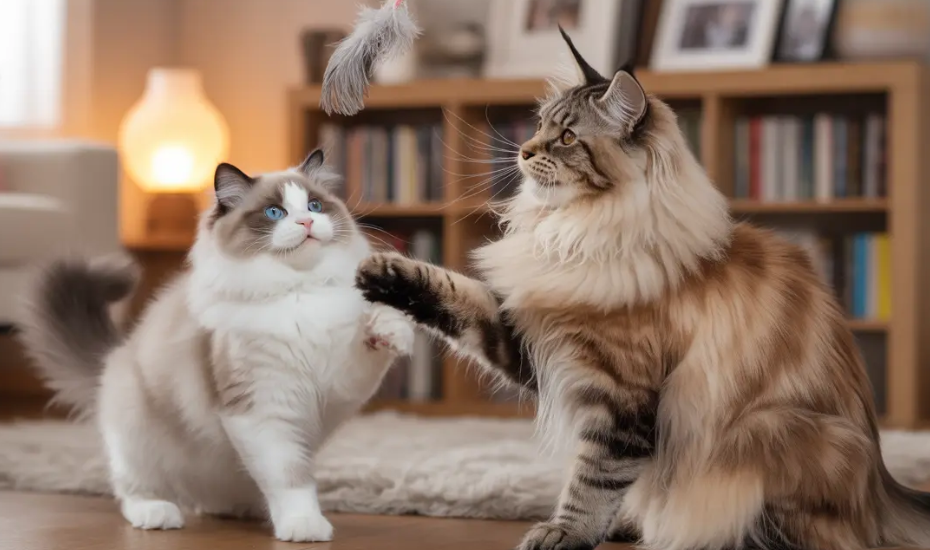
Feather wand toys rank among their favorites. These toys mimic the unpredictable movement of birds, encouraging stalking, jumping, and gentle pouncing.
Fishing-pole toys with soft feathers or fabric attachments also create exciting hunting opportunities without requiring excessive space.
Owners should allow the toy to move naturally rather than waving it directly in front of the cat’s face. Slow movements followed by quick changes in direction create a more realistic hunting experience.
Ending each session by allowing the cat to successfully “catch” the toy provides satisfying closure and reduces frustration.
Many Ragdolls Enjoy Playing Fetch
One characteristic that surprises many owners is the breed’s willingness to retrieve toys.
While not every individual develops this behavior, many Ragdolls naturally carry lightweight toys back toward their owners after chasing them.
Small plush mice, soft balls, or lightweight foam toys often work well during fetch games.
Some kittens begin retrieving without formal training. Others learn through positive reinforcement after repeated practice.
Unlike dogs, cats usually decide whether retrieving feels rewarding. Therefore, patience and encouragement produce much better results than forcing the activity.
Even Ragdolls that never become dedicated retrievers often enjoy chasing tossed toys across the room before proudly carrying them around the house.
Puzzle Toys Challenge Their Minds
Although Ragdolls appear relaxed, they still enjoy solving simple challenges.
Food puzzle toys encourage problem-solving by requiring the cat to move, roll, or manipulate the toy before treats appear.
These activities combine mental exercise with physical movement, making them excellent enrichment tools for indoor cats.
Beginners should start with easy puzzles that deliver rewards quickly.
Once your cat understands how the puzzle works, gradually introducing more challenging versions keeps the experience interesting.
Mental enrichment becomes especially valuable for cats spending several hours alone while owners work.
Puzzle feeders help prevent boredom while encouraging healthy curiosity throughout the day.
Climbing and Exploring
Ragdolls are generally less adventurous than highly athletic breeds such as Bengals or Abyssinians. Nevertheless, they still enjoy climbing safe structures designed for their size.
Large cat trees provide opportunities to observe the home from elevated positions.
Many Ragdolls choose the highest platform available before calmly watching family activities below.
Window perches offer additional entertainment by allowing cats to observe birds, squirrels, butterflies, and changing weather conditions.
Exploration also satisfies natural curiosity. Rotating tunnels, cardboard boxes, paper bags without handles, and new toys occasionally helps create fresh experiences without requiring major changes to the home.
Simple environmental variety often keeps indoor cats mentally engaged.
Their Hunting Instinct Never Disappears
Domestic cats remain natural hunters regardless of breed.
Although Ragdolls rarely display aggressive personalities, they still enjoy activities that imitate hunting.
Moving toys hidden beneath blankets, fabric tunnels, or paper bags encourage stalking behavior.
Small toys that disappear behind furniture before reappearing often capture their attention because the movement resembles prey.
Laser pointers also encourage running and chasing. However, owners should always finish laser games by allowing the cat to catch a physical toy afterward.
This simple step satisfies the hunting sequence and prevents lingering frustration.
Favorite Toys for Ragdoll Cats
Choosing appropriate toys improves both safety and enjoyment.
Soft plush mice remain popular because they are lightweight and easy to carry.
Crinkle balls provide interesting sounds that stimulate curiosity.
Feather toys encourage jumping and chasing.
Catnip toys appeal to many adult cats, although kittens often show little interest until they mature.
Silvervine toys offer another option for cats that respond weakly to catnip.
Large kicker toys allow cats to grab, wrestle, and kick using their powerful back legs.
Rotating these toys regularly helps maintain excitement while preventing boredom from constant familiarity.
Keeping Play Sessions Safe
Because Ragdolls tend to become large cats, selecting sturdy toys matters.
Avoid toys with easily removable strings, tiny plastic pieces, or decorations that could become choking hazards.
Always supervise interactive toys containing long cords or elastic materials.
Store wand toys safely after each session to prevent unsupervised chewing.
Inspect toys regularly for damage and replace worn items before they become unsafe.
Likewise, choose cat trees designed specifically for large breeds with reinforced platforms and stable bases.
Safe equipment allows enthusiastic play without increasing injury risks.