If you own a Ragdoll, you may have noticed that every cat has a unique way of communicating. Some greet you with soft chirps every morning, while others remain almost silent throughout the day. Understanding Ragdoll Cat Vocalization helps explain why these gentle cats express themselves differently and what their sounds or silence can tell you. Although Ragdolls are known for their affectionate personalities, their vocal habits vary from one cat to another. Learning how your companion communicates allows you to meet their needs while strengthening the bond you share.
Unlike highly vocal breeds such as the Siamese, Ragdolls generally communicate with quiet, pleasant sounds instead of loud or constant meowing. Even so, there is no single personality that fits every Ragdoll. Genetics, early socialization, environment, health, and individual temperament all influence how much a cat talks. Therefore, comparing your Ragdoll to another may not provide an accurate picture of what is considered normal.
Why Some Ragdolls Are More Vocal Than Others
One of the main reasons for different Ragdoll Cat Vocalization patterns is personality. Just as people communicate differently, cats also develop individual preferences. Some naturally enjoy responding whenever their owners speak, while others prefer expressing themselves through body language.
Age also affects communication. Kittens often meow more because they rely on vocalizations to get attention and ask for food. As they mature, many become quieter once they feel secure in their environment. However, some adult Ragdolls remain talkative simply because they have learned that vocalizing gets positive attention.
Additionally, breeding lines may influence vocal behavior. Some Ragdolls inherit a naturally expressive temperament, whereas others are calmer and more reserved. Neither personality is better than the other, provided your cat appears healthy and comfortable.
Daily experiences shape communication as well. Cats raised in interactive households often become more responsive because they receive regular conversation, affection, and positive reinforcement from their families.
What Your Ragdoll May Be Trying to Say
Many owners are surprised by how expressive quiet sounds can be. Ragdoll Cat Vocalization often includes gentle meows, chirps, trills, and soft purrs rather than loud cries. Each sound usually serves a specific purpose.
A soft meow often means your cat is greeting you or requesting attention. Many Ragdolls meow quietly when their owners return home after work. This behavior reflects their strong attachment to people.
Trilling commonly occurs when your cat wants you to follow them toward a favorite toy, food bowl, or resting place. Meanwhile, purring usually signals relaxation and contentment. However, cats sometimes purr when stressed or uncomfortable because it may help them soothe themselves.
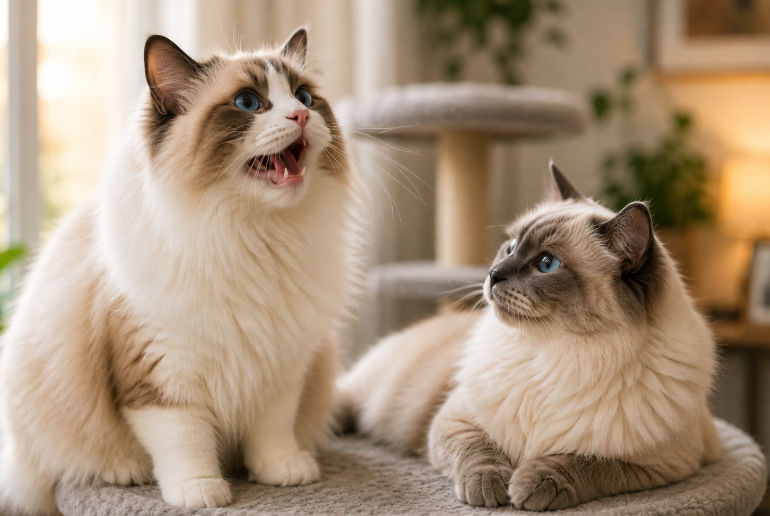
Short chirping sounds frequently appear when a cat watches birds through a window. These unique sounds are linked to natural hunting instincts and excitement rather than frustration.
Observing body language alongside vocalizations provides a clearer understanding of your cat’s emotions. Tail position, ear movement, eye contact, and posture all contribute to effective communication.
Why Some Ragdolls Stay Quiet
Although Ragdoll Cat Vocalization receives plenty of attention, many healthy Ragdolls remain naturally quiet. Silence does not mean your cat is unhappy or unfriendly. In fact, many Ragdolls communicate primarily through physical closeness instead of vocal sounds.
A quiet Ragdoll may follow you from room to room, gently rub against your legs, blink slowly, or curl up beside you. These affectionate behaviors often express trust more clearly than meowing.
Additionally, some cats simply develop quieter personalities from kittenhood. If your cat has always been calm, there is usually no reason for concern. However, a sudden change deserves closer attention. A previously talkative cat that suddenly becomes silent may be experiencing illness, pain, or stress.
Likewise, cats recovering from surgery or adapting to a new environment may temporarily reduce their vocalizations until they feel secure again.
When Excessive Meowing Signals a Problem
While normal Ragdoll Cat Vocalization is usually gentle, excessive or unusual meowing should not be ignored. Persistent crying often indicates that something requires attention.
Hunger remains one of the simplest explanations. Cats quickly learn that vocalizing may encourage owners to provide meals or treats. However, if food is not the issue, your cat may be asking for companionship, playtime, or mental stimulation.
Medical conditions can also increase vocalization. Dental pain, arthritis, urinary problems, thyroid disease, hearing loss, and cognitive decline in older cats sometimes cause excessive meowing. Therefore, any sudden increase in vocal activity deserves careful observation.
Stress is another common trigger. Moving house, introducing another pet, loud construction, or changes in routine may leave your Ragdoll feeling anxious. Once the environment becomes predictable again, many cats naturally settle down.
How to Encourage Healthy Communication
Building trust encourages healthy Ragdoll Cat Vocalization without reinforcing unwanted behaviors. Begin by responding consistently when your cat communicates appropriately. Gentle praise, petting, or playtime teaches your cat that calm communication receives positive attention.
Avoid rewarding constant meowing with treats every time it happens. Otherwise, your cat may learn that persistent vocalization always leads to food. Instead, establish predictable feeding schedules and interactive play sessions throughout the day.
Spend quality time together daily. Ragdolls are highly social cats that thrive on companionship. Regular interaction satisfies their emotional needs while reducing attention-seeking behaviors.
Environmental enrichment also plays an important role. Cat trees, scratching posts, puzzle feeders, climbing shelves, and window perches provide mental stimulation that prevents boredom.
Most importantly, pay attention to patterns. If your cat suddenly changes from quiet to extremely vocal or from talkative to silent, schedule a veterinary examination to rule out medical concerns.
Understanding Your Cat’s Individual Personality
Every Ragdoll Cat Vocalization style reflects a unique personality. Some cats happily greet visitors, respond whenever their owners speak, and carry on quiet conversations throughout the day. Others express affection through physical closeness without making many sounds at all.
Instead of expecting every Ragdoll to behave identically, focus on learning your own cat’s normal routine. Notice when they vocalize, how they combine sounds with body language, and what situations trigger communication. Over time, these observations help you recognize subtle changes that may indicate happiness, excitement, stress, or illness.
Patience also strengthens communication. As trust grows, many Ragdolls become more comfortable expressing themselves naturally, whether through gentle meows or quiet companionship.
Conclusion
Understanding Ragdoll Cat Vocalization allows you to appreciate the many ways these affectionate cats communicate. While some Ragdolls enjoy chatting with soft meows and trills, others prefer silent companionship expressed through body language and close physical contact. Both communication styles are perfectly normal when they remain consistent with your cat’s personality.
The most important step is paying attention to changes rather than comparing your cat to others. By providing a stable environment, regular interaction, proper healthcare, and plenty of affection, you encourage healthy communication while building a stronger lifelong bond. Whether your Ragdoll talks often or hardly at all, every sound and gesture offers valuable insight into how they feel.
FAQ
1. Are Ragdolls naturally talkative?
Most Ragdolls are moderately vocal and communicate with soft, gentle sounds rather than loud or frequent meows.
2. Why does my cat chirp instead of meow?
Chirping often happens during excitement, especially when watching birds or inviting you to follow them.
3. Should I worry if my cat rarely makes noise?
Not necessarily. Many healthy cats communicate through body language instead of vocal sounds.
4. Why has my usually quiet cat started meowing constantly?
Sudden changes may result from hunger, stress, boredom, pain, or an underlying medical condition that requires veterinary attention.
5. How can I improve communication with my pet?
Spend time together daily, maintain consistent routines, observe body language, and respond calmly to your cat’s natural attempts to communicate.