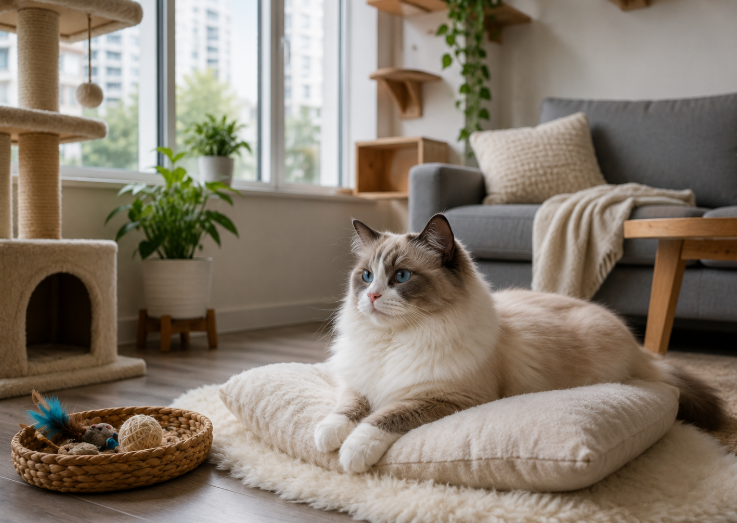
Many people wonder whether a Ragdoll cat can thrive in a smaller home. Fortunately, Ragdoll Apartment Living is often an excellent match because this breed is known for its calm personality, affectionate nature, and adaptable temperament. Unlike highly energetic cats that constantly seek outdoor adventures, Ragdolls usually enjoy spending time close to their owners. They are happiest when they have comfortable places to relax, regular interaction, and a predictable routine. As long as their physical and emotional needs are met, apartment living can provide everything a Ragdoll needs for a healthy and fulfilling life.
Although every cat has a unique personality, Ragdolls generally adjust well to indoor environments. They are not as driven to roam as many other breeds, making them one of the most popular choices for apartment owners. However, living in a smaller space does require thoughtful planning. Creating opportunities for exercise, enrichment, and companionship helps ensure your Ragdoll remains happy and healthy throughout every stage of life.
Why Ragdolls Adapt Well to Apartment Life
One reason Ragdoll Apartment Living works so well is the breed’s naturally relaxed personality. Ragdolls are often described as gentle, easygoing, and affectionate. Instead of constantly climbing curtains or racing through the house, many prefer lounging beside their favorite people or watching the world through a window.
Their calm nature also makes them excellent companions for quieter households. Whether you live alone, with a partner, or with children, most Ragdolls adapt well to consistent daily routines. Because they enjoy human company more than exploring outdoors, they rarely become frustrated simply because they live in an apartment.
Furthermore, Ragdolls are usually less vocal than many breeds. While they communicate with soft meows and gentle trills, they are unlikely to disturb neighbors with excessive noise. This characteristic makes them especially appealing in apartment buildings where sound can travel easily between units.
Creating an Indoor Environment They Love
Successful Ragdoll Apartment Living depends on making your home interesting and comfortable. Even though apartments have limited space, thoughtful design can provide plenty of opportunities for exploration and relaxation.
Vertical space is particularly valuable. Cat trees, climbing shelves, and sturdy window perches allow your Ragdoll to observe its surroundings while satisfying natural climbing instincts. These features increase usable space without requiring additional floor area.
Comfortable sleeping areas are equally important. Ragdolls love soft beds, blankets, and sunny spots where they can nap throughout the day. Place several resting areas around your apartment so your cat always has a quiet place to relax.
Window views provide valuable entertainment. Watching birds, trees, or passing people gives indoor cats mental stimulation that helps prevent boredom. Just be sure all windows are securely screened to keep your cat safe.
Exercise Is Still Essential
Although Ragdoll Apartment Living suits this breed well, daily exercise remains important. Ragdolls may appear relaxed, but they still require physical activity to maintain a healthy weight and strong muscles.
Interactive play sessions are one of the easiest ways to provide exercise indoors. Feather wands, toy mice, balls, and puzzle feeders encourage natural hunting behaviors while keeping your cat active. Aim for at least two 15 to 20-minute play sessions each day.
Rotating toys every few days also helps maintain interest. Cats become accustomed to seeing the same toys repeatedly, so introducing different options keeps playtime exciting.
Additionally, encourage climbing whenever possible. Multi-level cat furniture provides both exercise and confidence-building opportunities. Even older Ragdolls benefit from gentle daily movement that supports joint health.
Social Interaction Matters
One of the biggest advantages of Ragdoll Apartment Living is that these cats genuinely enjoy spending time with people. They often follow their owners from room to room and happily relax nearby while daily activities take place.
Because Ragdolls form strong emotional bonds, they generally prefer companionship over solitude. If you work from home, your cat will likely enjoy simply being in the same room. Even short conversations, gentle petting, and regular playtime strengthen your relationship.
However, owners who spend long hours away should consider ways to reduce boredom. Interactive toys, automatic feeders, puzzle games, and window perches can provide entertainment during the day. Some households also choose to introduce another compatible pet after careful consideration.
Consistent attention helps prevent loneliness while encouraging positive behavior. Fortunately, quality interaction often matters more than the size of your living space.
Keeping Your Apartment Cat Healthy
Maintaining good health is another important part of Ragdoll Apartment Living. Since indoor cats burn fewer calories than outdoor cats, portion control becomes especially important.
Feed a balanced, high-quality diet designed for your cat’s age and activity level. Measure meals carefully instead of leaving unlimited food available throughout the day. Combined with regular exercise, proper nutrition helps reduce the risk of obesity.
Fresh water should always be available. Many cats drink more from circulating water fountains, which support healthy hydration and kidney function.
Regular grooming is also beneficial. Although Ragdolls have silky coats with minimal undercoat, brushing several times each week removes loose hair and helps prevent tangles. Grooming sessions also provide an opportunity to check your cat’s ears, eyes, skin, and overall condition.
Routine veterinary visits remain essential. Annual wellness examinations, vaccinations, parasite prevention, and dental care all contribute to a longer, healthier life.
Common Apartment Challenges
Even successful Ragdoll Apartment Living comes with occasional challenges. Limited space can lead to boredom if the environment lacks enrichment. Fortunately, this issue is easy to address with climbing furniture, scratching posts, toys, and regular interaction.
Another concern involves scratching furniture. Providing multiple scratching posts in different locations encourages appropriate scratching behavior while protecting household items.
Litter box placement also deserves attention. Position the litter box in a quiet, easily accessible location away from food and water. Scoop it daily to maintain cleanliness and encourage consistent use.
Noise from neighboring apartments may occasionally startle sensitive cats. Creating quiet hiding places allows your Ragdoll to retreat whenever it feels overwhelmed.
Fortunately, most challenges can be solved through routine, patience, and thoughtful environmental enrichment.
Conclusion
Ragdoll Apartment Living is an excellent choice for many cat owners because these gentle, affectionate cats adapt naturally to indoor environments. Their calm personalities, moderate activity levels, and strong desire for human companionship make them well suited to apartment life when their needs are consistently met.
Providing daily exercise, mental stimulation, proper nutrition, comfortable resting places, and plenty of attention creates an environment where your Ragdoll can truly flourish. While every cat has its own personality, most Ragdolls thrive in apartments when owners focus on quality care rather than square footage. With thoughtful planning and regular interaction, your apartment can become the perfect lifelong home for this beautiful breed.
FAQ
1. Do Ragdolls need a large house to be happy?
No. Most Ragdolls adapt very well to apartments as long as they receive daily exercise, enrichment, and companionship.
2. How much exercise should an indoor Ragdoll get?
Aim for at least 30 to 40 minutes of interactive play each day, divided into two or more sessions.
3. Can this breed stay indoors full-time?
Yes. Ragdolls are generally considered one of the best breeds for indoor living because they are less likely to roam.
4. What furniture should I buy for an apartment cat?
Cat trees, scratching posts, window perches, puzzle feeders, and comfortable beds are all excellent additions.
5. Will a Ragdoll become lonely while I’m at work?
They can become bored if left alone for long periods, so provide enrichment, maintain a routine, and spend quality time together when you return home.