Bringing home a new Ragdoll kitten is exciting, emotional, and sometimes overwhelming for first-time owners. A proper Ragdoll Kitten Care Guide helps beginners understand how to support healthy growth, emotional stability, and safe indoor living from the very beginning. Because Ragdolls are affectionate, intelligent, and emotionally sensitive cats, they require thoughtful care and consistent routines to thrive indoors.
Ragdoll kittens are widely loved for their soft coats, blue eyes, and calm personalities. However, many owners underestimate how much attention these kittens need during early development. While they often appear relaxed and gentle, Ragdolls still require social interaction, enrichment, grooming, and proper nutrition every day.
The first few months shape long-term behavior, confidence, and health significantly. Consequently, creating stable routines early helps kittens adapt more comfortably to their new homes. Safe environments, balanced feeding schedules, and positive interaction all contribute to healthier development.
Unlike highly independent breeds, Ragdolls usually prefer close human companionship. Many follow owners throughout the house and dislike feeling isolated for long periods. Therefore, emotional care becomes just as important as physical care.
Understanding breed-specific needs helps new owners feel more confident while preventing common beginner mistakes. With patience, consistency, and proper preparation, raising a healthy and happy Ragdoll kitten becomes a deeply rewarding experience.
Preparing Your Home Before Bringing a Kitten Home
Preparation makes the transition smoother for both kittens and owners. Ragdoll kittens feel safer when their environment already includes secure resting spaces, food stations, toys, and litter boxes before arrival. Consequently, thoughtful preparation helps reduce stress significantly.
Start by creating a quiet starter area where the kitten can adjust gradually. Large homes may feel overwhelming initially, especially during the first few days. Therefore, smaller safe spaces often improve confidence and emotional comfort.
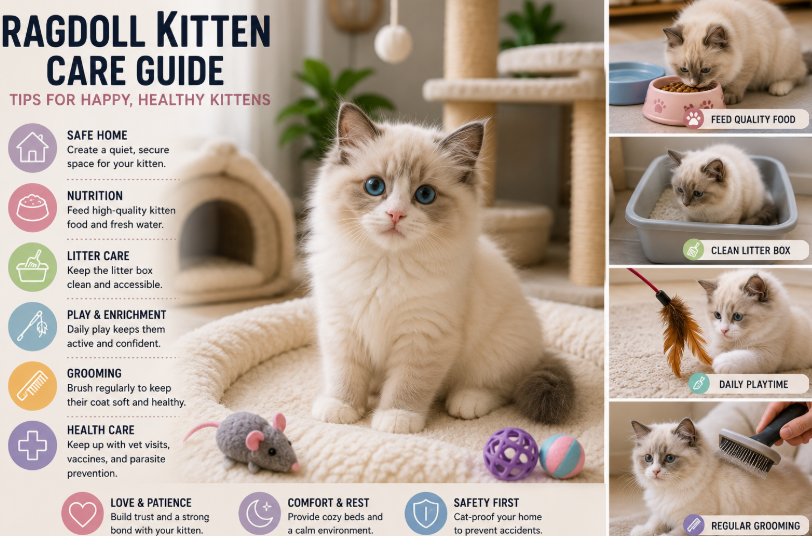
Ragdoll Kitten Care Guide planning should also include removing household hazards. Loose wires, toxic plants, small objects, and unstable furniture create serious safety risks for curious kittens.
Litter box placement matters too. Boxes should remain in calm and accessible areas away from loud appliances or heavy foot traffic. Most kittens adjust more easily when litter boxes feel private and secure.
Soft bedding helps kittens feel comfortable immediately. Ragdolls generally enjoy warm and cozy resting spots because they form strong emotional attachments to familiar spaces quickly.
Interactive toys should also be available from the beginning. Simple feather toys, soft balls, and scratching posts encourage healthy activity and mental stimulation naturally.
Preparation reduces anxiety during transition periods. Consequently, kittens often settle faster and display calmer behavior when homes feel organized and predictable from the start.
Understanding Ragdoll Personality Traits
Ragdolls differ from many cat breeds because of their unusually affectionate and gentle personalities. They often seek human attention constantly and prefer staying close to family members throughout the day.
Many Ragdolls enjoy being carried, cuddled, or following owners from room to room. Consequently, they sometimes behave more like companion dogs than independent cats. This emotional attachment makes social interaction extremely important during kittenhood.
Ragdoll Kitten Care Guide advice should always emphasize emotional support because the breed tends to become stressed more easily in chaotic environments. Loud households, constant disruptions, or long isolation periods may increase anxiety significantly.
Despite their relaxed personalities, Ragdolls remain playful and curious during kittenhood. Interactive play helps develop confidence while supporting physical coordination and healthy growth.
They are also highly intelligent cats. Consequently, boredom may lead to attention-seeking behavior or destructive habits if enrichment remains limited indoors.
Ragdolls generally adapt well to families, children, and other pets when introductions happen carefully. However, their trusting nature means they may struggle with aggressive animals or stressful social situations.
Patience and gentle communication work especially well with this breed. Harsh correction or punishment often damages trust more than it improves behavior.
Understanding these personality traits helps owners create more supportive routines and stronger emotional bonds from the beginning.
Feeding and Nutrition During Kittenhood
Nutrition plays a major role in healthy growth and development. Ragdoll kittens require balanced diets rich in protein, healthy fats, and essential nutrients to support rapid physical growth during the first year.
High-quality kitten food designed specifically for growing cats usually provides the best nutritional balance. Consequently, owners should avoid adult cat food during early development stages.
Ragdoll Kitten Care Guide routines should include scheduled meals rather than unlimited feeding whenever possible. Structured feeding supports healthier digestion while helping owners monitor appetite changes more effectively.
Kittens generally require several small meals throughout the day because they burn energy quickly. As they grow older, feeding schedules can gradually transition into fewer meals.
Fresh water should remain available constantly as well. Hydration supports digestion, energy levels, and long-term urinary health.
Treats should stay limited during early development. Although treats help during training and bonding, excessive treats may encourage unhealthy eating habits later. Therefore, moderation remains important from the start.
Some kittens experience digestive sensitivity during food transitions. Consequently, diet changes should happen gradually over several days to reduce stomach upset and stress.
Veterinary guidance helps owners choose appropriate foods based on age, weight, and overall health needs. Balanced nutrition during kittenhood supports stronger immune systems, healthier coats, and better long-term wellness.
The Importance of Safe Indoor Living
Most breeders and veterinarians strongly recommend indoor living for Ragdolls. Their trusting and social personalities make them especially vulnerable to outdoor dangers such as traffic, predators, theft, and disease exposure.
Indoor living provides greater safety, yet indoor environments must still support physical activity and mental stimulation. Without enrichment, kittens may become bored or inactive over time. Therefore, indoor setups should encourage exploration and play naturally.
Ragdoll Kitten Care Guide planning should include climbing furniture, scratching posts, tunnels, and interactive toys. These features help kittens develop coordination while satisfying natural instincts safely indoors.
Window perches also provide excellent enrichment. Watching birds, insects, and outdoor activity keeps kittens mentally stimulated throughout the day.
Safe indoor environments reduce stress significantly because kittens learn predictable routines more easily inside controlled spaces. Consequently, emotionally sensitive Ragdolls often feel calmer indoors compared to outdoor exposure.
Owners should also secure windows, balconies, and small escape areas carefully. Curious kittens may accidentally fall or wander into unsafe areas unexpectedly.
Indoor living does not mean limiting stimulation. Instead, it involves creating engaging environments where kittens feel both secure and mentally active daily.
Litter Training and Early Habits
Most Ragdoll kittens arrive already familiar with litter boxes. However, adjusting to new environments sometimes causes temporary accidents during the first few days. Patience and consistency help kittens adapt successfully.
Place litter boxes in quiet and easy-to-access locations. Loud areas or hidden corners may discourage use, especially for nervous kittens adjusting to unfamiliar surroundings.
Ragdoll Kitten Care Guide strategies usually recommend large uncovered litter boxes because Ragdolls grow into fairly large adult cats. Spacious boxes improve comfort while encouraging long-term litter consistency.
Keep litter clean daily. Cats naturally prefer hygienic environments, and dirty litter boxes often create unnecessary stress or avoidance behaviors.
Positive reinforcement works much better than punishment during training. Calm praise after successful litter use helps build confidence naturally.
Some kittens may dislike strongly scented litter or sudden litter changes. Consequently, sticking with familiar textures often reduces confusion during adjustment periods.
Accidents should never trigger anger or harsh correction. Stress and fear may worsen litter problems rather than solving them. Instead, owners should focus on identifying possible environmental or medical causes calmly.
Consistent litter routines during kittenhood help establish healthy lifelong habits more effectively.
Grooming and Coat Maintenance
Ragdolls have long and silky coats that require regular grooming to stay healthy and comfortable. Although their fur mats less easily than some long-haired breeds, brushing still remains extremely important.
Starting grooming early helps kittens feel relaxed and cooperative during future maintenance routines. Consequently, gentle brushing sessions during kittenhood usually prevent grooming struggles later.
Ragdoll Kitten Care Guide routines should include soft brushes designed for long-haired cats. Short daily brushing sessions often work better than occasional lengthy grooming.
Grooming also supports emotional bonding between owners and kittens. Calm brushing sessions help kittens feel secure while reducing shedding and preventing tangles.
Nail trimming should begin early too. Kittens adjusting to gentle paw handling during development often tolerate future nail care much more comfortably.
Ear cleaning and dental care also deserve attention. Healthy hygiene routines during kittenhood support long-term wellness while helping kittens become familiar with regular handling.
Bathing usually remains unnecessary unless kittens become unusually dirty. Most Ragdolls groom themselves effectively when healthy and comfortable.
Consistent grooming supports healthier coats, cleaner homes, and stronger trust between kittens and owners.
Socialization and Emotional Development
Early socialization strongly influences long-term confidence and behavior. Ragdoll kittens exposed to gentle handling, positive experiences, and calm routines often grow into emotionally balanced adult cats.
Invite safe interaction gradually rather than overwhelming kittens with constant attention immediately. Consequently, kittens build trust more naturally when introductions happen slowly and positively.
Ragdoll Kitten Care Guide advice should include regular play sessions because interactive games support both emotional and physical development. Feather toys, soft balls, and puzzle activities encourage natural instincts while building confidence.
Kittens also learn important social behaviors through interaction with humans and other pets. Therefore, supervised introductions help prevent fear or territorial stress later.
Routine matters greatly during emotional development. Feeding, playtime, and rest schedules should remain reasonably predictable whenever possible.
Some Ragdoll kittens become highly attached to owners quickly. While affection is healthy, encouraging independent play and comfortable alone time also prevents excessive separation anxiety later.
Positive experiences during kittenhood shape lifelong emotional responses significantly. Calm environments and patient communication help emotionally sensitive breeds feel secure and trusting.
Veterinary Care and Preventative Health
Regular veterinary care supports healthy growth and early disease prevention. Kittens require vaccinations, parasite prevention, and wellness checks throughout the first year of life.
Ragdoll Kitten Care Guide schedules should include early veterinary visits soon after adoption. These appointments help confirm healthy development while allowing owners to ask questions confidently.
Vaccinations protect against common feline diseases that may become dangerous or life-threatening. Consequently, following veterinary vaccine schedules remains extremely important.
Parasite prevention matters even for indoor kittens. Fleas, worms, and mites may still enter homes through clothing, visitors, or other pets.
Spaying or neutering discussions also happen during early veterinary care planning. Many veterinarians recommend these procedures before adulthood to support healthier long-term behavior and wellness.
Owners should monitor appetite, energy levels, litter habits, and coat condition regularly. Sudden changes often signal illness or stress requiring attention.
Preventative healthcare supports stronger immunity, healthier development, and longer life expectancy overall.
Conclusion
Raising a Ragdoll kitten requires patience, consistency, and thoughtful care from the very beginning. A proper Ragdoll Kitten Care Guide helps new owners create safe environments, balanced routines, and strong emotional connections that support healthy long-term development.
Ragdolls thrive best with calm indoor living, regular interaction, proper nutrition, and gentle socialization. Because the breed forms deep emotional attachments, both physical and emotional care remain equally important throughout kittenhood.
Preparing homes carefully, maintaining predictable schedules, and encouraging enrichment all contribute to healthier and happier kittens. Grooming, litter training, and veterinary care also help establish strong lifelong habits early.
Although first-time ownership sometimes feels overwhelming initially, small daily routines often create the biggest long-term improvements. With proper guidance and attention, Ragdoll kittens usually grow into affectionate, emotionally balanced, and deeply loyal companions.
Providing supportive care during kittenhood builds the foundation for years of trust, comfort, and companionship ahead.
FAQ
1. Are Ragdoll kittens good for beginners?
Yes. Ragdolls are generally gentle, affectionate, and adaptable, making them excellent pets for first-time owners.
2. How often should Ragdoll kittens eat daily?
Most kittens require several small meals each day to support healthy growth and energy levels.
3. Do Ragdolls need daily grooming?
Regular brushing helps prevent tangles, reduce shedding, and maintain healthy long coats comfortably.
4. Why should Ragdolls stay indoors?
Their trusting nature makes them more vulnerable to outdoor dangers like traffic, predators, and theft.
5. How can I help my kitten adjust faster?
Provide quiet spaces, predictable routines, gentle interaction, and gradual introductions to new environments.