
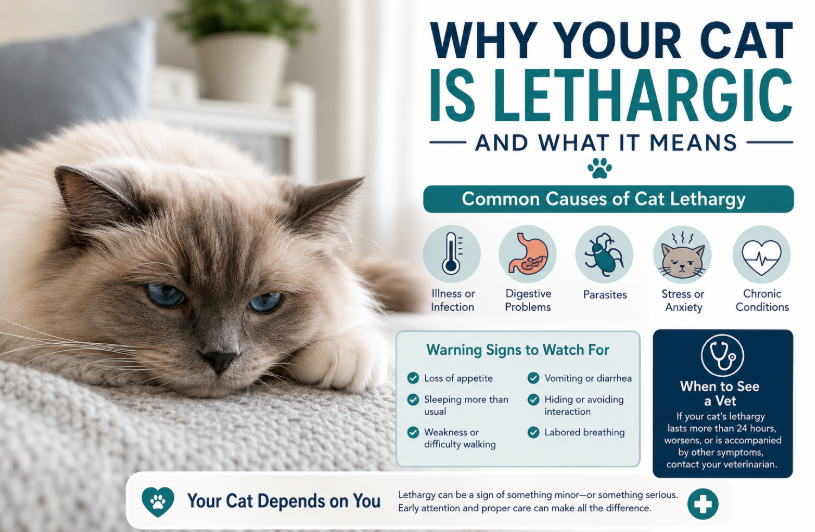
Seeing your normally active cat become unusually quiet can be worrying. Understanding Cat Lethargy Causes is important because a sudden drop in energy often signals that something is affecting your cat’s health or well-being. While some cats naturally sleep more than others, true lethargy goes beyond enjoying a long nap. A lethargic cat may avoid playing, ignore favorite treats, hide more often, or show little interest in interacting with family members. Recognizing these changes early allows you to respond quickly and seek veterinary advice if needed.
Cats are experts at hiding discomfort. In the wild, showing weakness could make them vulnerable, so domestic cats still instinctively mask pain and illness. Because of this behavior, owners should pay close attention to subtle differences in daily routines. Even small changes in appetite, grooming habits, or activity levels can provide valuable clues. The sooner you identify the cause, the better the chances of helping your cat recover comfortably.
What Does Lethargy Look Like in Cats?
Many owners confuse normal sleeping with lethargy. Healthy adult cats often sleep between 12 and 16 hours each day, while kittens and senior cats may sleep even longer. However, a healthy cat usually wakes up alert, stretches, eats enthusiastically, and responds to sounds or movement.
A lethargic cat behaves differently. Instead of simply resting, your cat may remain inactive throughout the day and show little interest in food, toys, or attention. Some cats hide under furniture, avoid climbing, or stop grooming themselves. Others appear weak when walking or seem reluctant to jump onto their favorite spots.
Additionally, you may notice slower reactions, reduced curiosity, or unusual breathing patterns. Although these symptoms do not always indicate a medical emergency, they should never be ignored if they persist.
Common Reasons Your Cat May Become Lethargic
There are many possible Cat Lethargy Causes, ranging from temporary fatigue to serious illnesses. One of the most common reasons is an infection. Viral and bacterial infections often leave cats feeling tired while their immune systems fight illness. Respiratory infections, for example, may also cause sneezing, watery eyes, coughing, or nasal discharge.
Pain is another major factor. Arthritis, dental disease, injuries, and muscle strains can reduce a cat’s willingness to move. Because cats rarely cry out in pain, decreased activity may be one of the first noticeable signs.
Digestive problems can also affect energy levels. Vomiting, diarrhea, constipation, or stomach discomfort often lead to dehydration and reduced appetite. As a result, cats become weak and less active until the underlying problem improves.
Furthermore, parasites such as fleas, ticks, or intestinal worms can gradually drain your cat’s energy. Severe infestations may even lead to anemia, especially in kittens.
Stress should not be overlooked either. Cats thrive on routine, so changes like moving to a new home, introducing another pet, or loud household renovations can temporarily affect their behavior. Although stress-related lethargy often improves over time, prolonged symptoms deserve veterinary evaluation.
Health Conditions That Require Immediate Attention
While some Cat Lethargy Causes are relatively mild, others require prompt medical care. Kidney disease commonly affects older cats and often causes increased thirst, weight loss, vomiting, and fatigue. Early diagnosis significantly improves long-term management.
Diabetes can also reduce your cat’s energy. A diabetic cat may drink excessive amounts of water, urinate more frequently, and lose weight despite eating normally. Similarly, heart disease sometimes causes weakness, rapid breathing, or reluctance to exercise.
Poisoning represents another emergency. Cats are highly sensitive to many household items, including lilies, certain medications, cleaning products, and antifreeze. If your cat suddenly becomes lethargic after possible exposure to a toxic substance, contact your veterinarian immediately.
Traumatic injuries may produce internal damage that is not immediately visible. Even if there are no obvious wounds, lethargy following a fall or accident always warrants professional evaluation.
How Veterinarians Diagnose the Problem
Finding the exact Cat Lethargy Causes often begins with a complete physical examination. Your veterinarian will ask about recent behavioral changes, appetite, water intake, medications, and environmental changes.
Next, a physical examination checks temperature, heart rate, hydration, weight, and signs of pain. Blood tests frequently help identify infections, kidney disease, liver problems, diabetes, or anemia. Urine testing provides additional information about kidney function and hydration status.
Depending on the findings, your veterinarian may recommend X-rays, ultrasound imaging, or specialized laboratory testing. Although these procedures may seem extensive, they help identify problems before they become more serious.
Providing detailed observations from home often speeds up diagnosis. Therefore, keep track of when symptoms began, how much your cat has eaten, and whether vomiting or diarrhea has occurred.
Supporting Your Cat at Home
Once serious illnesses have been ruled out, supportive care becomes an important part of recovery. One of the best ways to address Cat Lethargy Causes is by encouraging hydration. Always provide fresh water and consider using a water fountain if your cat drinks very little.
Offer highly palatable food in small portions throughout the day. Warm wet food slightly to enhance its aroma, making it more appealing to cats with reduced appetites. Never force-feed your cat unless instructed by a veterinarian.
Create a quiet, comfortable environment where your cat can rest without interruption. Keep the litter box, food, and water easily accessible so your pet does not have to travel far.
Continue monitoring your cat’s behavior closely. Improvements should become noticeable once the underlying problem begins resolving. However, worsening symptoms require another veterinary visit.
When Should You Call a Veterinarian?
Although mild tiredness after vigorous play or a stressful event may resolve naturally, persistent lethargy should never be ignored. Contact your veterinarian if your cat refuses food for more than 24 hours, struggles to breathe, vomits repeatedly, develops diarrhea, or cannot stand normally.
Likewise, immediate medical attention is necessary if lethargy occurs alongside seizures, collapse, pale gums, severe pain, or suspected poisoning. These situations can quickly become life-threatening.
Senior cats deserve special attention because age-related diseases often develop gradually. Regular wellness examinations help detect many problems before symptoms become severe.
Helping Your Cat Stay Healthy
Preventing many Cat Lethargy Causes begins with good daily care. Feed a complete, balanced diet, maintain a healthy weight, schedule routine veterinary checkups, and keep vaccinations current. Parasite prevention also protects your cat from illnesses that can reduce energy levels.
Additionally, provide regular play sessions and mental enrichment. Interactive toys, climbing trees, scratching posts, and puzzle feeders encourage exercise while supporting emotional well-being. A stimulating environment helps cats remain active throughout their lives.
Finally, learn what is normal for your individual cat. Knowing your pet’s typical sleeping habits, appetite, and personality makes unusual changes much easier to recognize.
Conclusion
Understanding Cat Lethargy Causes allows you to respond quickly when your cat seems unusually tired or inactive. While temporary fatigue can occur after excitement or minor stress, ongoing lethargy often signals an underlying health problem that deserves attention. Careful observation, prompt veterinary care, and consistent daily monitoring all contribute to better outcomes.
Your cat depends on you to notice subtle changes that they cannot communicate. By recognizing early warning signs and acting without delay, you give your feline companion the best opportunity for a full recovery and a long, healthy life.
FAQ
1. How can I tell if my cat is simply sleeping or truly lethargic?
A healthy sleeping cat wakes easily and responds normally. A lethargic cat remains inactive, avoids food, play, and interaction even after waking.
2. Can stress make a cat lose energy?
Yes. Moving, travel, loud noises, or introducing another pet can temporarily reduce activity levels and affect your cat’s behavior.
3. Should I take my cat to the vet after one day of lethargy?
If the lethargy lasts more than 24 hours or is accompanied by vomiting, diarrhea, breathing problems, or loss of appetite, contact your veterinarian promptly.
4. Are older cats more likely to become lethargic?
Yes. Senior cats are more likely to develop conditions such as kidney disease, arthritis, diabetes, and heart disease that can reduce energy.
5. What can I do while waiting for a veterinary appointment?
Keep your cat warm, provide fresh water, offer small meals of wet food, minimize stress, and closely monitor any changes in behavior or symptoms.