Keeping your cat hydrated may seem simple, yet many owners underestimate how important water intake truly is. Ragdolls are calm and affectionate cats, but they can also be selective about their drinking habits. Because of this, understanding effective Ragdoll Cat Hydration Tips can help prevent common health problems while improving your cat’s comfort and overall wellness.
Many cats naturally drink less water than other pets. Their ancestors survived in dry climates, so felines evolved to conserve moisture efficiently. However, indoor lifestyles and dry food diets can still leave modern cats at risk of dehydration. Ragdolls especially benefit from routines that encourage healthy water consumption every day.
Hydration affects almost every part of a cat’s body. Proper water intake supports digestion, circulation, kidney function, and body temperature regulation. Additionally, hydrated cats often have healthier skin and softer coats. Small changes around the home can make a surprisingly large difference in your cat’s drinking habits.
Fortunately, helping a Ragdoll stay hydrated does not require complicated routines. With consistency and observation, owners can create an environment that encourages better hydration naturally.
Why Hydration Matters for Ragdoll Cats
Water plays a critical role in maintaining feline health. Even mild dehydration can affect energy levels, digestion, and urinary health. Cats that consistently drink too little water may develop urinary tract issues or kidney strain over time.
Ragdolls are generally relaxed indoor cats. While that personality makes them wonderful companions, it can also mean lower activity levels. Less movement sometimes leads to reduced thirst, especially in cooler indoor environments.
Good hydration also supports digestion. Moisture helps food move properly through the digestive tract and reduces the likelihood of constipation. In addition, adequate water intake assists the kidneys in filtering toxins from the body.
Many owners first notice dehydration through subtle signs. Dry gums, reduced appetite, low energy, and sunken eyes may indicate insufficient hydration. However, prevention always works better than treatment. That is why practical Ragdoll Cat Hydration Tips should become part of daily care rather than an afterthought.
Hydrated cats often appear healthier overall. Their coats look shinier, their skin feels softer, and their litter box habits usually remain more consistent. Small improvements in hydration can therefore create visible benefits throughout the body.
Encourage Drinking With Fresh Water Sources
Fresh water availability strongly influences feline drinking habits. Cats prefer clean, cool water and may avoid bowls that appear dirty or stale. Therefore, changing water at least once daily can encourage more frequent drinking.
Placement also matters more than many owners realize. Cats often dislike water bowls positioned beside food dishes or litter boxes. In nature, felines instinctively avoid water near potential contamination sources. Because of this, separating food and water stations may improve water intake.
Many owners notice better results when they place several bowls throughout the house. Multiple hydration stations make drinking more convenient and naturally increase curiosity. Some cats drink more often when water appears in different rooms.
Material choice can also affect preferences. Stainless steel and ceramic bowls usually work best because they resist odors and bacteria buildup. Plastic bowls sometimes retain smells that discourage drinking.
One of the simplest Ragdoll Cat Hydration Tips involves monitoring bowl cleanliness closely. Even a thin layer of dust or food residue can make a cat avoid the bowl entirely. Washing bowls daily therefore becomes extremely important.
Try a Cat Water Fountain
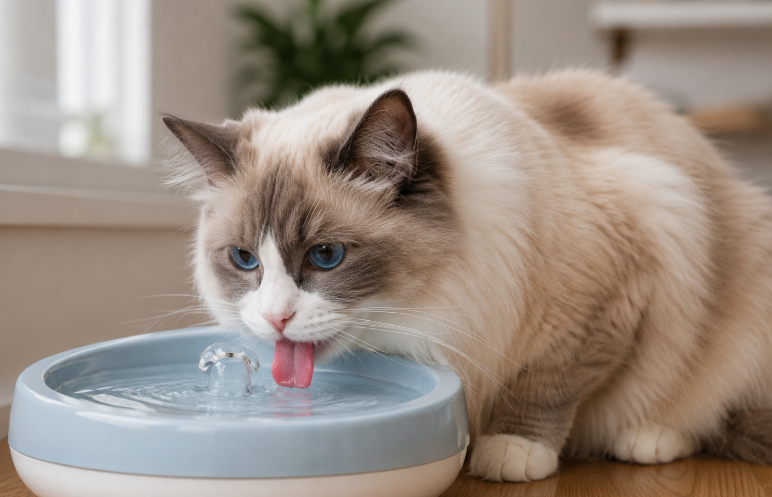
Many cats feel attracted to moving water. Running water appears fresher and safer to them instinctively. Because of this, water fountains often increase hydration significantly.
A fountain continuously circulates water, which helps maintain freshness and oxygen levels. Additionally, many fountains include filters that remove debris and odors. Cats that ignore regular bowls may suddenly drink more from flowing water sources.
Ragdolls usually adapt well to fountains because they are naturally curious and gentle cats. However, some cats need gradual introduction. Placing the fountain near an existing water bowl often helps create familiarity.
Noise level matters when choosing a fountain. Loud motors may frighten sensitive cats, while quieter fountains feel more inviting. Regular cleaning also remains essential because buildup inside the fountain can discourage use.
These types of Ragdoll Cat Hydration Tips work especially well for cats eating mostly dry food. Extra water intake helps balance lower moisture consumption from kibble diets.
Some owners even notice behavioral improvements after introducing fountains. Cats may appear more energetic and comfortable once hydration levels improve consistently.
Add Moisture Through Wet Food
Diet directly affects hydration. Wet food naturally contains far more moisture than dry kibble, making it one of the easiest ways to increase water intake.
Cats eating canned food often consume significantly more moisture each day without realizing it. Since felines naturally obtain hydration from prey in the wild, wet food better reflects their biological needs.
Mixing wet and dry food can also work well. Owners do not always need to switch completely to canned diets to see benefits. Even partial wet food meals can improve hydration noticeably.
Some owners add a small amount of warm water or low-sodium broth to meals. This technique increases moisture while enhancing flavor and aroma. As a result, picky eaters often respond positively.
When following Ragdoll Cat Hydration Tips, food quality matters too. High-protein wet foods with balanced nutrition support muscle health while providing hydration simultaneously.
Transitioning diets slowly helps prevent digestive upset. Gradual changes allow cats to adapt comfortably to new textures and flavors.
Recognize Early Signs of Dehydration
Understanding dehydration symptoms helps owners respond quickly before problems worsen. Cats often hide discomfort well, so subtle signs deserve careful attention.
Loss of appetite commonly appears first. Dehydrated cats may also seem unusually tired or less interested in play. Dry or sticky gums can indicate insufficient moisture intake as well.
Another useful test involves skin elasticity. Gently lifting the skin between the shoulders should result in quick movement back into place. Slow movement may suggest dehydration.
Litter box habits also provide clues. Smaller urine clumps or infrequent urination may indicate reduced water intake. Additionally, constipation can develop when hydration remains too low.
These Ragdoll Cat Hydration Tips become especially important during hot weather or illness. Cats lose more fluids during high temperatures, vomiting, or diarrhea.
Owners should contact a veterinarian if dehydration symptoms persist. Severe dehydration requires medical attention and should never be ignored.
Create Daily Habits That Support Hydration
Cats thrive on routine, and hydration habits improve when owners remain consistent. Predictable schedules help cats feel secure and encourage regular drinking patterns.
Refreshing water at the same times each day can help establish familiarity. Many cats drink more after meals, play sessions, or grooming routines. Observing these natural behaviors allows owners to place water access strategically.
Environmental comfort matters too. Warm indoor temperatures may increase thirst slightly, while stressful environments can discourage drinking. Quiet, calm spaces therefore support healthier hydration habits.
Interactive play sessions also help. Physical activity stimulates thirst naturally and encourages cats to seek water afterward. Even short play periods can support healthier drinking patterns.
Among the most practical Ragdoll Cat Hydration Tips is simply paying attention to your cat’s individual preferences. Some cats prefer wide bowls, while others like elevated fountains or colder water.
Small adjustments often produce the best results because every cat responds differently.
Hydration During Hot Weather
Summer temperatures create additional hydration challenges for indoor cats. Even air-conditioned homes may become warmer than usual during heat waves.
Cats often seek cooler resting places when temperatures rise. Providing shaded spaces and proper airflow helps reduce overheating. Fresh water should remain available in several locations throughout the home.
Some owners place ice cubes in water bowls to maintain cooler temperatures longer. Others chill ceramic bowls briefly before filling them with water. These small changes can make drinking more appealing during warm days.
Wet food becomes even more valuable during summer because it supplies additional moisture effortlessly. Extra hydration supports body temperature regulation and reduces heat-related stress.
These seasonal Ragdoll Cat Hydration Tips also include monitoring activity levels carefully. Excessive panting, lethargy, or drooling may indicate overheating and require immediate attention.
Travel and outdoor exposure during hot weather increase dehydration risks further. Portable water bowls therefore become essential for any trips outside the home.
Support Kidney and Urinary Health Naturally
Kidney disease and urinary issues commonly affect cats as they age. Fortunately, strong hydration habits can help reduce strain on these systems.
Water dilutes urine naturally, which lowers the risk of crystal formation and urinary blockages. Additionally, hydrated kidneys filter waste more effectively.
Older Ragdolls may require extra encouragement to drink because aging sometimes reduces thirst response. Senior cats also benefit from more frequent wellness monitoring.
Feeding moisture-rich diets, maintaining fresh water access, and using fountains together often produce the best long-term results. Preventive care consistently works better than waiting for symptoms to appear.
Many veterinarians emphasize hydration because it influences so many areas of feline health. Following reliable Ragdoll Cat Hydration Tips throughout your cat’s life supports healthier aging and greater comfort.
Cats that stay hydrated generally experience fewer urinary complications and better energy levels over time.
Common Mistakes Owners Should Avoid
Some hydration mistakes happen without owners realizing it. One common issue involves relying only on a single water bowl. Limited access reduces drinking opportunities throughout the day.
Another mistake involves neglecting bowl hygiene. Cats have strong senses of smell, so even slightly dirty bowls may discourage drinking.
Feeding only dry food without encouraging additional moisture can also contribute to chronic dehydration. While kibble remains convenient, it should not become the sole hydration source.
Sudden diet changes may create resistance as well. Gradual transitions always work better when introducing wetter foods or hydration supplements.
Ignoring subtle symptoms creates another risk. Mild dehydration can worsen slowly over time if owners overlook behavioral or litter box changes.
The best Ragdoll Cat Hydration Tips focus on prevention and consistency rather than reacting only after problems appear.
Conclusion
Helping a Ragdoll stay hydrated does not require dramatic lifestyle changes. Instead, small daily habits create the strongest long-term results. Fresh water, proper bowl placement, wet food, and hydration-friendly routines all contribute to better health and comfort.
Cats naturally hide signs of dehydration, which makes preventive care especially important. Fortunately, attentive owners can support healthy drinking habits through simple environmental adjustments and observation.
Every Ragdoll has unique preferences, so patience matters during the process. Some cats immediately love fountains, while others respond better to food-based moisture or multiple water stations around the home.
With consistent care and practical Ragdoll Cat Hydration Tips, owners can support kidney health, digestion, coat quality, and overall wellness for many years. More importantly, proper hydration helps your cat feel comfortable, active, and content every single day.
FAQ
- How much water should a Ragdoll drink daily?
Most cats need about 3.5 to 4.5 ounces of water per 5 pounds of body weight each day.
- Are water fountains better than bowls for cats?
Many cats prefer fountains because moving water feels fresher and more appealing instinctively.
- Can wet food improve feline hydration?
Yes, wet food contains high moisture levels that naturally increase daily water intake.
- What are common signs of dehydration in cats?
Dry gums, low energy, reduced appetite, and smaller urine clumps often indicate dehydration.
- How can owners encourage picky cats to drink more?
Providing multiple clean water stations and offering flowing water often improves drinking habits naturally.