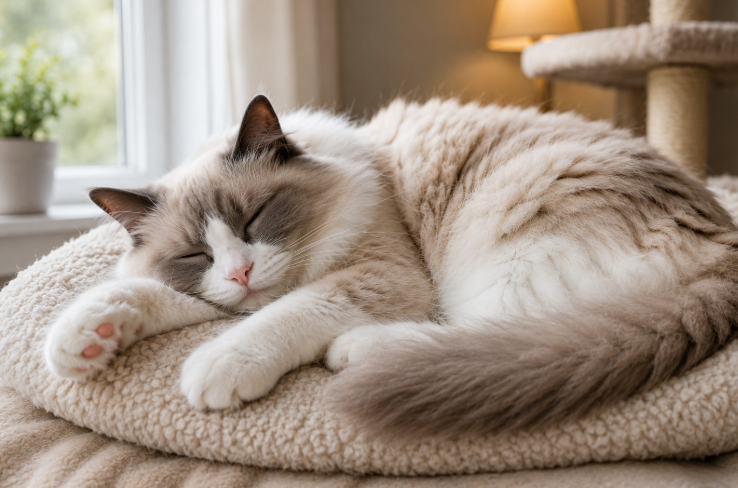
Understanding Ragdoll Cat Sleep Patterns can help owners create healthier daily routines and more comfortable environments for their cats. Ragdolls are calm, affectionate, and emotionally sensitive cats that spend large portions of the day resting. Although many owners worry their cat sleeps too much, long sleep periods are completely normal for this breed.
Cats naturally conserve energy through frequent naps and extended rest periods. However, Ragdolls often appear even more relaxed than other breeds because of their gentle personality and indoor lifestyle. Their calm behavior, combined with their strong emotional attachment to humans, influences how and where they prefer to sleep.
Sleep quality matters greatly for feline health. Proper rest supports mood, immune function, digestion, and overall energy levels. Additionally, comfortable sleeping routines help reduce stress and improve emotional security.
Learning how your Ragdoll sleeps can reveal important information about comfort, health, and emotional well-being. More importantly, small changes around the home can often improve your cat’s rest naturally.
Why Ragdolls Sleep So Much
Cats generally sleep between 12 and 16 hours daily. Some Ragdolls may even rest longer, especially as they age. While this behavior sometimes surprises new owners, it reflects normal feline biology rather than laziness.
Cats evolved as predators that conserve energy between active hunting periods. Even indoor cats maintain these instincts. Therefore, they alternate between bursts of activity and long recovery periods throughout the day.
Ragdoll Cat Sleep Patterns also reflect the breed’s naturally calm personality. Unlike highly energetic breeds, Ragdolls prefer relaxed indoor lifestyles and peaceful environments. They often choose comfort and companionship over constant movement.
Age strongly affects sleep behavior too. Kittens sleep heavily because their bodies grow rapidly. Senior cats also require additional rest due to lower energy levels and aging joints.
Weather and temperature can influence sleep as well. Many cats become sleepier during colder seasons or rainy days because warm resting spots feel especially comforting.
Owners should remember that sleeping often does not automatically indicate illness. Healthy Ragdolls usually enjoy extended relaxation as part of their normal daily rhythm.
How Sleep Supports Overall Health
Quality sleep affects nearly every aspect of feline wellness. During rest, the body repairs tissues, restores energy, and supports immune function naturally.
Sleep also plays an important role in emotional balance. Cats that feel stressed or overstimulated may struggle to relax deeply. Over time, poor rest may contribute to anxiety, irritability, or behavioral changes.
Ragdoll Cat Sleep Patterns often reflect emotional comfort within the home. Relaxed cats usually sleep openly and comfortably near trusted people. Meanwhile, stressed cats may hide or remain restless.
Healthy sleep additionally supports digestion and metabolism. Rest allows the body to process nutrients efficiently while maintaining energy balance.
Mental stimulation during waking hours also influences rest quality. Cats that receive regular play and interaction often sleep more peacefully afterward.
Owners who understand these connections can create routines that encourage healthier sleep naturally. Small improvements in environment and schedule may significantly improve overall wellness.
Understanding Daytime and Nighttime Activity
Cats are naturally crepuscular animals, meaning they feel most active during dawn and dusk. Because of this instinct, many cats become playful early in the morning or late at night.
Ragdolls usually display calmer nighttime behavior than highly active breeds. However, younger cats may still experience sudden bursts of energy before bedtime.
Ragdoll Cat Sleep Patterns often adapt partially to owner routines over time. Cats living in active households may stay awake longer during the day to remain close to family members.
Even so, occasional nighttime activity remains normal. Running, climbing, or vocalizing briefly during evening hours usually reflects natural feline instincts rather than behavioral problems.
Consistent daily schedules help regulate activity cycles. Feeding, playtime, and bedtime routines create predictability that encourages more balanced sleep patterns.
Owners who engage cats in interactive play during the evening often notice calmer nighttime behavior afterward. Physical activity helps release energy while promoting deeper rest later.
Creating the Perfect Sleeping Environment
Comfortable environments strongly influence sleep quality. Cats prefer safe, warm, and quiet spaces where they feel protected from disturbance.
Soft bedding placed in calm areas often works best. Many Ragdolls also enjoy elevated sleeping spots because height provides security and better observation of surroundings.
Temperature matters greatly as well. Cats naturally seek warmth, especially during colder months. Heated blankets designed for pets or soft fleece beds can create extra comfort safely.
When owners improve Ragdoll Cat Sleep Patterns, environmental consistency becomes extremely important. Frequent rearranging of sleeping areas may disrupt feelings of security.
Noise levels also affect rest quality. Loud televisions, heavy foot traffic, or constant interruptions may prevent deeper relaxation.
Some cats enjoy sleeping near owners because emotional closeness creates comfort. Others prefer quieter corners during longer naps. Respecting individual preferences helps create healthier rest habits.
Lighting plays a role too. Dim, calm spaces often encourage relaxation better than bright or highly stimulating environments.
Why Ragdolls Love Sleeping Near Owners
Ragdolls are famously affectionate and emotionally attached cats. Because of this, many prefer sleeping beside or near trusted people whenever possible.
This behavior reflects emotional security rather than dependency alone. Cats feel safest when resting close to familiar individuals they trust deeply.
Ragdoll Cat Sleep Patterns commonly include shared sleeping routines with owners. Some cats curl beside pillows, while others sleep at the foot of the bed or nearby furniture.
Body warmth also contributes to this behavior. Human body heat feels comforting, especially during colder nights or quiet relaxation periods.
Additionally, sleeping near owners allows cats to remain connected to household activity. Ragdolls often dislike feeling isolated from family interaction.
While many owners enjoy this companionship, maintaining boundaries still matters. Cats should always have alternative quiet spaces available if they prefer independent rest occasionally.
Creating several comfortable sleeping options throughout the home helps support emotional comfort and healthy flexibility.
How Stress Affects Sleep Quality
Emotional stress can significantly disrupt feline rest patterns. Changes in routine, loud environments, unfamiliar visitors, or conflicts with other pets may create anxiety that affects sleep.
Stressed cats sometimes sleep excessively as a coping mechanism. Others become restless and struggle to relax fully. Both changes may indicate emotional discomfort.
Ragdoll Cat Sleep Patterns often respond strongly to environmental stability because this breed values routine and emotional security deeply.
Signs of stress-related sleep issues may include hiding, unusual nighttime pacing, sudden vocalization, or sleeping in isolated areas unexpectedly.
Calm interaction and predictable schedules usually help restore emotional balance gradually. Interactive play, gentle grooming, and quiet bonding time can also reduce stress naturally.
Owners should observe behavioral changes carefully. Sudden dramatic shifts in sleep habits sometimes indicate underlying health problems requiring veterinary attention.
Healthy emotional environments strongly support healthier rest patterns over time.
The Importance of Daily Exercise
Although Ragdolls are calm cats, they still require regular physical and mental stimulation. Cats lacking activity often develop unbalanced energy cycles that affect sleep quality.
Interactive play helps maintain muscle tone, supports circulation, and releases mental energy naturally. Wand toys, climbing trees, and puzzle feeders all encourage healthy movement.
Ragdoll Cat Sleep Patterns usually improve when cats experience balanced activity during waking hours. Cats that remain mentally engaged often settle more peacefully afterward.
Even short play sessions can make a difference. Ten to fifteen minutes of active interaction several times daily helps support healthier routines.
Exercise also strengthens emotional bonds between owners and cats. Positive interaction reduces boredom while encouraging confidence and relaxation.
Older cats may require gentler activities, yet movement remains important throughout life. Light play and environmental enrichment still support mental stimulation and better rest.
Balanced routines create healthier sleep cycles more effectively than excessive inactivity.
Recognizing Normal and Abnormal Sleep Habits
Most sleep behavior remains perfectly normal, especially in relaxed indoor cats. However, certain changes may require closer attention.
Sudden extreme lethargy, loss of appetite, or difficulty waking should never be ignored. Likewise, noticeable restlessness or signs of discomfort during sleep may indicate pain or illness.
Ragdoll Cat Sleep Patterns generally remain consistent once routines stabilize. Significant behavioral changes often provide early warning signs of health concerns.
Snoring occasionally occurs in some cats, especially while sleeping deeply. However, loud breathing difficulties or persistent respiratory sounds should receive veterinary evaluation.
Older cats may sleep more heavily, yet they should still display normal interest in food, affection, and light activity during waking periods.
Owners know their cats best. Monitoring personality, appetite, grooming habits, and energy levels alongside sleep behavior helps identify problems early.
Preventive care and regular veterinary checkups support healthier long-term sleep patterns and overall wellness.
How Diet Influences Rest and Relaxation
Nutrition affects sleep more than many owners realize. Balanced diets support steady energy levels while reducing digestive discomfort that may interfere with rest.
Cats eating low-quality food sometimes experience skin irritation, stomach upset, or unstable energy patterns that affect relaxation. High-protein diets generally support healthier body function and muscle maintenance.
Hydration also plays a role in comfort and rest quality. Dehydrated cats may become uncomfortable or restless more easily.
When owners support Ragdoll Cat Sleep Patterns through proper nutrition, consistent feeding schedules also help stabilize routines naturally.
Heavy meals immediately before intense activity may cause discomfort, while balanced evening meals often encourage calmer nighttime behavior.
Some cats also feel more emotionally secure when daily routines remain predictable. Consistent feeding times contribute to that sense of stability.
Healthy nutrition ultimately supports both physical comfort and emotional well-being.
Helping Senior Ragdolls Sleep Comfortably
Aging changes sleep behavior gradually. Senior Ragdolls often sleep longer and prefer softer, warmer resting areas because joints become more sensitive over time.
Orthopedic beds may provide additional support for aging cats. Heated resting pads designed for pets can also improve comfort safely during colder seasons.
Ragdoll Cat Sleep Patterns in older cats may include more frequent naps and reduced nighttime activity. However, dramatic confusion or excessive nighttime vocalization could signal cognitive changes requiring attention.
Easy access to food, water, and litter boxes also helps older cats rest more comfortably. Climbing or jumping difficulties may disrupt sleep if important resources feel difficult to reach.
Gentle interaction and calm routines become especially important as cats age. Emotional reassurance helps senior cats feel secure and relaxed.
With thoughtful adjustments, older Ragdolls can continue enjoying peaceful and restorative rest well into their senior years.
Conclusion
Ragdolls are naturally relaxed cats that thrive on comfort, routine, and emotional security. Their long sleep hours often reflect healthy feline behavior rather than inactivity or laziness.
Understanding Ragdoll Cat Sleep Patterns helps owners create calmer environments and healthier daily routines. Comfortable sleeping areas, balanced activity, proper nutrition, and emotional stability all contribute to better rest quality.
Although every cat has slightly different habits, most Ragdolls respond positively to predictable schedules and peaceful surroundings. Small improvements in comfort and routine can therefore create noticeable benefits over time.
Healthy sleep supports emotional balance, physical wellness, and stronger human-animal bonds. More importantly, quality rest allows your Ragdoll to feel safe, comfortable, and fully relaxed throughout every stage of life.
FAQ
- How many hours do Ragdolls usually sleep each day?
Most Ragdolls sleep between 12 and 16 hours daily, depending on age, activity level, and environment.
- Is it normal for indoor cats to nap frequently?
Yes, indoor cats naturally rest often because they conserve energy between active periods.
- Why do some cats sleep beside their owners?
Many cats feel emotionally secure and comforted when resting near trusted people.
- Can stress affect feline sleep habits?
Yes, stress and environmental changes may cause excessive sleeping or restless behavior in cats.
- What helps improve nighttime rest for cats?
Consistent routines, evening play sessions, comfortable bedding, and calm environments often support better sleep.