Many cat lovers wonder whether Ragdolls are easier to live with for people who have allergies. Understanding Ragdoll Cats Hypoallergenic Care becomes especially important for owners trying to reduce allergens while maintaining a healthy indoor environment. Although Ragdolls are not truly hypoallergenic cats, they may produce fewer allergy-triggering reactions for some people compared to certain other breeds. However, managing allergens still requires proper grooming, cleaning routines, and thoughtful home care.
People often misunderstand what causes cat allergies. Most allergic reactions are not triggered by fur itself. Instead, allergens mainly come from proteins found in saliva, skin oils, and dander. When cats groom themselves, these proteins spread across their coat and eventually circulate throughout the home.
Ragdolls have semi-long coats, which sometimes surprises people researching allergy-friendly cats. Despite their fluffy appearance, many Ragdolls shed less heavily than double-coated breeds. Consequently, some owners notice reduced airborne fur and dander compared to other long-haired cats.
Still, every person reacts differently to allergens. Some individuals tolerate Ragdolls comfortably, while others continue experiencing symptoms. Therefore, allergy management involves realistic expectations combined with consistent household care.
Creating healthier indoor environments benefits both cats and owners. Proper grooming, air quality control, nutrition, and cleaning habits all contribute to better comfort and reduced allergen buildup throughout the home.
Are Ragdoll Cats Truly Hypoallergenic?
The term “hypoallergenic” often creates confusion among cat owners. No cat breed is completely allergen-free because all cats naturally produce allergenic proteins through saliva, skin glands, and dander. Consequently, Ragdolls cannot be considered fully hypoallergenic.
However, some people experience fewer allergy symptoms around certain breeds depending on coat type, shedding levels, and personal sensitivity. Ragdolls sometimes fall into this category because of their softer coat structure and moderate shedding patterns.
Ragdoll Cats Hypoallergenic Care discussions should focus on allergen management rather than eliminating allergens entirely. Even low-shedding cats still spread proteins through grooming and natural skin turnover.
Ragdolls also lack dense woolly undercoats found in some long-haired breeds. Consequently, their fur tends to mat less while releasing less loose undercoat into the environment. Some allergy sufferers notice this difference positively indoors.
Person-to-person sensitivity varies greatly too. One individual may react mildly around Ragdolls, while another experiences strong allergy symptoms regardless of breed. Therefore, spending time around a Ragdoll before adoption often helps owners evaluate tolerance levels more realistically.
Regular grooming and environmental maintenance play much larger roles than breed labels alone. Cleaner indoor conditions often improve allergy comfort significantly even in homes with non-hypoallergenic cats.
Understanding these facts helps owners make informed decisions while avoiding unrealistic expectations about completely allergy-free living.
What Actually Causes Cat Allergies
Most cat allergies are caused by a protein called Fel d 1. This protein exists primarily in saliva, skin oils, and sebaceous glands rather than fur itself. When cats groom, allergens spread across their coat and eventually into the environment.
Dander also contributes heavily to allergic reactions. Tiny flakes of dead skin become airborne easily and settle on furniture, bedding, clothing, and carpets throughout the home. Consequently, allergens may remain indoors even after cleaning.
Ragdoll Cats Hypoallergenic Care strategies focus heavily on reducing dander and loose fur accumulation because these materials carry allergenic proteins into the air continuously.
Saliva becomes another major factor because cats groom frequently every day. Long-haired cats may spread saliva proteins more extensively across larger coats, although individual grooming habits vary between cats.
Environmental airflow also affects allergen distribution. Poor ventilation often increases airborne particles inside homes, especially in smaller living spaces. Therefore, air circulation and filtration become extremely important for allergy-sensitive households.
Some people mistakenly believe shaving cats eliminates allergies. However, allergens remain present in skin oils and saliva regardless of coat length. Consequently, shaving rarely solves allergy problems completely and may even create additional skin irritation.
Understanding the true source of allergies helps owners focus on practical solutions rather than relying only on breed reputation or coat appearance.
How Grooming Helps Reduce Allergens
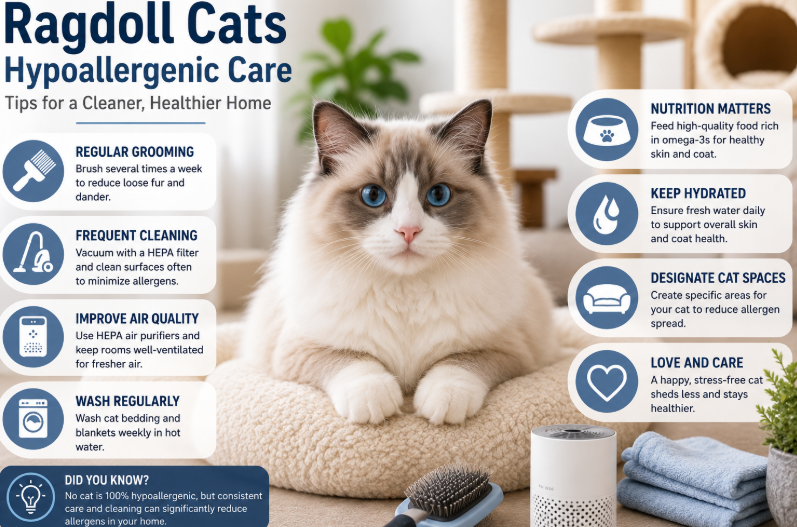
Regular grooming remains one of the most effective ways to manage allergens indoors. Brushing removes loose fur, dander, and debris before these particles spread throughout the home. Consequently, consistent grooming supports cleaner air quality naturally.
Ragdoll Cats Hypoallergenic Care routines should include brushing several times weekly using tools designed for semi-long coats. Gentle grooming also prevents tangles while maintaining healthier skin and coat condition.
Daily brushing often works best during heavier shedding seasons. Removing loose fur consistently helps reduce allergen buildup on furniture, bedding, and clothing significantly.
Some owners prefer grooming outdoors or in ventilated areas to minimize indoor dander spread. Consequently, airborne particles remain easier to control after brushing sessions.
Bathing occasionally may also reduce surface allergens temporarily. However, excessive bathing can irritate skin and increase dryness. Therefore, baths should remain infrequent unless recommended by veterinarians.
Wiping coats gently with pet-safe grooming cloths sometimes helps reduce dander between brushing sessions too. This approach works especially well for cats that dislike frequent bathing.
Grooming strengthens emotional bonds as well. Many Ragdolls enjoy gentle brushing because of their affectionate personalities and social nature.
Consistency matters most. Occasional grooming helps somewhat, yet regular routines create the biggest long-term improvement in household allergen control.
Cleaning Habits That Support Allergy Control
Household cleaning strongly influences allergen levels indoors. Fur and dander settle quickly onto floors, furniture, curtains, and bedding. Consequently, regular cleaning becomes essential in homes with allergy-sensitive individuals.
Vacuuming frequently helps remove loose fur and dander before allergens accumulate heavily. Vacuum cleaners with HEPA filtration systems often improve air quality more effectively because they trap smaller particles.
Ragdoll Cats Hypoallergenic Care should also include washing blankets, bedding, and cat beds regularly. Soft fabrics collect allergens quickly and continuously release particles back into the air.
Hard flooring generally holds fewer allergens compared to carpets. However, rugs and upholstered furniture still require regular maintenance when cats share indoor living spaces.
Air purifiers also help significantly in many households. HEPA air filters reduce airborne dander and improve indoor circulation, especially in bedrooms or smaller rooms.
Cleaning litter areas daily matters too. Dusty litter and fur accumulation near boxes may increase allergen spread throughout nearby spaces. Therefore, low-dust litter options often support better indoor air quality.
Decluttering homes may also help because allergens collect easily on unnecessary fabrics and surfaces. Cleaner and simpler spaces usually remain easier to maintain consistently.
Good cleaning habits support healthier environments not only for allergy sufferers but also for the cats themselves.
The Role of Nutrition in Skin and Coat Health
Diet influences coat quality, skin health, and shedding patterns significantly. Poor nutrition may increase dry skin, excessive shedding, and flaky dander production over time. Consequently, balanced diets support healthier indoor environments naturally.
High-quality protein supports skin repair and coat strength effectively. Omega-3 fatty acids also help reduce skin irritation while improving coat softness and moisture balance.
Ragdoll Cats Hypoallergenic Care strategies often include proper hydration and balanced nutrition because healthier skin usually produces less flaky dander overall.
Wet food may support hydration better than dry food alone because of its higher moisture content. Well-hydrated cats often maintain healthier skin and softer coats naturally.
Food sensitivities occasionally affect skin condition too. Cats experiencing allergies or poor-quality diets may develop excessive itching, irritation, or dandruff. Therefore, veterinary guidance becomes important when skin problems appear consistently.
Healthy digestion also contributes indirectly to coat condition. Balanced nutrition supports immune function while reducing inflammation that may affect skin health over time.
Although nutrition alone cannot eliminate allergens completely, healthier coats and reduced shedding often improve indoor comfort significantly.
Managing Allergies in Multi-Pet Households
Homes with multiple pets may experience increased allergen accumulation because fur and dander levels rise naturally with additional animals. Consequently, allergy management requires more consistent maintenance in these environments.
Ragdoll Cats Hypoallergenic Care becomes especially important in multi-cat households because shared spaces increase airborne particles and surface buildup more quickly.
Separate grooming tools for each pet help maintain cleaner coats and reduce cross-contamination between animals. Frequent vacuuming also becomes more important when multiple cats share living areas.
Air purifiers often make noticeable differences in multi-pet homes. Consequently, many owners place purifiers near sleeping areas or primary living spaces to improve comfort.
Feeding high-quality diets consistently across all pets also supports healthier coats and reduced shedding overall. Environmental cleanliness works best when combined with strong general pet wellness habits.
Designated cat-free zones sometimes help allergy-sensitive individuals manage symptoms more comfortably. Bedrooms especially benefit from reduced pet exposure because people spend many hours sleeping there daily.
Litter box maintenance also becomes increasingly important with multiple cats. Clean boxes help reduce odor, dust, and general indoor allergen spread significantly.
Consistency matters heavily in larger households. Small daily cleaning and grooming habits usually prevent overwhelming allergen buildup over time.
How Indoor Air Quality Affects Allergies
Air quality strongly influences allergy severity inside homes. Poor ventilation allows dander and allergenic particles to remain suspended in the air longer. Consequently, improving airflow often reduces symptoms significantly.
Ragdoll Cats Hypoallergenic Care plans should include ventilation strategies whenever possible. Open windows, circulating fans, and air purifiers all help improve indoor freshness naturally.
Humidity control matters too. Extremely dry air may increase airborne particles and worsen skin dryness for both humans and cats. Moderate humidity levels usually support better comfort indoors.
Smoking indoors greatly worsens air quality as well. Smoke particles combine with pet dander and irritate respiratory systems more intensely. Therefore, smoke-free environments remain especially important in allergy-sensitive households.
Cleaning air filters regularly also improves airflow efficiency. Dust and fur buildup inside ventilation systems may circulate allergens continuously if filters remain neglected.
Some owners also limit fabric-heavy decor because thick curtains, carpets, and upholstered furniture trap allergens heavily over time. Simpler surfaces generally remain easier to clean thoroughly.
Healthier indoor air supports better respiratory comfort for everyone living inside the home, including the cats themselves.
Creating Realistic Expectations for Owners
Many people searching for hypoallergenic cats hope to eliminate allergy symptoms completely. Unfortunately, no breed can guarantee a totally allergen-free experience. Therefore, realistic expectations help owners make healthier long-term decisions.
Ragdoll Cats Hypoallergenic Care approaches focus on reducing allergen exposure rather than promising complete elimination. Consistent management usually creates noticeable improvement, yet some symptoms may still occur depending on individual sensitivity.
Testing personal reactions before adoption often helps significantly. Spending time around Ragdolls in controlled environments gives potential owners a better understanding of how their allergies respond.
Medical guidance may also support long-term success. Allergy medications, air filtration systems, and preventative care often improve comfort when combined with household management strategies.
Commitment matters greatly too. Reducing allergens requires ongoing grooming, cleaning, and environmental maintenance rather than occasional effort alone.
Fortunately, many allergy-sensitive owners successfully live with Ragdolls by maintaining thoughtful routines consistently. Emotional companionship and affectionate personalities often make the extra care feel worthwhile.
Conclusion
Living comfortably with a Ragdoll while managing allergies is often possible with realistic expectations and consistent care. Ragdoll Cats Hypoallergenic Care strategies help reduce dander, shedding, and allergen buildup while supporting healthier indoor environments overall.
Although Ragdolls are not completely hypoallergenic, some owners experience fewer allergy symptoms because of the breed’s moderate shedding and softer coat structure. However, regular grooming, air quality control, and household cleaning remain essential for maintaining comfort.
Balanced nutrition, healthier skin care, proper ventilation, and organized routines all contribute to lower allergen exposure naturally. Small daily habits often create the biggest long-term improvements in indoor living conditions.
Every allergy sufferer responds differently to cats, so personal tolerance levels should always guide adoption decisions carefully. With thoughtful management and consistent care, many people successfully enjoy life with these affectionate and emotionally gentle companions.
Ragdolls offer loyalty, comfort, and companionship that many owners deeply value. Creating cleaner and healthier indoor spaces simply helps strengthen that relationship while improving comfort for everyone in the home.
FAQ
1. Are Ragdolls completely hypoallergenic?
No. Ragdolls still produce allergens through saliva, skin oils, and dander like all cats.
2. Why do some people react less to Ragdolls?
Their softer coat and moderate shedding may reduce airborne fur and dander for some individuals.
3. How often should Ragdolls be brushed?
Most Ragdolls benefit from brushing several times weekly to reduce loose fur and allergens.
4. Can air purifiers help with cat allergies?
Yes. HEPA air purifiers often improve indoor air quality by reducing airborne dander particles.
5. Does bathing reduce feline allergens?
Occasional bathing may temporarily reduce surface allergens, although regular grooming remains more important overall.