The Ragdoll cat’s luxurious, semi-longhaired coat is undoubtedly one of its most captivating features, giving them their distinctive plush appearance. However, with such a magnificent mane comes the inevitable reality of shedding. For many owners, finding effective Ragdoll cat shedding solutions is a continuous quest to maintain both their cat’s pristine beauty and a hair-free home. While you can’t eliminate shedding entirely, you can certainly manage it effectively with the right strategies.
Understanding Ragdoll Cat Shedding
Before diving into solutions, it’s helpful to understand why Ragdolls shed and what constitutes normal versus excessive hair loss. Knowing the root causes helps you address the issue more strategically. Consequently, you can implement more targeted care routines.
Why Do Ragdolls Shed?
Shedding is a natural process for all cats, allowing them to replace old or damaged fur with new growth. For Ragdolls, this typically occurs year-round, with more noticeable periods of heavy shedding during seasonal changes – often in spring as they shed their thicker winter coat, and in autumn to prepare for new growth. Furthermore, factors like diet, stress, and underlying health issues can also influence the amount of fur they lose. Therefore, observing these patterns is quite important.
What’s Normal vs. Excessive Shedding?
Normal shedding involves a consistent, manageable amount of loose fur. On the other hand, excessive shedding might be indicated by large clumps of hair coming out, bald patches, a dull or greasy coat, or skin irritation. If you notice any of these signs, it’s always best to consult your veterinarian, as it could signal a nutritional deficiency, allergies, parasites, or other medical conditions. A regular Ragdoll Cat Vet Schedule for Lifelong Health can help identify such concerns early.
Effective Ragdoll Cat Shedding Solutions
Managing your Ragdoll’s shedding requires a multi-faceted approach, combining consistent grooming with attention to diet and environment. By addressing several aspects of their care, you can significantly reduce the amount of loose fur. Ultimately, this leads to a cleaner home and a happier cat.
The Power of Daily Brushing: Tools and Techniques
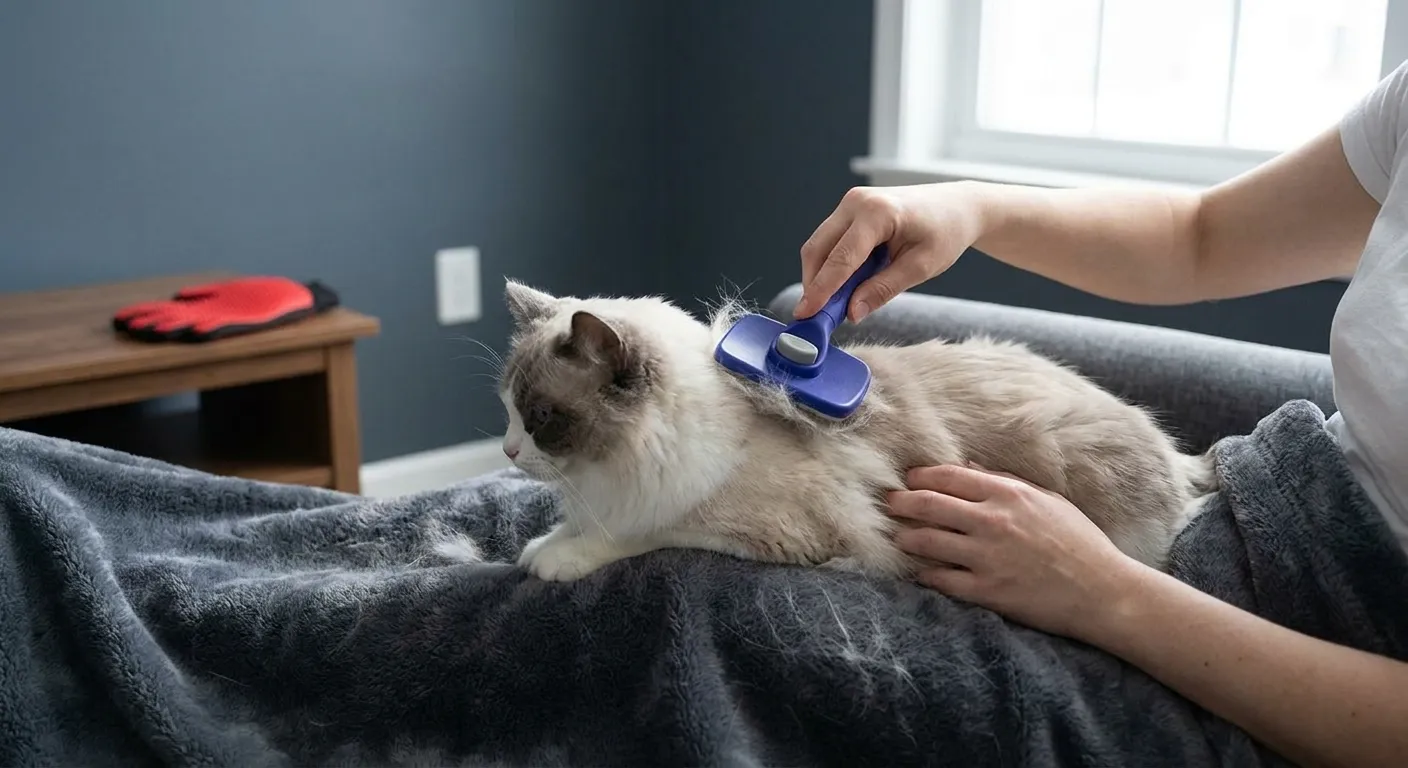
The single most impactful strategy for managing Ragdoll cat shedding is daily brushing. Their single-layer, non-matting coat is a blessing, but it still releases a lot of loose hair. A soft slicker brush, a wide-toothed comb, or a deshedding tool designed for long-haired cats can work wonders. Focus on gentle, thorough strokes, working in the direction of hair growth. Pay special attention to areas like the ruff, tummy, and hindquarters where fur can be denser. Daily brushing removes loose hair before it ends up on your furniture and helps distribute natural skin oils, promoting a healthier coat. In fact, consistent brushing is one of the best Ragdoll cat shedding solutions.
Diet’s Role in Coat Health
What your Ragdoll eats directly impacts the quality of their fur and skin. A high-quality diet rich in animal-based protein and essential fatty acids, particularly Omega-3 and Omega-6, can significantly reduce excessive shedding. Look for foods that list real meat as the primary ingredient and consider supplements like fish oil if recommended by your vet. These nutrients nourish the hair follicles, leading to a stronger, healthier coat that sheds less frequently. Therefore, always prioritize premium cat food.
Bathing Your Ragdoll: When and How Often
While Ragdolls are generally good at self-grooming, occasional bathing can be a beneficial part of your shedding management strategy. A bath helps to loosen and remove dead hair, especially during heavy shedding seasons. Use a cat-specific shampoo that is gentle and moisturizing. Make sure to rinse thoroughly to prevent skin irritation. However, avoid over-bathing, as this can dry out their skin and coat. Most experts suggest bathing every few months, or when your cat is noticeably dirty. This is a practical approach to reduce Ragdoll cat shedding.
Environmental Control: Keeping Your Home Hair-Free
Beyond grooming your cat, managing the hair in your home is also crucial. Regular vacuuming, especially with an attachment designed for pet hair, can make a significant difference. Consider washable covers for furniture where your Ragdoll loves to lounge. Furthermore, air purifiers with HEPA filters can help capture airborne dander and loose fur. Investing in lint rollers and rubber gloves for quick clean-ups is also a smart move. Consequently, you can maintain a cleaner living space for everyone.
Hydration and Overall Health
Proper hydration is vital for skin and coat health. Ensure your Ragdoll always has access to fresh, clean water. Some cats prefer running water, so a pet drinking fountain might encourage them to drink more. A well-hydrated cat generally has healthier skin and a more resilient coat, which can contribute to less shedding. Moreover, a healthy cat, in general, will have a healthier coat. If you’re concerned about your Aging Ragdoll Cat Care for Better Senior Wellness, remember that hydration becomes even more critical.
Addressing Stress and Anxiety
Stress can sometimes manifest as excessive shedding in cats. Ragdolls, known for their affectionate nature, thrive on routine and companionship. Sudden changes in environment, new pets, or lack of attention can cause anxiety. Providing a stable environment, plenty of playtime, and comforting interactions can help reduce stress. For example, a consistent Ragdoll Cat Home Setup for Comfort and Safety can minimize anxiety. If stress-related shedding persists, discuss it with your vet. Therefore, creating a calm atmosphere is beneficial for their overall well-being.
Supplements for Coat Health
While a balanced diet is key, sometimes supplements can offer an extra boost for coat health. Omega-3 and Omega-6 fatty acid supplements (like fish oil or flaxseed oil) are often recommended for improving skin and fur quality. Biotin is another supplement sometimes suggested for strengthening hair. However, always consult your veterinarian before adding any supplements to your Ragdoll’s diet. They can advise on appropriate dosages and ensure there are no contraindications with existing medications or health conditions. This is a proactive step in finding effective Ragdoll cat shedding solutions.
Professional Grooming Services
For some Ragdoll owners, especially those with busy schedules or cats who are not keen on home grooming, professional grooming can be an excellent option. Professional groomers have specialized tools and techniques to efficiently remove loose undercoat and maintain coat health. They can also provide services like de-shedding treatments and nail trims, ensuring your Ragdoll looks and feels their best. Consequently, this can significantly reduce the amount of hair shed in your home. Furthermore, they can offer personalized advice on maintaining your cat’s coat. This can be a very effective Ragdoll cat shedding solution.
Understanding Coat Cycles and Hormones
Shedding is intrinsically linked to a cat’s natural coat cycles, which are influenced by light exposure and hormones. Female cats, for instance, may experience increased shedding during heat cycles or after giving birth. Spaying or neutering can sometimes lead to changes in coat texture and shedding patterns, often resulting in a thicker, softer coat that may shed more consistently. Understanding these natural biological processes helps set realistic expectations for managing your Ragdoll’s fur. For more insights into feline health, consider resources like the ASPCA’s general cat care guide.
The Importance of Regular Vet Check-ups
As mentioned earlier, excessive shedding can sometimes be a symptom of an underlying health issue. Regular veterinary check-ups are crucial for early detection and treatment of conditions that might affect your Ragdoll’s coat. Your vet can rule out parasites, allergies, thyroid imbalances, or other systemic diseases. They can also provide tailored advice on diet and grooming specific to your cat’s health needs. In fact, a proactive approach to health is one of the best Ragdoll cat shedding solutions. Learn more about maintaining overall feline health from reputable sources like Cornell Feline Health Center.
Consistency is Key for Managing Ragdoll Shedding
Ultimately, the most successful approach to managing your Ragdoll’s shedding involves consistency and patience. Regular daily brushing, a high-quality diet, proper hydration, and a low-stress environment all contribute to a healthier coat and reduced hair loss. While you can’t stop shedding entirely, by implementing these effective Ragdoll cat shedding solutions, you can significantly minimize the amount of fur around your home and ensure your beloved Ragdoll maintains their magnificent, plush appearance. Your efforts will result in a happier, healthier cat and a cleaner living space. Remember, managing their beautiful coat is an ongoing commitment.
Frequently Asked Questions About Ragdoll Cat Hair Loss
Why do Ragdoll cats shed so much?
Ragdoll cats have a semi-longhaired, plush coat. While they don’t have a dense undercoat like some other long-haired breeds, they still shed as part of their natural hair growth cycle. This shedding can be more noticeable during seasonal changes, especially in spring as they lose their winter coat.
What is the best brush for a Ragdoll’s coat?
For a Ragdoll’s single-layer coat, a soft slicker brush or a wide-toothed comb is generally recommended. Some owners also find deshedding tools designed for long-haired cats effective. The best choice often depends on your cat’s preference and the specific needs of their fur.
Can diet help reduce my Ragdoll’s hair fall?
Absolutely. A high-quality diet rich in animal protein and essential fatty acids (like Omega-3 and Omega-6) can significantly improve coat health and reduce excessive hair fall. These nutrients nourish hair follicles, leading to stronger, healthier fur.
How often should I groom my Ragdoll to control shedding?
Daily brushing is the most effective way to control hair fall for Ragdolls. This consistent routine removes loose hair before it spreads around your home and helps distribute natural oils, keeping their coat healthy and shiny. Occasional bathing can also assist.
Are there any health issues that cause increased hair loss in Ragdolls?
Yes, excessive hair loss can sometimes indicate underlying health problems such as nutritional deficiencies, allergies, parasites, fungal infections, or other medical conditions. If you notice a sudden increase in shedding, bald patches, or skin irritation, it’s always best to consult your veterinarian.
Do Ragdolls shed more than other cat breeds?
Ragdolls do shed, but often less than cats with a dense double coat. Their single-layer coat tends to be less prone to matting, making grooming somewhat easier. However, the sheer volume of their long fur can make their shedding seem more pronounced than that of short-haired breeds.
Related reading: