Ragdoll cats are known for their trusting, placid nature and tendency to go limp in your arms, making them truly delightful companions. However, this very docility means they often lack the street smarts or high prey drive of some other breeds. Therefore, a secure indoor environment is paramount. Ensuring a Ragdoll safe home is a fundamental responsibility for every owner. This article outlines key strategies to protect your beloved feline and foster a secure, enriching living space where they can thrive without unnecessary risks.
Why a Ragdoll Safe Home is Non-Negotiable
Ragdolls are typically indoor-only cats due to their gentle temperament and trusting nature. This makes them vulnerable to outdoor hazards. Their unique characteristics necessitate a thoughtful approach to home safety. In fact, understanding these traits is the first step toward creating a secure space for them.
Their Trusting Nature
Unlike more wary breeds, Ragdolls are less likely to perceive danger or flee from unfamiliar situations or people. Consequently, this makes them susceptible to getting lost, stolen, or injured if they were to venture outside unsupervised. Their affectionate disposition, while charming, also means they might approach strangers readily.
Indoor-Only Lifestyle Benefits
Keeping your Ragdoll indoors significantly extends their lifespan. Specifically, it protects them from traffic, predators, diseases, and harsh weather. A secure indoor environment is simply the safest place for them. Moreover, an indoor lifestyle prevents exposure to parasites and common feline illnesses.
Potential Household Hazards
Even within the confines of your home, numerous items can pose a threat to curious cats. Identifying and neutralizing these dangers is crucial for their well-being. Furthermore, constant vigilance helps prevent accidental ingestions or injuries.
Cat-Proofing Your Space for Ragdolls
Creating a secure environment for Ragdolls involves more than just keeping them indoors. It means actively eliminating or securing potential dangers. For instance, a thorough sweep of your home can reveal many hidden risks. This section will guide you through making your home a truly secure haven for your Ragdoll.
Hazardous Items to Remove or Secure
- Toxic Plants: Many common houseplants are toxic to cats. Examples include lilies, sago palms, and azaleas. Research any plants you have and remove or place toxic ones completely out of reach. Consider cat-safe alternatives like catnip or spider plants instead.
- Human Medications: Keep all human medications, both prescription and over-the-counter, in secure cabinets. Even a small dose can be fatal. Likewise, ensure no dropped pills are left on floors.
- Cleaning Supplies: Store all household cleaners, detergents, and chemicals in locked cabinets. Be mindful of spills when cleaning. Therefore, always wipe up any residue immediately.
- Small Ingestible Objects: Items like rubber bands, hair ties, string, small toys, or even dental floss can cause intestinal blockages if ingested. Keep them out of reach. Similarly, be cautious with small decorative items.
- Electrical Cords: Kittens, in particular, might chew on cords, leading to burns or electrocution. Secure loose cords or use cord protectors. Moreover, unplug appliances when not in use.
- Open Windows and Balconies: Ragdolls are not known for their climbing prowess, but a fall from a height can still be devastating. Ensure all windows have sturdy screens and keep balcony doors closed or securely netted. This is a critical step for a Ragdoll safe home.
Window and Balcony Safety
Windows and balconies, while offering enrichment, also present risks. For a truly Ragdoll friendly environment, ensure all windows have strong, secure screens. Furthermore, consider installing cat-proof netting on balconies. This allows your Ragdoll to enjoy fresh air safely. Double-check that screens are free of tears or gaps where a determined cat could slip through. Similarly, never leave a Ragdoll unsupervised on an open balcony, even if netted.
Secure Cabinets and Drawers
Curiosity is a feline trait, and Ragdolls are no exception. They may try to open cabinets or drawers. Therefore, install child-proof latches on any cabinets containing hazardous materials, food, or delicate items. This is particularly important in kitchens and bathrooms. In addition, ensure heavy items are not stored where they could fall if a drawer is opened by a paw.
Safe Play and Enrichment
A secure environment isn’t just about removing dangers; it’s also about providing safe enrichment. Offer a variety of appropriate cat toys. Avoid toys with small parts that can be chewed off and swallowed. Instead, opt for durable, cat-safe materials. Regularly inspect toys for wear and tear. Furthermore, rotating toys keeps your Ragdoll engaged and prevents boredom, which can sometimes lead to destructive behaviors. For more insights on their needs, consider reading about Ragdoll Cats Need Attention More Than Most Breeds.
Creating a Ragdoll Safe Home with Proper Supervision
Even in a cat-proofed home, supervision plays a vital role. Ragdolls, especially kittens, are naturally curious and can find new ways to get into mischief. Consequently, active monitoring helps prevent accidents. This is particularly true during their early, explorative stages. Proper supervision contributes significantly to a truly secure environment for your feline friend.
Kitten-Proofing Specifics
Kittens are more prone to getting into trouble. They are smaller and can squeeze into tighter spaces. They also tend to chew on things more frequently. Therefore, extra vigilance is needed when you have a Ragdoll Kitten Care Guide for First-Time Owners. Block off small crevices, secure all loose wires, and keep very small items completely out of reach. Remember, what might be safe for an adult cat could be a hazard for a kitten. This ensures an even more thorough Ragdoll safe home from the beginning.
Guest Awareness
When guests visit, politely inform them about your Ragdoll’s indoor-only status and the importance of keeping doors and windows closed. Guests might not be aware of common household dangers to cats. For example, they might leave medications or small items within reach. A quick, friendly reminder can prevent potential accidents. Moreover, educate them about your cat’s trusting nature.
Emergency Preparedness
Despite best efforts, accidents can happen. Have an emergency plan in place. This includes knowing the location of the nearest 24-hour veterinary clinic and having their contact information readily available. Keep a pet first-aid kit stocked with essentials. Knowing basic feline first aid can also be life-saving. For general health information, review the Ragdoll Cat Vet Schedule for Lifelong Health.
Enriching Your Secure Environment
A secure home for your Ragdoll isn’t just about safety; it’s also about creating an enriching environment. A stimulated cat is a happy cat. This means providing opportunities for play, exploration, and comfort within their safe confines. A well-designed living space contributes to their overall well-being and reduces stress. Thus, a truly secure environment goes beyond just hazard removal. It cultivates a thriving space.
Vertical Space and Hiding Spots
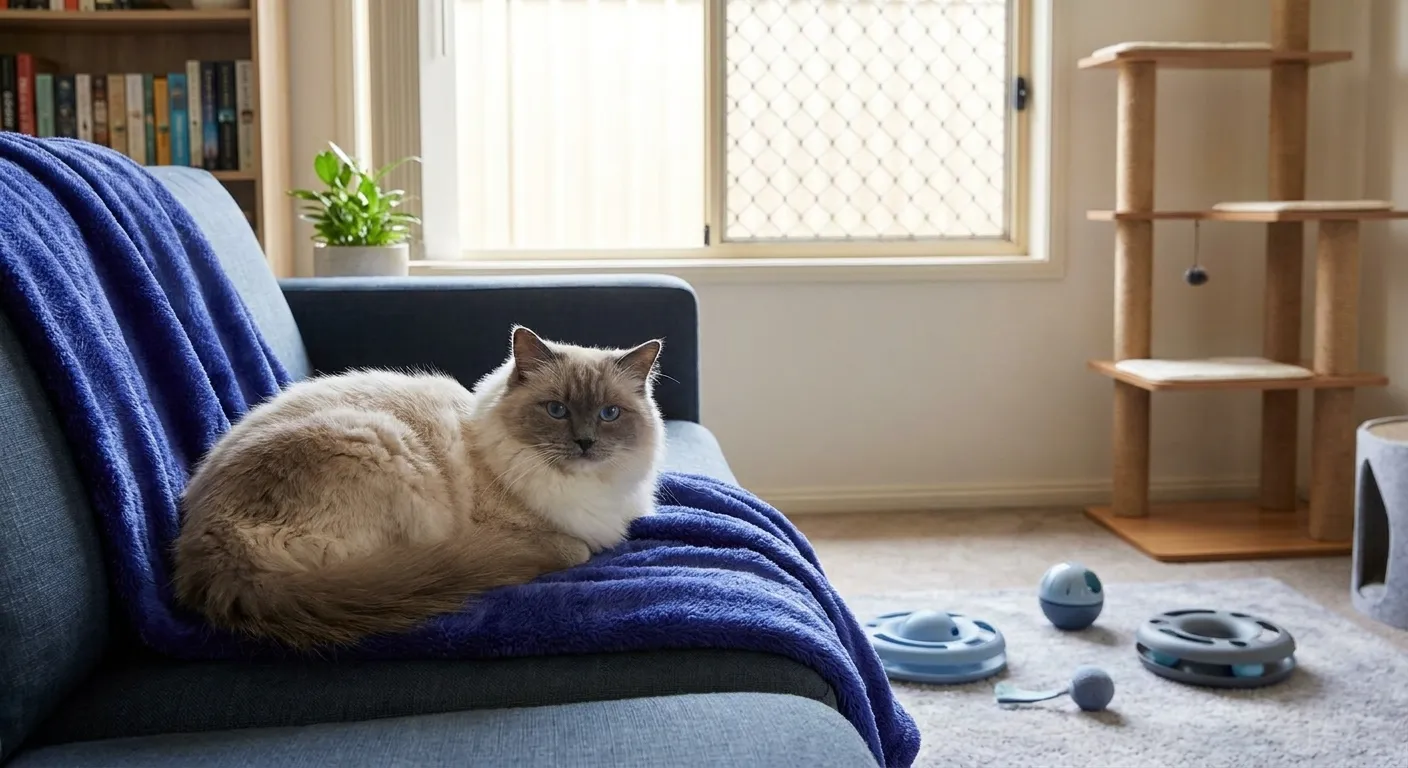
Cats love to climb and observe their surroundings from above. Provide cat trees, shelves, or perches. These offer secure vantage points. Additionally, ensure there are cozy hiding spots like cat caves or tunnels. These allow your Ragdoll to retreat when they need privacy or feel overwhelmed. Vertical space is especially beneficial for multi-cat households. This adds another dimension to a Ragdoll safe home.
Scratching Posts and Pads
Scratching is a natural feline behavior. Provide multiple scratching posts and pads in various textures and orientations. This protects your furniture and allows your Ragdoll to express natural instincts. Ensure they are sturdy and tall enough for your cat to stretch fully. Consider both vertical and horizontal options to satisfy different preferences. Regular scratching is also important for paw health.
Interactive Toys and Playtime
Ragdolls benefit greatly from interactive play. Use feather wands, laser pointers (with caution to end on a tangible reward), or puzzle feeders. Dedicate regular playtime sessions to bond with your cat and keep them physically and mentally stimulated. This is crucial for preventing boredom and potential behavioral issues. For insights into their behavior, check out Ragdoll Cat Behavior Problems Every Owner Should Understand.
Fresh Water and Food Stations
Always ensure your Ragdoll has access to fresh, clean water. Consider a cat water fountain, as many cats prefer running water. Place food and water bowls in quiet, accessible locations away from litter boxes. This promotes good hydration and healthy eating habits. Clean bowls regularly to prevent bacterial growth. A well-hydrated cat is generally healthier.
The Importance of Routine and Mental Stimulation in a Ragdoll Safe Home
Ragdolls thrive on routine and benefit immensely from mental stimulation. A predictable schedule helps reduce anxiety and provides a sense of security. Furthermore, engaging their minds prevents boredom, which can lead to destructive behaviors or stress. Therefore, incorporating consistent routines and stimulating activities is key to maintaining a peaceful and enriching environment.
Consistent Feeding and Play Schedules
Establish a regular feeding schedule. This helps regulate their digestion and provides a sense of predictability. Similarly, consistent playtimes are vital. These sessions not only offer physical exercise but also strengthen your bond. Moreover, a routine helps them understand when to expect attention and when to relax. This contributes to a well-adjusted Ragdoll.
Training and Positive Reinforcement
Ragdolls are intelligent and can be trained to respond to commands or even walk on a leash (in a secure, controlled environment). Use positive reinforcement methods, such as treats and praise. This builds confidence and provides mental challenges. For example, teaching them to come when called can be useful in emergencies. Training can be a rewarding experience for both you and your feline companion. This makes for a more harmonious Ragdoll safe home.
Environmental Enrichment for Indoor Cats
Beyond toys, consider other forms of environmental enrichment. Bird feeders outside a window can provide hours of entertainment. Cat grass or catnip plants offer safe, natural chewing options. Create varied textures and scents in their environment. In addition, rotating their toys and sleeping spots keeps things interesting. A stimulating environment is crucial for indoor cats, preventing lethargy and promoting activity.
Long-Term Commitment to a Secure Environment
Maintaining a secure environment for your Ragdoll is an ongoing commitment. As your cat ages, their needs may change. Regular home safety checks are essential. Furthermore, staying informed about new pet products and potential hazards is important. Your dedication ensures your Ragdoll lives a long, happy, and healthy life in their secure haven. This continuous effort reflects true pet parenthood.
Regular Home Safety Checks
Periodically walk through your home from a cat’s perspective. Look for newly exposed wires, loose objects, or areas that might have become accessible. This is especially important after renovations or moving furniture. A fresh pair of eyes can spot overlooked dangers. For instance, a new plant might have been introduced that is toxic. Regular checks maintain a consistently secure living space.
Adapting to Age and Health Changes
As your Ragdoll ages, their mobility and senses may decline. This requires adjusting your home environment to meet their changing needs. For example, provide easily accessible litter boxes and ramps to favorite high spots. For more information on caring for older felines, refer to Aging Ragdoll Cat Care for Better Senior Wellness. Similarly, if your cat develops health issues, consult your vet about any necessary home modifications. A secure environment adapts with your cat.
Staying Informed
The world of pet care is constantly evolving. Stay updated on pet product recalls, new information regarding toxic substances, and best practices for feline safety. Follow reputable veterinary organizations and animal welfare groups. For example, the ASPCA Animal Poison Control Center is an excellent resource for toxic plant and food lists. This proactive approach ensures you are always providing the best possible care. Another great resource is the Humane Society’s cat care tips.
Creating and maintaining a Ragdoll safe home is a rewarding aspect of pet ownership. By understanding their unique nature, cat-proofing your space diligently, and providing ongoing enrichment, you ensure your beloved Ragdoll can thrive in a secure and loving environment. Your efforts create a sanctuary where their gentle spirit can flourish without worry. Ultimately, this dedication fosters a strong, trusting bond between you and your cherished feline companion.
FAQ
What are the most common household dangers for cats?
Common household dangers for cats include toxic plants (like lilies), human medications, cleaning supplies, small ingestible objects (like string or hair ties), electrical cords, and open windows or balconies. Always keep these items secured or out of reach to protect your feline friend.
How can I make my apartment safe for a Ragdoll?
To make your apartment safe for a Ragdoll, ensure all windows have sturdy screens and balconies are netted. Secure cabinets with child-proof latches, especially those containing cleaners or medications. Remove toxic plants, secure electrical cords, and provide safe toys. Lastly, always supervise your cat, especially kittens.
Are Ragdoll cats better indoors or outdoors?
Ragdoll cats are significantly better suited for an indoor-only lifestyle. Their trusting, gentle nature makes them vulnerable to outdoor hazards such as traffic, predators, diseases, and theft. An indoor environment provides the necessary protection for their well-being and longevity.
What kind of enrichment does an indoor cat need?
Indoor cats need vertical space like cat trees, cozy hiding spots, scratching posts, and interactive toys. Regular playtime with their owner is also crucial for mental and physical stimulation. Consider puzzle feeders and safe cat-friendly plants to further enrich their environment.
How often should I check my home for potential pet hazards?
It is advisable to perform a thorough home safety check periodically, perhaps monthly or quarterly. Additionally, check your home any time you rearrange furniture, bring in new plants, or have guests. Always be vigilant for new hazards your curious cat might discover.
Related reading: